This episode was pre-recorded as part of
a live continuing education webinar. On-demand CEUs are still available for this
presentation through ALLCEUs. Register at ALLCEUs.com/CounselorToolbox. I’d like to welcome you to today’s
presentation on the sociological approach to reducing risk and building
resilience. As I was putting together This presentation it was kind of like
right in the wake of when Harvey hit.
And then you know recently we’ve had the
shooting in Las Vegas, and some of the counselors, especially counselors in
training that can’t be practiced independently yet that are in some of my
social media groups and in my professional groups have been talking
about how frustrating it is and even some of us who are licensed but just
can’t wake up and go help the Red Cross right now about how frustrating it is
not to be able to help and how much we want to help so what I usually do
because you know I I’m generally not upwardly mobile where I can just drop
everything and go to a crisis what I did after 9/11 was look at what things
in that situation could I positively impact and how could I do it in a way
that made sense but you know for my life because I can’t you know at that point I
for 9/11 I had an infant at home and you know other stuff so we’re going to look
when we’re talking about addressing issues like the opiate epidemic or the
major problem of depression almost I guess anxiety almost one in four people
has anxiety issues and we’re gonna look at some of that and try to figure out
what can be done what can we do from where we are in a way that makes sense
because yes we can influence politics and advocacy but what can we do with
small chunks of time that are beneficial to helping the cause as well as you know
could help the clients we have currently so we’ll define the
socio-ecological not model which is Broth and Brenner’s model we’re going to
apply it to addiction and mental health issues and explore different variables
in this model and then discuss how this framework can be used in prevention and
treatment of co-occurring or independently occurring disorders so
we’re going to talk about how it may
sense to conceptualize not only the development of addiction but also the
development of things like eating disorders and mood disorders in terms of
a socio-ecological model and even some things like bipolar and
schizophrenia can be a person being genetically predisposed or whatever but
there could be certain environmental factors that could you know trigger that
first psychotic episodes so we want to look at what might be going on and how
can we help prevent or treat now prevention can take the form of
three different activities if you will prevent the problem so helping people
not get depressed at all ever so starting to provide those skills and
tools when people are knee-high to a grasshopper hopefully preventing
worsening of the problem so people don’t get severely clinically depressed where
they can’t get out of bed so the early intervention services and effective you
know frontline resources and preventing associated fallout okay the person gets
to press gets clinically depressed well let’s see if we can help them avoid
losing their job because they can’t get out of bed to go to work develop
additional health problems from being depressed or developing an addiction in
order to self-medicate that depression so we’ve there are three different
methods or avenues we can take in prevention and you know we want
to look at them all because when you’ve got somebody who’s becoming clinically
depressed you know they’re depressed you know situationally whatever something
happened and it started to turn into something more than just a couple of
days it’s going to start having associated fallout early and you know
it’s not going to be huge they’re not going to lose a job right off they’re
not going to start having major family problems right off but they are going to
start having little hiccups because that depression causes an imbalance in their
in their environment and we know environments like to maintain
homeostasis and you know the kids are gonna be like well Mom why aren’t you
getting up and doing these things and what’s going on and you know things are
going to start changing and the person will need to be able to deal with that
so the socio-ecological model explores and explains human behavior as the
interaction between the individual and environmental systems there’s
a fifth one that is more of your longitudinal but we’re going to
talk about the four main ones today the micro the meso the EXO and the macro
systems the microsystem involves well let’s start before that the individual
if you look at the model is sort of the bull’s eye here and the individual is
not considered a system but it involves all of the things about the
individual including biology and personal learning that make people who
they are okay so this person exists within a microsystem and that micro
system is their family peers School Church synagogue whatever and health
services things that they probably interface with regularly
work should also be on that but it’s for some reason it’s not on this diagram
anyway the mesosystem is the interconnection between microsystems so
how do family and peers interact I don’t know about you
thankfully my family might be very accepting of most of my peers but I know
other friends of mine who brought home peers who were not as well accepted by
their family so there was some conflict between the the family and the peers and
we know how much peer pressure and peer relationships are important in an
adolescents’ lives which creates conflict and consternation
how does the family interface with school how does Pierce how does
your peer group interact with school and do they see it
as a good thing to do they see it as worthwhile you know etc so when we’re
talking about the microsystem and the mesosystem we’re talking about
things that people interface with daily so I want you to think
about how the mesosystem and you can feel free to chime in on the chat
room if you want how does the mesosystem family peer
school church you know recreational activities health services impact the
development of mental health or illness now you notice I’m trying to kind of
switch ears for health because we want to promote health and we can look at the
opposite for mental illness but you know if you have positive family peer
interactions it’s probably going to support mental health it’s probably
going to support decision-making in the adolescent it’s probably going to I mean
and I’m thinking adults and adolescents here but family and friends you know if
you want to think about you know how do you get along with your significant
others peer groups and do they interface well or is it kind of like oil and water
how does the how does your family interface with your work how do they
deal with how many hours you have to work whether you’re getting called in at
night or getting emails or text messages at 8 p.m. or you know what
are their expectations and how does that influence if there’s a conflict you know
if the family doesn’t like what’s going on at work or the fact that you
know your boss is emailing you at 8 p.m. then it can create
conflict within the environment which can lead to increased anxiety and
depression and Yabadabadoo now how does mental health or illness impact the
mesosystem so again thinking about how if someone is clinically depressed how
does it impact their family how does it impact their peers and if you have a
family member who has you know clinical depression or generalized anxiety how
does it impact how your family interfaces with everything else because
you know you end up having somebody or somebody in the family who may be
caretaking for the person who has depression or anxiety or whatever the
mental health issue is who’s not able to do the stuff that they were able to do
so the rest of the families kind of pick slack so how does that affect how they
interface you know the rest of the family members interface with school and
work you know maybe they end up showing it
more exhausted so it’s important to look at the mesosystem
the exosystem involves links in a social setting in which the individual
does not have a direct active role so for example how would I impact my
spouse’s work and again if I am the identified patient and I’ve got clinical
depression and I’m calling my spouse to come home because I just can’t be alone
or my spouse is late to work or unproductive because he’s always
exhausted when he gets to work because he has so much to do since I am you know
not able to do as much right now then it could negatively impact his work and
so we want to look at how that impacts how the home environment impacts work
and how work impacts the home environment the macro system describes
the culture socioeconomic status poverty ethnicity etc so what we’re looking at
in the macro system is really the larger you know not just within your city maybe
or even closer to your neighborhood we’re looking at what you see in the media
what you see on national TV your your statewide elections your national
elections your state laws and culture and what’s being communicated if you
are a religious person what your religious culture communicates because
you know religion generally is not just in one little area it’s international or
national so what types of things does that communicate to to the person and
how does that influence the development or not development if you will of
depression anxiety or addiction so again think about how the exosystem of the
social setting in which the individual doesn’t have a directive or an active role
think about how much people were influenced after the elections I mean
yeah we had a role if you went out and voted you had a role but you don’t
decide the election so once that happens how do you know the exosystem
impact you know your your emotions your other
community events employment etc and how those things impact the family I know
you know there was a lot of consternation and concern among some of
my friends who are Jewish after the last election so their families experienced a
high ink or a great increase in anxiety development of mental health or mental
illness how does all this stuff that’s going on in the exosystem and
stuff that you don’t have direct control over how does it impact the development
of mental illness you know or mental health and we’re going to talk more
specifically in a couple of minutes and again likewise how does mental illness
or mental health impact the exosystem if you have a healthy workforce if you
have healthy people who are actively participating in work and going to community
activities voting to participate then you’re probably going to have a
healthier outcome than if you have people who are not able I mean they’re
so depressed they’re not able to even get out and participate so we want to
look at the reciprocal nature it’s not one way the community doesn’t just
affect us you know it may affect us but then how we react affects the community
how does the attitude of the culture impact the community if you’ve got a
a culture that is accepting of certain ideologies they’re accepting of LGBTQI
they’re accepting of people who are Muslim in their religion they’re
accepting of people who are Christian and their religion they’re accepting of
you know fill in the blank if the culture is accepting of that how does
that affect the community and those people within the community who might
you know otherwise not have been accepting does it kind of pressure them
in or does it cause anxiety and consternation in those people how
does the attitude of the culture for example about
premarital sex and marriage affect the family how does it affect the
development of and again we’re thinking about anxiety depression and addiction
so how does it affect the development of stress which may lead to mood disorders
or problems and how did the community families and individuals with mental
health or mental illness impacts the culture you know so we have an impact on
our culture we get together we see you know we have Generation X Generation Y
but the baby boomers all had their sort of or we all have our sort
of unique cultures and things that we bring to the table and things you know
that was given to us we said no we don’t want to thank you very much
so there is a give-and-take among the individuals within the
culture and that’s good because that means we can start small you know start
in our locale and create this positive mesosystem and then build from there if
If you have a positive community then that’s probably going to spread think
about when a company goes and dumps fertilizer for example into a waterway
it doesn’t just stay there over time that fertilizer bleeds out and
you start having algae blooms everywhere things don’t stay I mean in our society
things don’t stay in one place for very long they tend to move they tend to
migrate so positive will migrate that’s awesome
negative can also migrate so we want to look at how can we enhance the positive
migration and keep down the negative if you will so now let’s start talking
about what can we do and how can we operationalize all of this we realize
that if we affect the individual it’ll have a positive effect on the meso
system which can have a positive effect on the exosystem Yabadabadoo
so great we also realize that one of the only things we have a lot of
control over is the individual ourselves so a lot of people come to
counseling individually score so this is where we’re going to start
so what things contribute I start by listing risk factors for the
development of mood disorders and addictions and then we talk about capital you know what you have in order
to you need to have to prevent these things and then prevention
strategies so that’s kind of how we’re going to go it’s not going to stay
depressing individuals with chronic pain are at higher risk of mood disorders or
addiction addiction because of the pain management you know drugs that are out
there and you know once they start taking payment management drugs opiates
a lot of times the brain quits producing endogenous opioids the natural
painkillers so when they first come off the body doesn’t automatically pick up
so it takes a little while for the person’s pain tolerance to build back up
which keeps some people from wanting to get off the medication among other
things but chronic pain can also be debilitating it can make people lose
some abilities that they used to have or crush some dreams if you will you
no, I think I’ve told you before that I have a bad shoulder and carpal tunnel so I
can’t garden the way I used to you know I still go out and do it but I’ve got to
pay attention and only be out there for an hour too instead of spending six
hours out on the farm which is frustrating to me it was only mildly
frustrating but my grandfather when he started developing Parkinson’s couldn’t
make his miniatures anymore and he made gorgeous miniatures and I know that’s
not chronic pain but it’s kind of the same thing if you’ve got rheumatoid
arthritis he couldn’t make his miniatures and he became devastated and
became withdrawn so understanding that pain has multiple influences that can
cause depression that may trigger a grief reaction that we need to help
people address now the things I put in bold are things that we as clinicians
can easily help people prevent or/or address chronic pain we can help
For people with low self-esteem that’s a no-brainer
if people don’t feel good about themselves
and they’re looking for external validation they’re going to be at a higher
risk for anxiety fear of abandonment fear of not being good enough fear of
failure and depression a sense of hopelessness and helplessness substance
use especially early substance use can cause changes in the prefrontal cortex
leading to problems with impulse control and decision-making but it can also
disrupt the balance of neurochemicals leading to symptoms of depression and/or
anxiety so it’s important to understand that especially the earlier the
substance use starts the greater the chance that it’s going to cause some
sort of brain changes and we’ve also found that a lot of people, not the
majority but there is a percentage a significant percentage of people that
when they start using early they kind of quit developing coping skills after that
they find something that works they’re like oh I like this I think I’ll use
that from now on when we start talking about people who
started drinking or smoking marijuana when they were you know 9 10 11 12 you
might see more mood issues or addiction issues in those people than
people who didn’t start using mood-altering drugs as early as a history of
abuse can contribute to the development of PTSD but not everybody who
is abused develops PTSD but there can be episodes of anxiety and depression as
well as it increases the chances of the development of addiction genetic
vulnerability we know that mood disorders and addictions tend to run in
families and they’ve done studies that have shown that there is a genetic
component doesn’t mean it’s going to happen it just means you have this gene
there that could be triggered so we don’t want we want to make sure that
clients know that they are not just doomed you know they can prevent
triggering that but they need to be aware that they may be more vulnerable
inappropriate coping responses if we are not born with coping skills
so if somebody doesn’t know how to cope with life on life’s terms
because either because they’ve always been shielded or because they’ve never
had anybody helped them maybe they were kind of on their own from the
get-go so they learned to lash out and get angry or withdraw and get depressed
but they never really learned how to deal with the stuff they’re gonna be at
higher risk of mood and addictive disorders we can help people develop
coping responses are one of the things you want to look at when people are using
seemingly unhelpful behaviors is to remember to ask what is the cause of
this so we want to look at what is the root cause of what is prompting this
behavior and what is the benefit of the current behaviors and I’m going to keep
reminding you of that as we go through this violence and aggression you know
again what’s the cause of the violence and aggression did people do this person
learn that’s how you cope with distress in their family of origin is it a
protective mechanism because they’ve experienced situations where that has
helped them deal with conflict before what prompts this and what the benefit
to it when they act out when they’re violent and aggressive what is the
benefit it gives them power it pushes people away they just enjoy hurting
people hopefully that’s the minority but we want to ask that because we can’t
figure out an alternative until we know what the function is
same thing with risk-taking and impulsivity there are certain theories
that says some people need more stimulation than others they get bored
easily so they tend to be higher risk-takers and maybe more impulsive than you
want to ask if this person doing this you know I have a friend who is an
adrenaline junkie you know skydiving rock climbing you
name it he’s done it and you know more power to him I don’t see a purpose of
jumping out of a perfectly good airplane but he he thrives on that and when he
can’t get out and do those sorts of things he feels good so what is it about
this risk-taking and what kind of risk-taking it risk-taking as
in holding a balloon liquor store or is it risk-taking as
in doing something like skydiving which is theoretically safe and what’s the
benefit it makes gives them a rush makes
they feel good helps him you know escape or whatever great that’s fine
the rebellious nests you know again what is
and this is a key for adolescents especially but even if you’re a
supervisor working with employees if they’re being rebellious you want to
look and say what’s the point what’s the benefit to being rebellious what are
they holding on to and refusing to let go of that you want them to let go of or
what are they refusing to do that you want them to do and what’s the
benefit to it if they are being rebellious and they’re staying like
think again adolescents staying out all night OK well what’s a motivating factor
is it to get under their parent’s skin probably not is it to conform to peer
pressure you know oftentimes that’s maybe the case but you have to look at
the individual and say ok how can you do this in a way that helps you move
forward rejection of pro-social values if the people who espouse the
pro-social values are the people that the person rejects then they’re probably
going to reject those values so we want to look at you to know if you’re rejecting
those what values are you espousing and why are those important to you and
why are you rejecting these over here you know not saying it’s right or wrong
I’m just trying to understand where you’re coming from and you know that’s
something that we’ve got to be sensitive to and different people
are going to hold different values lack peer refusal skills to stay out late
to get into trouble to use drugs to have early sex whatever it is those things a
lot of times indicate poor communication skills and low self-esteem need to be
accepted you know all that stuff that’s challenging during during teen and early
adolescent years those are things we can help with being bullied you know that’s
a risk factor when people are bullied they tend to get depressed and when
they’re bullied they may turn to substances to try to make themselves
feel better to numb the pain they make self-injure there’s a lot of
different things might happen we can help people
develop skills to deal with being bullied since we don’t understand
a hundred percent why people bully we need to help the victims become
survivors we need to help them have the tools to be able to deal with it and
understand why it happens without letting it hurt them early and
persistent problem behaviors that’s just so broad but again look at why the
person’s child acting out an early sexual activity could be a history of sexual
abuse could be a dysfunctional family of origin and the child is trying to get
out I worked with a 14-year-old who once told me she was gonna get pregnant
as soon as she turned 15 because that’s when she could get into housing on her
own so she was intentionally going to get pregnant at 15 and there was a
reason for it she was very clear about her logic a lot of times it’s peer
pressure and acceptance but uh asking what is that what is the cause and is
this cause going to keep the person from developing healthy coping skills and
being happy is potentially going to lead to depression peer rejection you
know that hurts so helping people figure out how to navigate peer rejection
because you’re not going to be liked by everybody academic failure we can help
with now not necessarily as clinicians but we can advocate for the person we
can help them find tutors resources etc lack of information on positive health
behaviors put it out there most of the time youth these days have a pretty good
idea of what’s healthy and what’s not they just aren’t motivated for it
they’re motivated for something else when addictive behaviors are you used to
cope with stress or unpleasant feelings I said coping skills may fail to
develop or when they’re used to enhance self-confidence such as drinking before
going to a party then they may start to develop anxiety and self-consciousness
when they don’t have a drink on board so it may start
prompting the development of some mood disorders in addition to the fact that
repeated use especially in a young brain can cause some neurotransmitter
imbalances using addictive behaviors also to enhance other experiences ties
it to those experiences making them person more likely to use those and
similar situations desensitizing the brain’s pleasure centers so what am I
what do I mean I mean if you typically drink when you are watching football
then you’re going to be more likely to drink every time you watch football it’s
just one of those things you do when you watch football if you’re one of those
people who eat when they watch TV then when you watch TV you’re more likely to
eat when you go to the movies because that’s a similar situation you’re more
likely to want to have popcorn or eat so it’s important to understand that with
addictive behaviors if you have something that produces pleasure it can
be triggered you know the person can start thinking about it in a similar
situations using repeatedly can cause neurochemical imbalances in genetics you
know you can’t be born with a neurochemical imbalance not enough
serotonin too much whatever and poor health behaviors as I’ve talked about a
bunch of times not enough sleep quality poor nutrition and high stress
can also cause neurochemical imbalances so we can educate people about some of
the things that can cause depression and anxiety so they can prevent it we can
educate parents so they can start coaching their kids from the get-go so
personal recovery capital to develop what we need to be happy and healthy
human beings we have to have certain things to help us along the way we need
to have the things to enable us for physical health think about Maslow’s
pure hierarchy bottom level is all your health and biological needs we need to
have our physical health and that includes nutrition Slee
and you know not being in pain all the time sometimes you’re gonna feel pain
that’s being human that’s being alive but we need to have our health for the
the most part we need to have financial assets to get our basic needs met you
now get that food keep clothing on our back
transportation roof over our heads health insurance and access to medication and
there are two different things health insurance covers theoretically
going to the doctor and the mental health counselor etc access to
medication is not covered under a lot of insurance so remember that most
pharmaceutical companies have patient assistance programs that can help
clients access their medication if they can’t afford it because some medication
is a really expensive safe housing conduct that’s conducive to recovery and
that’s not just addictions if you’ve got somebody who is clinically depressed or
highly anxious living in a radically dysfunctional household where there’s
lots of yelling or arguing or other people who are similarly dysfunctional
it’s probably not going to prompt those positive cognitions and mindfulness and
everything that we’re trying to establish doesn’t mean they can move
unfortunately a lot of people can’t so we got to talk about how can you create
an area in your housing environment that’s safe people need to have adequate
clothing to stay warm to be able to dress for work and you know go
to their job and be dressed appropriately and transportation to get
their needs met most of us don’t live in a city where we can just walk but
walking I guess is a form of transportation we need to be able to
access the resources that are out there whether it be food or going to work so
we can pay our light bill or whatever it is
values awareness people need to know what’s important to them to
figure out what they need to do to be happy a sense of purpose helps people
keep going and we can help people with this I mean these are easy exercises
when you give them a values activity worksheet you know
what are your top five values when you look at the sense of purpose what is
your purpose in life and a lot of us don’t know but we know what we
want it to be or we can start theorizing about what is the purpose of what I do
as a job on a day-to-day basis, what is the purpose of this activity that I’m
doing so they can start to see some meaning in the stuff they do we can help
people develop hope and optimism and we’ve talked about that one people need
to have a perception of their past present and future they need to be able
to look over the past and it may suck or it may be great but they need to be able
to look back over it and go yep that’s it they need to be able to look at their
present and realistically assess what they’ve got and maybe what they don’t
have but realistically assess what they’ve got and look at their future and
go where do I want to go from here because you’re here and you don’t want
to stay here forever you can’t stay here forever because times gonna move on what
next people need to be able to see but understand that they’re not
necessarily controlled by their past or stuck in the present that they have the
ability to make choices every single moment to work toward what they want for
the future education training and job skills people need to be able to make a
living that’s just the way it is you need to be able to feed yourself and put
a roof over your head so we can make referrals to job training agencies we
can make referrals to social service agencies problem-solving skills
interpersonal skills and self-esteem are all things that we are super
skilled at teaching and we can teach these in chunks they don’t have to be
these long groups don’t have to be big drawn-out sessions we can provide
people snippets you can provide somebody with the concept of distressed tolerance and
the improve acronym in a handout and have them look at that or in an email
you know if you email your clients once each day or on your blog there are a lot
of different ways, you can just get that information out there and in front of
people so I can look at it I call I tell my
clients it’s bathroom reading you know I usually give them a handout or two and I
just put it on the back of the toilet and when you’re in there you know take a
look at it if it’s useful great if not bottle it up and throw it in the the
trashcan I’m good with that but there’s no
pressure and I’m not putting extra assignments on them I’m just providing
information about a skill and then if they want to pursue it further when they
come back to counseling we can talk about it so what can we do we can
promote positive health and wellness behaviors by educating people about why
they’re important and what to do and where to find more information you know
because some of these things like nutrition we can’t be prescriptive but
we can point people in the direction of where to get good advice and information and we can also model this you know in
our treatment plan at least in mind I try to make sure that people are putting
a print emphasizing getting enough
quality sleep eating well and maybe exercising at least moving around if
they don’t want to call it exercise but taking care of themselves and getting
some relaxation and recreation in their bonding to a pro-social culture is
difficult for us to do for people or do with people we can talk about what
are your hobbies what are things that you enjoy doing and encourage people to
try out volunteering or get involved in meetups to engage in activities
with other people but that’s something that they’re going to have to do
on their participation in extracurricular activities again kind of
the same thing we can point them in the right direction of volunteerism meetups
things through their through their church or their synagogue or their you
know whatever clubs that they’re involved in positive relationships with
adults now obviously this is more important if we’re working with children
or teenagers we want to help children and teenagers kind of see where adults
don’t have their head that far in the ground
but we also want to help adults learn how to more effectively communicate with
teenagers because a lot of adults lecture at and I know this and you’ll
you’ll understand when you’re older and you know lots of that kind of stuff
so things that we can do to enhance relationships with adults is to educate
people about you know how to effectively communicate with teenagers for
example who are trying to find their way and trying to assert independence and
resisting some rules how do you deal with that how do you communicate with
them in a way because a lot of parents have difficulty navigating that boundary
between friend and parent so we can help with that
active workshops in the community workshops you can do at churches at
libraries those are things you can do there you can put them on for like an
an hour once a month it’s good if you’re it’s free but it’s a good promotion for
your practice if you know you go out and do it and people come to learn something
from you, they’re like hey that might be helpful social competence it’s another
one of those things that we can do in little snippets we can provide tips and
tips and tools whether infographics on an Instagram page are really
useful for a lot of teenagers they want something that’s you know in a picture
and fast it’s a snapshot so social competence checklists are another
really good thing if you’re teaching different types of skills for
communication or how you’re supposed to use different forks I know the first
time I went to a formal dinner I was looking at all the silverware going I
have no idea what to do with this stuff the sense of well-being and
self-confidence we can help people develop this by encouraging them to
focus on what they do well we want to make sure they have plans
well that means goal setting and since a lot of people don’t know how to goal-set
they don’t have goals, so they’re just kind of floating out there not
looking at the future we want to help people look at the future and
figure out how they’re going to get there so they’re like wow this is
doable this is attainable this is another thing you can put work put
worksheets on your website you can do short workshops to help people
figure out how to look at how to define or learn how to define a rich and
meaningful life and figure out how they’re going to define their goals and
achieve their knowledge about risks associated with addictive
behaviors now a lot of kids you know think back to the old dare programs I
had a lot of clients tell me that those programs only taught me how to you
safely I was like well that’s not what they were intended for but we do want to
educate youth about you know still about the risks of some of those drugs and
even adults not just youth educate people about how dangerous or how
potentially addictive opiates for example can be after three to five days
your body has already started to build up a tolerance that’s kind of scary so
helping people understand that but also addictive behaviors like pornography a
lot of teens don’t think about it a lot of adults don’t think about
it until they’re stuck in it or online gambling you know those are some things
that can kind of catch people unawares because they didn’t think about it
wasn’t a substance we typically think of addictions as substances since it’s not
a substance they didn’t think about the effect that the pleasure from those
activities were going to have on our neurochemicals and create a
a situation where they didn’t feel okay they didn’t feel normal
they didn’t feel happy without having that in their life because their
dopamine receptors had been blunted individual prevention strategies
the big summary is we want to promote attitudes beliefs and behaviors
that ultimately provide the person with healthy coping skills whether it’s
through health class whether it’s through workshops I know at
organizations I’ve worked at before the Jaypee would come in and do periodic
workshops that’s a great way to connect with people and reduce utilization if
you do psycho-educational prevention group because an ounce of prevention is
worth a pound of cure we want to make sure that they’re aware of positive
health behaviors and how to access those resources in Gainesville I don’t know
about up here but I know in Gainesville the mall used to open at six o’clock in
the morning so people could walk inside in a safe place and you know be out of
the elements and yadda-yadda so just letting people know that that
existed was a big step because they were like well I don’t want to join a gym and
go to the mall with effective interpersonal skills we want to make sure people know
how to effectively communicate set boundaries all that stuff that we talked
about this can be taught it’s nice if your local news is willing to use you to
do you know wellness minute I find one of the best places to do that is
either right before or right after the weather because most everybody Tunes in
for the weather, I may not stick around for the animal of the day or whatever
well I always do but I’m always tuned in for the weather so if you get
either right before or right after that you tend to get higher viewership and
reach more people and a minute gives somebody a chunk of something that they
can use today-specific approaches may include education and life skills
training in schools you know is provided to the kids and have them share it
with their parents through the media and community center or library workshops
those are all great ways to get stuff out I encourage you if you want to get
into providing prevention and helping to help your community helping people to
prevent getting depressed or anxious or developing other problems to look at
doing some of these very time-limited things because you don’t want to
lose a lot of billable hours but we still want to be able to do more than
we’re doing at least that’s what a lot of a lot of us tend to feel
like the mesosystem so we’ve been talking about the individuals so far
because that’s where we can have the greatest effect the mesosystem examines
close relationships that may increase the risk of experimenting with high-risk
behaviors or developing mood disorders people’s closest circle of peers
partners and family members influence their behavior and contribute to their
range of experience if you’ve got a child that grows up in a household where
the parent or parents are clinically depressed they’re not able to
model effective coping skills where they model cognitive distortions guess what
jr.
Is gonna pick up if you are in a household where you know you’re in college and
you’ve got four other roommates and all of your your other roommates tend to be
negative and naysayers you’re either probably going to move or you may that
might start wearing off on you a little bit likewise if they are you know all
kinds of go-getters that can wear off on you too so you know there’s going to be
an impact risk factor is peer and family reinforcement of negative or unhealthy
norms and expectations so if your family says you know people suck they’re
always going to take advantage of you what are you going to take away from
that and is that going to contribute to you probably having difficulties with
trusting and maybe developing depression possibly so we want to look at what kind
of messages is the peer group or family sending to the individual that may
contribute to the development of mood or anxiety disorders early sexual activity
among peers could communicate that well this is the norm so everybody’s doing it
ties to deviant peers and gang involvement you know especially at that
particular group there’s a lot of pressure to conform or there’s a
negative consequences family members who don’t spend much time together and this
could be because parents work a lot this could be because everybody’s you know
involved in all kinds of other stuff but they found that
when families are disengaged the parents tend to miss out on subtle cues when
families are disengaged even if they don’t have children in the mix that
there tends to be a weakening of those bonds supportive bonds so people
are at higher risk for development of depression and anxiety because they
don’t have that you know everybody’s behind me sort of feeling parents who
have trouble keeping track of youth can indicate that the youth may be at risk
for developing substance or more mood disorders lack of clear rules and
consequences you think about even just being at work when there’s a lack of
clear rules and consequences you don’t exactly know what you’re supposed to do
I know for me that creates doodles of anxiety I like manuals and to date
pretty much every job I’ve ever taken I’ve walked in and there hasn’t been a
manual and I’ve been like okay there must be a manual written and that’s been
my first thing now I’m kind of on the structured side so I don’t expect
everybody is that way but most of us tend to experience a little bit of
anxiety about failure about acceptance if we don’t know what’s expected so it’s
important whether it’s a family or a job situation to make sure there’s clear
rules and consequences you know what’s expected and what’s going to happen if
you mess up or if you don’t meet this expectation there also needs to be
consistent expectations and limits you know when people especially children but
a lot of us tested our limits when we were kids and even as adults you know I
know you know going back to working in organizations I would have staff who
would test limits and see how long they could go without turning in a progress
note before I’d be knocking on their door going paperwork it’s natural for
people to kind of test limits especially with stuff they don’t want to do stuff
that’s not rewarding family conflict and abuse can cause a high risk of depression
and anxiety whether adults or children I mean if there’s a
a lot of conflict and chaos it’s exhausting and it can cause a lot of
dysphoric emotions and loss of employment that’s kind of
self-explanatory protective factors close family relationships so as
clinicians we can encourage people to identify who they consider their family
it may not be their blood relatives or their family who are there for them
who can they call it 2:00 in the morning and how can they nurture those
relationships encourage people to develop relationships with peers that
are involved in pro-social activities like hiking or volunteering in the
community consistency of parenting is important in terms of producing children
who are who are stronger healthier more resilient encouraging education and
parents who are actively involved can help prevent future depression because
they’re creating children who can join the workforce and have that
individual capital to prevent depression and anxiety and cope with stress
positively and this is a family protective factor and a peer for
protective factor why because we learn from observation so if our peers cope
with stress positively by prayer or exercise or whatever it is they do and
our family has other positive ways of coping with stress and we’re going to
have a greater venue of stuff to choose from supportive relationships with
caring for adults beyond the immediate family is encouraged so we want
children to grow up being able to interact with teachers coaches with
you know Scout leaders whomever and start seeing that people outside of the
nuclear family are trustworthy sharing and family responsibilities including
chores and decision making and that’s true for children teenagers and even
adults you know if you’re living in the same household it
important that everybody feels like they have a say in what’s happening
and participates in the upkeep of the family environment and family
members are nurturing and support each other and this is one where I tend to
stop and I do a love languages little mini class to help people remember that
we don’t always experience nurturance in the same way so understanding one
another’s love language is really important to be able to nurture in a
way that’s meaningful to that other person peer and family interventions are
designed to identify norms goals and expectations in the family foster family
problem-solving skills so there’s not just one person always fixing it develop
structure and consistency within the family unit promote healthy
relationships and engage peers and family of choice in the recovery process
so if somebody’s already depressed we need to be able to hopefully engage
everybody that’s involved in this person’s immediate environment in
helping them move towards recovery and you know preferably not dragging them
back down so we want to engage them and make sure that people have a supportive
others school and work risk factors lack of clear expectations both academic or
performance-wise and behavioral lack of commitment or sense of belonging at
school or at work if you just kind of go and you feel like a number you punch in
punch out that may not make you feel appreciated which can contribute
to depression and you know just bad feelings high numbers of students
failing academically at school and work translates to high amounts of
turnover if you never know who’s going to get laid off it increases stress and
anxiety and parents and community members who are not actively involved
in keeping kids in school and helping make sure that the workforce workforce
is strong but we want to make sure that people have access to how
when it’s needed we want to make sure that people have access to tutoring in
school if they need it to prevent failing school they have access to
transportation to get to work now those are things those are meta concepts that
are more on the community level but it’s important that as a community member you
know we look at different things that we may be able to participate in advocacy
and say you know it’s really important to get a bus system going I live out
about 30 miles east of Nashville and we must have the
the train that goes from my city out to Nashville so people have
access to more jobs so that was important for us to get past the City
Commission protective factors school and work positive attitudes gotta find a
reason why you’re doing this you know and sometimes it’s hard to find a reason
for algebra but we need to help kids find a reason for that we need to help
adults find a reason for why they’re going to work why are they doing what
they’re doing regular attendance shows you know it is associated with higher
mood less less risk of mood or addictive disorders because you’re able to get up
and do it and interface with people and get that social support hopefully from
your colleague’s high expectations are communicated effectively in setting
and positive social development is encouraged you know whether it’s at work
or at school, there are goals there are things you’ve got to accomplish there
are performance objectives but we also want to encourage morale and positive
social bonding whatever the setting having a positive instructional climate
again whether at work or school, I know we learn things when we’re on the
job we learn things and I don’t want people to feel like they’re having
difficulty like they’re stupid I want people to feel like anything that we
teach them as a challenge and something that may be beneficial down the road
leadership and decision-making opportunities are really important again
for students or employees to prevent burnout keep morale up reduce
anxiety and increase a sense of personal empower
and connection and active involvement for everybody is fostered and the school or
organization is responsive to the student’s needs making sure that in
school in the case of school they have access to tutoring resources it’s a safe
environment for them to be in and the children that are going to that school
have enough food in their bellies you know they can’t learn if they’re
hungry all the time workplace is a little bit different but we still need
to be responsive to people’s needs in terms of you know family requirements
whether they need to if they’re going back to school
shifting schedules a little bit we need to try to work with people instead of
being completely rigid and it’s my way or the highway when possible to
promote the best mental health characteristics of settings in which
relationships are often associated with the development of mood disorders and
addictive behaviors so we want to look at the characteristics of schools that are
they safe are they positive environments are they cheering squads or are they
places where people know they’re gonna go and get thrown under the bus
same thing with workplaces you know when you walk into a place you get most of
we get a sense and you’re either like oh this is a cool place to work or oh I
can’t wait til I can get out of here you know we want to go toward the
other end and neighborhoods when you go into a neighborhood – people take care
of their environment do they or do they have trash strewn all over their lawn
all of these things communicate how people feel about their environment and
generally how they feel about themselves and whether they have the energy to take
care of stuff or they just feel completely disenfranchised and don’t
care more about community risk factors no sense of
connection to the community neighborhood disorganization rapid changes high
unemployment a lack of strong social institutions lack of monitoring of youths
activities imbalanced media portrayals of safety health and appropriate
behavior misleading advertising and alcohol or drugs readily available
a lot of stuff we do we’re not going to be able to affect on the community level
so much but we’re gonna hit them real quick we want to improve the climate
process and policies within community schools and workplaces to make it safe and
promote positive health behaviors prevention strategies are designed to
reduce social isolation reduce and address stigma increase awareness of
local recovery models you know who’s out there that has recovered and can serve
as a role model improve economic and housing opportunities so people have a
house a safe roof over their head and they can you know earn money and feel
good about themselves increasing the accuracy and improving the positivity of
media messages and increasing physical and financial ability availability of
recovery so like I said I live in a little town so it’s nice that we have
a community mental health center here so people don’t have to rely on going into
Nashville but also making sure that services are financially available
whether you have a free clinic once a month or you know make sure you’ll you
take Medicaid but there are still a lot of people who have no insurance so where do
they go the socio-ecological model identifies
how the end the individual impacts and is impacted by not only his own
characteristics but also those of family peers community and culture prevention
takes the form of preventing the problem preventing the worsening of the problem and
preventing associated fallout like I said as clinicians a lot of what we’re
going to do is target the individual providing them with resiliency skills to deal
with some of this adversity that might be around them and to help them sort
through some of those media messages and go yeah
that’s not even true you know if I drink this vodka I’m not suddenly going to
have 14 supermodels hanging on me or whatever it is that’s being communicated
so encouraging people to be informed and Wylie consumers any change in the
the system will affect other parts of this system so if it’s a
positive change is probably going to have positive changes negative has
negative changes addressing addictive and mood disorder behaviors require a
the multi-pronged approach we need to look at the individual and you know provide
provide as many skills as possible there because that’s where we’re going to have
a lot of our impact especially in prevention but we also need to
realize that this person resides within a family you know whether they live
alone which sometimes is less problematic or they live in a household
with other people, we need to make sure that where they lay their heads at night
where they spend their non-working hours feel safe and is conducive to recovery
where they work or go to school also needs to feel safe and be conducive to
recovery and that’s part of the community so we need to kind of look at
these areas and if they aren’t safe or they don’t feel safe or aren’t conducive
to recovery, we need to help people how to figure out how they can fix that or
address it like I said they may not be able to move so what can you do to set
some boundaries to create as much safety as you can how can you do this and there
are a lot of different techniques that I’m sure you already have that you used
to help people but it’s important again not to just focus on the individual
because they don’t live in a bubble we need to look at everything right and are
Are there any questions now we have or I have added a Wednesday
class, so you don’t don’t have to come but if you have unlimited
membership same time same station Wednesday so Tuesday Wednesday and
Thursday we have a class from noon.
CST 1 p.m. EST 2 for an hour all righty I will talk to y’all maybe
tomorrow maybe on Thursday have a great day if you enjoy this podcast please like
and subscribe either in your podcast player or on YouTube you can attend and
participate in our live webinars with Doctor Snipes by subscribing at all CEUs
comm slash counselor toolbox this episode has been brought to you in part
by all CEUs com providing 24/7 multimedia continuing education and pre
certification training to counselors therapists and nurses since 2006 use
coupon code consular toolbox to get a 20% discount off your order this month.
As found on YouTube
I thought my anxiety disorder was for life… $49.⁰⁰ But I Discovered How Hundreds Of Former Anxiety Sufferers Melted Away Their Anxiety And Now Live Relaxed, Happy Lives – With No Trace Of Anxiety Or Depression At All!
http://flywait.anxiety4.hop.clickbank.net
We’ve seen so many people go anxiety-free that we have no hesitation in guaranteeing this program. So… If at any time within 60 days of you purchasing ‘Overthrowing Anxiety’, your anxiety hasn’t completely evaporated then you can have all your money back. No questions asked! You can do this for yourself today. You can start making a difference in your life right now. Click on the button below and you’ll receive your copy of Overthrowing Anxiety in just a few minutes. It’ll be one of the best decisions you’ve ever made – guaranteed!
http://flywait.anxiety4.hop.clickbank.net
This episode was pre-recorded
As part of a live continuing education webinar on-demand CEUs are
still available for this presentation through all CEUs registered at all
CEUs.com/counselor toolbox I’d like to welcome everybody to today’s
presentation we’re going to return to talking about vulnerabilities and this is a topic
We’ve covered it before, but you know I don’t seem to be able to say enough about it so we’re going to
talk some more about it we’re going to define what vulnerabilities are and you know I expand
the definition more than what occurred in dialectical behavior therapy because I think there
are a lot of other resources or vulnerabilities out there sorry I’m trying to read two things at
Once anyhow we’re going to identify some of the most common vulnerabilities as I define them so
We’re going to go beyond sleep in nutrition and we’re going to look at environmental vulnerabilities…
Dr. Dawn-Elise Snipes is a Licensed Professional Counselor and Qualified Clinical Supervisor. She received her PhD in Mental Health Counseling from the University of Florida in 2002. In addition to being a practicing clinician, she has provided training to counselors, social workers, nurses, and case managers internationally since 2006 through AllCEUs.com A direct link to the CEU course is https://www.allceus.com/member/cart/i…
Nurses, addiction and #mentalhealth#counselors, #socialworkers, and marriage and family therapists can earn #CEUs for this and other presentations at AllCEUs.com #AllCEUs courses are accepted in most states because we are approved as an education provider for NAADAC, the States of Florida and Texas Boards of Social Work and Mental Health/Professional Counseling, the California Consortium for Addiction Professionals and Professions.
As found on YouTube
AFFILIATE MASTERY BONUS: 6-Week LIVE Series Has Begun! FunnelMates $46.⁹⁵ Replays are Instantly Available. Want A Profitable Mailing List But Not Sure Where To Begin? We’ll Guide You, Equip You, and even PAY You Cash To Do It! ☃
in 5-10 Minutes A Day Using Automation Software and our Time-Tested Strategy See How Your New Site Can Be Live In Just 27 Seconds From Now!
This episode was pre-recorded
As part of a live continuing education webinar on-demand CEUs are
still available for this presentation AllCEUs.com/Anxiety-CEU I’d like to welcome everybody to today’s
presentation on best practices for the treatment of anxiety I am your host, Dr. Dawn Elise Snipes now not too long ago we did
a presentation on strengths-based biopsychosocial approaches to addressing anxiety while
Those are wonderful you know I thought maybe we ought to look at you know what’s some of the
current research so I went into PubMed which is I don’t know it’s a playground for me it’s where
You find a lot of journal articles and you can sort I sorted by articles that were
done and meta-analyses that were done within the past five years so that gives us an idea
About current research I mean there’s a lot of stuff that is still the same like some of
The medications that were known to work ten years ago are still known to be you know good
first-line treatments but there are also some newcomers that we’ll talk about and there are
also some changes that we’re going to talk about so we’re going to explore some common causes
for anxiety symptoms in order to treat it, we really need to and of course, this does play into
the biopsychosocial aspect we really need to understand kind of what causes it because anxiety
that’s caused by for example somebody having a racing heart may be different than anxiety that’s
caused for somebody who has abandonment issues so we’re…
…It
can be incorporated in a lot of various places again where they’re not applying it or ingesting
it in any way all they’re doing is smelling it they’ve used it in defusing aromatherapy in
hospital emergency rooms and they found that it reduces stress and irritability the people in
emergency rooms and I’ve been to enough emergency rooms over the course of the years to know that
People who are in emergency rooms typically are not in the best mood so if it can help those people then
It’s probably going to have some sort of an effect so psychologically helping clients realize
that their body thinks there’s a threat for some reason that’s why it triggered the threat response
system which is what they call anxiety, so they need to figure out why is there really a threat
You know sometimes it’s like the fire alarm going off in my house it just means that the windows are
open and there’s a strong breeze there is no fire there is no problem there’s just a malfunction
It’s a false alarm A lot of times clients get this threat reaction they get this stress
reaction and it’s not a big deal right now so they can start modifying what their brain responds to
and again, those basic fears that a lot of people worry about failure rejection loss of control the
unknown and death and loss distress tolerance is one of those cognitive interventions that has
taken center stage in anxiety research and it isn’t about controlling your anxiety you know
helping people recognize their anxiety acknowledge it and say okay I’m anxious it is what it is
How can I improve the next moment instead of saying I’m anxious I shouldn’t be anxious I hate
being anxious and slang with that anxiety let it go just accept it is what it is have the client
learn to start saying I am feeling anxious okay so distracted don’t react because I explain to them
The whole notion of feelings comes in crest and go out in about 20 minutes It’s like a wave so once they
acknowledge their feeling if they can distract themselves for twenty or thirty minutes you know
Obviously, they figured out there’s no real threat if they can distract themselves for twenty or
thirty minutes those emotions can go down and then they can deal with it in their wise mind and encourage
them to use distancing techniques instead of saying I am anxious, or I am terrified or whatever
Have them say I am having the thought that this is the worst thing in the world I am having the
thought that I could not handle this because thoughts come and go and that comes from acceptance and
commitment therapy functional analysis makes it possible to specify where and when with what frequency
with what intensity and under what circumstances the anxious response is triggered so it’s
important that we help clients develop the ability to do functional analyses on their own so
when they start feeling anxious, they can stop and say okay where am I what’s going on how intense
Is it what are the circumstances, and they start really trying to figure out what causes this for
them so they can identify any common themes from their psychoeducation about cognitive distortions
and techniques to prevent those circumstances or mitigate them can be provided so if the client
knows that they get anxious before they go into a meeting with their boss and it’s usually a high
intensity of anxiety okay so we can educate them and help them identify what fears that may be related
to techniques to slow their breathing calm their stress reaction and help them figure out
times in the past when they’ve handled going in and talking to their boss and it really wasn’t
the end of the world you know there’s lots of different things we can do there for them there
but the first key and it gives them a lot of a huge sense of empowerment to start becoming
detectives in their own life and going okay now under what situations does this happen positive
Writing this was another really cool study each day for 30 days the experimental group and this
was high school-aged youth in China but you know the experimental group engaged in 20 minutes of
writing about positive emotions they felt that day so they’re writing about anything positive
that make them happy that made them enthusiastic give them hope whatever long-term expressive
writing positive emotions so after 30 days it appeared to help reduce test anxiety by helping
them develop insight and use positive emotion words so it got them out of the habit of using
the destruction and doom words and encouraged them to get in the habit of looking at the positive
things and being more optimistic it’s a really cool activity that clients can try it’s…
The Market Week
Sign Up For The Free Newsletter
No nonsense, no spam, unsubscribe anytime
You can unsubscribe at any time. Read our privacy policy.
Financial disclaimer: The Market Week is a general interest newsletter that is not liable for the suitability or future investment performance of any securities or strategies discussed. Readers are advised that the material contained herein should be used solely for informational purposes. As a financial newsletter publisher of general and regular circulation, we cannot tender individual investment advice. Read our full disclaimer.
https://is.gd/mycbgenie_The_Market_Week
As found on YouTube
AFFILIATE MASTERY BONUS: 6-Week LIVE Series Has Begun! FunnelMates $46.⁹⁵ Replays are Instantly Available. Want A Profitable Mailing List But Not Sure Where To Begin? We’ll Guide You, Equip You, and even PAY You Cash To Do It! ☃
in 5-10 Minutes A Day Using Automation Software and our Time-Tested Strategy See How Your New Site Can Be Live In Just 27 Seconds From Now!
This episode was pre-recorded
as part of a live continuing education webinar on-demand CEUs are
still available for this presentation through all CEUs registered at all
CEUs comm slash counselor toolbox I’d like to welcome everybody today to the
presentation love me doesn’t leave me addressing fears of abandonment the purpose of this
presentation is really to help us help clients increase their awareness of their story including
beliefs about behavioral reactions to situations that trigger their fear of abandonment so how
do we do that well the first thing we need to figure out is what fear of abandonment is and how
can we identify it in a clinical set setting then we’re going to explore the concept of schemas or
core beliefs and these are things that are formed in early childhood you know if you remember
prior classes we’ve talked about early childhood cognition is generally very dichotomous in children
Young children can’t look at that gray area so these schemas if they’ve gone
unchecked can lead to some very extreme belief patterns which lead us into common traps in
thinking reacting and relationships if your schemas are based on all-or-nothing you either
love me or you’re going to leave me hence the name of the book then your reactions are going to
tend to be more extreme and more all-or-nothing which increases anxiety because then anytime
a person who perceives any amount of disapproval is going to go to that extreme so we
want to talk about bringing it more toward the middle line and helping people learn to appreciate
and love themselves for themselves while they may not approve of the behaviors of other people they can
still love other people so just because somebody doesn’t approve of your behavior doesn’t mean
necessarily that they’re going to abandon you so we’re going to talk about that and then we’ll
learn skills necessary to help people accept their past as part of their story maybe they do
have a lot of abandonment issues and you know some people do and it is painful it cuts
to the core especially when those abandonment issues occur in early childhood when kids going
what that does so we’re going to talk about that and help people learn how to integrate it into
their present and we’ll learn the skills necessary to acknowledge that their past does not have to
continue to negatively impact them in the present so if they were abandoned when they were a child
you know we need to deal with that however if they continue to expect that every significant person
in their life will abandon them notice I use the word every because we’re still in those extremes
then they’re going to think that the past is negatively impacting them in the present so we’ll talk about
how to sort of moderate those belief systems how does this impact recovery whether you’re talking
about addiction or mental health issues connection is a basic human need we are not meant for the
most part to be Hermits in the middle of the woods there are introverts and in my husband’s an
introvert he has a couple of excellent friends he needs quiet time each day he doesn’t need to
be surrounded by people and he’s fine but I mean we’ve got human connection he’s not going to be
one that’s just going to you know move out to the middle of nowhere I’m an extrovert on the other
hand and I tend to have a lot of acquaintances and a lot of friends I draw energy from
being around other people so just because someone doesn’t have 150 acquaintances doesn’t
necessarily mean they don’t need connections so we want to recognize that connection is a basic
human need when infants are born they are put on their mother’s chest when we embrace each
other whether it’s mother and child or friends or whatever a chemical called oxytocin is released
and it’s our bonding chemical we are programmed we are hardwired for connection and oxytocin is a
very rewarding chemical so we want to recognize this that if people are so afraid of abandonment
that they push everybody away what are they losing as far as quality of life as infants and children
survival is dependent upon the relationship with the primary caregiver so if mom or dad wasn’t
happy if mom or dad was rejecting the young child was pretty much helpless to think about a child
who’s growing up in a family that’s just riddled with addiction and mental health issues and the
primary caregiver or caregivers are completely emotionally unavailable they may be physically
there but they may be so high or so depressed or so psychotic that they cannot attend to the
child’s needs what does that communicate to the child the child feels abandoned the child
feels a sense of neglect for people’s beliefs about other people and relationships were formed largely
based on their interactions with their caregivers so if this child was going Mom I’m hungry and
nothing happened or worse yet child was going Mom I’m terrified and nothing happened or they
were just given a pacifier and told to shut up then that is they were told they were communicated
to that, their beliefs their feelings their wants, and their needs were not important so they were
being rejected healthy relationships serve up as a buffer against stress so even if they had all
these negative experiences in early childhood teenage years you know maybe up until
they walked into your office it doesn’t mean it has to continue and how much can they gain from
having healthy relationships with a lot of clients that I work with who have pretty significant
abandonment issues can’t even fathom trusting someone enough to be in a healthy relationship so
we’re going to talk about how to sort of ease into that because you’re not going to say don’t let
your past influence your future and we’ll wave a magic wand and they’re ready to trust people
even once you point out that what happened in the past was largely not their fault or maybe not
even if their fault at they they’re still going to have difficulty not accepting responsibility
and going everybody leaves me so what talk about that addressing beliefs that formed as a result
of these relationships the past dysfunctional relationships we can help people create a
new understanding of events was mom or dad or caregiver being rejecting were you being
abandoned emotionally and physically because of you or because mom or dad just was able to do what
they needed to do to be a caregiver then they were doing the best they could with
the tools they had but it wasn’t enough to meet your needs so we want to talk about alternate
explanations for why parents and caregivers may have behaved in that way if you have a young child well
an adult now but who was put up for adoption or abandoned by their caregivers at a young age the
a young child was probably very confused because one moment their caregiver was there in the
next moment they were in the system so they were trying to figure out what did they do wrong and why
doesn’t that person love me anymore it must be me because children really can’t see well you
know mom is not able to function as a parent right now or dad is having difficulty coping we
want to help people better understand themselves in their reactions so that when they start getting
this urge to just cut all ties and be like you know what fine you know I’ll take my ball and go
home no problem what does that mean at there’s a certain point in all relationships in all healthy
relationships that you know sometimes people have to distance themselves from one another because
it’s becoming dysfunctional but for the most part, people will in relationships encounter
hiccups will encounter disagreements but in healthy relationships, they can work through
them in relationships with people who fear abandonment there are going to be two extremes
there’s going to be complete compliance and please don’t leave me or complete disengagement
and whatever I don’t care the final thing we want to do is help make people more conscious of
what they’re doing so they can make healthy decisions in their current relationships so when
they get that urge to either comply or disengage is that a healthy normative reaction right now
or are you reacting out of your past experiences the abandonment experience in childhood survival
depends on caregivers a four-year-old left alone for five days is not going to do so well you
know they may be able to scavenge food but once the food runs out where do they get it you
know there’s only so much that a child can do an infant can’t even get food
so survival depends on their caregivers and if their caregivers fail to meet those needs there are
high levels of anxiety and I will refer regularly to emotionally unavailable caregivers
and emotionally absent in addition to physically unavailable or absent because some parents and I
worked in the field of co-occurring disorders for over two decades and some parents just they are so
overwhelmed and so paralyzed by life itself they can’t even attend to anything else that’s going
on they’re doing good just to be breathing but if they have a child and that child’s needs are
getting neglected and fear of abandonment is a natural survival response when your food source goes away
what happens you start to freak the freak out so this is normal we look at this and say that that’s
that’s natural if a child thinks about the first time you take a child to kindergarten or pre-k
or daycare or whatever it is and you drop the child off even if they’re securely attached what
do they cry because they’re afraid that mom or dad won’t come back and they’re afraid of
this new situation that’s changed securely attached children will you know to adjust and then be happy to
see mom or dad when they come back but the point is there’s that initial oh crap reaction meeting
biological needs and safety are key triggers for anxiety at any age so we’re talking about housing
we’re talking about safety we’re thinking about Maslow’s hierarchy if somebody is not meeting the
child’s needs or if the person is not getting their needs met then they may have high levels
of anxiety and I add to the safety concept not only physical safety but also emotional safety
people need to feel safe in their heads and they need to be free from emotional abuse when
focused on survival people can’t focus elsewhere so if they’re not getting their physical needs
met guess what you know if you take somebody who is in pain who is sick who is hungry and who is
homeless are they going to work on self-esteem are they going to work on relationship skills
no, they’re focused on survival they need to have those basic needs met they need to have a certain
sense of security if they are in a situation that is dangerous physically obviously they’re not
going to be focusing on how I can better myself when they’re worried about somebody coming in
and hurting them physically likewise, it’s hard to focus on how can I better myself when everywhere
they turn they perceive someone telling us you’re not okay you’re stupid you’re lazy you’re bad
you were the worst decision I ever made in my life they can’t focus on personal growth when
all they’re getting is these verbal beatdowns all the time so people need to have acceptance if
they don’t have acceptance kind the opposite of acceptance is abandonment two kinds of extremes
again we’ll bring it back to the middle every stressful situation becomes a crisis the in
securely attached child now you can go back to and read Bowlby’s work on secure and all that kind
of stuff great reading but for the short version of this presentation remember that certs securely
attached children feel anxiety when their parents leave but then they can adjust and they’re happy
to see the parents return in securely attached children feel a great amount of anxiety when
their parents leave and are terrified that mom or dad won’t come back and then when mom or dad does
come back it’s your very very clingy or very very rejecting so with this child that’s in securely
attached it’s just like one to a hundred as soon as something happens that they think they may be
abandoned you see this pattern again in adults who are still struggling with these abandonment issues
that schema that they’ve formed and I’m getting a little ahead of myself that schema that they form
says if you let this person at your site or if this person disagrees with you or if this person
criticizes you they’re rejecting you and they’re going to abandon you so we want to you know check
in with those cognitions and look for trying to make those thoughts a little bit more helpful in
infancy or early childhood if caregivers were away for long periods because of work because
of the military if they were in jail if they just chose to be away or if they passed away children
may experience some abandonment issues now if the parents are away because a parent is a way
because of work or military or even jail and the other parent can help the child work through it
there’s much less drama if you will there’s much less issue with abandonment issues in totality
now if it’s whatever parent it is if the pay if the father happened to be the one went away
that person may have some residual issues with adult figures in their life that they need to deal
with but they may not know I’m not saying that every child of a soldier or a service person
is going to have abandonment issues that are so not true however if the experiences of the time
apart was not handled in a way where the child felt secure then it could have consequences that
are going into the present day if in early childhood caregivers were consistently or unpredictably
physically or emotionally present so think about a parent who has major recurrent major depressive
disorder addiction or is just ill-equipped to deal with a child when I was working at the treatment
center in Florida I had 14 15 16 year old young women coming in and having babies and you know
what does a 14-year-old know about giving birth and raising a child it’s not that they weren’t
necessarily trying you know they didn’t have great role models raising them in most cases and so they
don’t have anything to work with they don’t know how to be a parent they’ve never been taught so
it’s not always I don’t want to pathologize or make the parents look like bad people because
I believe that people do the best they can with the tools they have at any given time parents
don’t choose to be sucky parents sometimes it happens but I don’t believe they choose to
anyhow off my soapbox in later childhood as the child becomes elementary school middle school
age if they’re a poor family fit or they feel like they’re the black sheep they just don’t
have the same beliefs that the other people do they don’t seem to have the same interest that
their family does they may not feel accepted especially if the family’s going no that’s wrong
to believe and invalidate them so going back to that psychological safety if they’re constantly
being told their ideas are stupid they’re wrong they have the wrong point of view and they can
feel very isolated something can happen that ruptures the relationship with the primary care
giver whether it’s abuse or you know some other trauma and introduction of a new less
emotionally or physically safe caregiver can also lead to abandonment if the child feels like the
biological caregiver chose a new spouse over him or her say if you see where I’m going with that
because if this new person comes in and is less safe is abusive in some way emotionally physically
sexually it doesn’t matter the child is going to feel like they didn’t have a voice the child
is going to feel like the biological caregiver didn’t care and brought this other person in
any way which leads to feelings of rejection and abandonment so what are the reactions
fight-or-flight whenever there’s a threat we fall back to fight or flight or freeze but we’ll
talk about that when there’s a threat our anxiety goes up and we say in the past in these kinds of
situations, if I fought, did I succeed if so then we’ve got fights in the past did I succeed, and if
the answer’s no then the response is to flee pretty simply so anger towards someone unavailable
if they got angry and felt like it got them some sort of acceptance from somewhere that might
be the prevailing reaction sadness when someone goes away a sense of helplessness this person
just left me shame or self-anger about feeling needy or about pushing someone away with fears related
to rejection and isolation, nobody will ever love my loss of control or the unknown everybody
always leaves see how I’m using these extreme words again and fear of failure I can’t maintain
a relationship nobody wants to be with me because I’m not good enough so the questions for clients
in these situations what caused these fears as a child so when someone starts to have these fears
about a relationship, if the relationship starts to get rocking first question is what is it that
you’re afraid of in this situation if you stay together what is it that you’re afraid of if this
the person leaves what is it you’re afraid of and how likely is it that this person is going to leave
based on whatever is going on right now so let’s get some objective evidence here and another
the tool you can use is the challenging questions worksheet in cognitive processing therapy if
you google it challenging questions worksheet CPT or cognitive processing therapy helps
people walk through the logic in some of their cognitions and identify some known as unhelpful
distortions so then after you figure out kind of what the fear is then we say what caused that as
a child in the past when you felt like this what caused that and how was this reasonable or helpful
you know in the past when you felt like this and you reacted in anger what was the outcome and
how was it helpful in some sort of way you know did it get somebody to pay attention to you did
it gets somebody to come to comfort you, okay so you were identifying the function of the current
behaviors and then we want to say what causes these fears now a lot of times it’s the same symp
or similar stuff but we could say how are these reactions now unhelpful because as independent you
know adult-type people we can fend for ourselves we can put food on the table we can go to work we
can do we can function independently whereas this is a child we couldn’t you know there were just
some barriers to that does that mean again that we should live in isolation and say well
I don’t need anybody no that’s not what I’m saying what I’m saying is is these fears that
are overwhelming about abandonment that causes people to push others away or cling on like you
know whatever clings on uh are these reactions helpful in the present day you know do you still
need to hold on to people like there’s no tomorrow temperament based on their temperament children
need different types and amounts of caregiver interaction um some children are wide open and
easily overstimulated you know my son was that way when he was born well to this very day um
when he’s awake he is like the Energizer Bunny on methamphetamine I’m he’s just going going
going and talking and talking to himself and he needed a lot of structure and he would get
overstimulated easily but we were able to help him figure out how to handle that instead of
getting mad at him for what seemed to be acting out we were able to help him channel and figure
out when he needed to take a break the introvert may not need as much one-on-one attention with
the caregiver may need a comforting word here and there but they may not need the amount of
the attention that an extrovert may need an extrovert tends to need more interaction with parents with
family with other people because they draw energy and they think while they talk and they think
while they talk with other people so they feel a lot more isolated if they are isolated so we
want to understand the person’s temperament and how they may or may not have gotten their needs
met how they may have been told they were wrong and invalidated when they were younger and you
can hear some of this is kind of going towards Linda hands DBT environment um but what we want to
look at what you need now how can we create an environment that’s accepting and welcoming
to you now based on their needs and caregivers’ reactions children form schemas or core beliefs
about the world and others so if they state their opinion and it’s squashed or it’s ridiculed then
they’re going to form this core belief that it is not safe ever to share my opinions because I am
always wrong now we’re talking about children here but a lot of times think back for yourself there I
think most of us have at least some all-or-nothing dichotomous thoughts that come in every once in
a while and you know we can catch them but if these dichotomies go unaddressed the person starts
feeling very lost and very abandoned because it’s all-or-nothing important points about children
under 7 from 8 to 12 children are developing alternative cognitive skills they’re
starting to be able to think abstractly they’re starting to be able to see the gray area and
alternate explanations but even you know during that period so zero to 12 children are having
difficulty envisioning all the possibilities so anything that happens before that we want to
encourage them to look at the schemas that were formed and challenge them to examine whether they
are currently accurate and helpful children think dichotomously when they’re that young it’s all
or nothing it’s good or bad it’s not kind of sort of something it is what it is I mean even think
about thinking back to grades that we would get it was satisfactory or unsatisfactory there was
no ABCD F when we were in elementary school and I don’t remember middle school then it was a
dichotomous grading scale you either did it or you didn’t children are egocentric so whatever happens
they say what was it about me that made this happen if mom’s in a bad mood what did I do if
you know Mom is rejecting stupid well I’m stupid children are very egocentric so you take
all or nothing combined with all about me and you can see we’re creating the perfect storm of children
can only focus on one aspect at a time when I work with adult clients you know they come in and they
tell me that they had an interaction with their boss he was walking down the hall and he was in a
bad mood and I just knew I did something and so we talked about that and I’m like how do you know
that because he had it he had an angry look on his face okay what are some other possibilities what
else might have been going on with him then and a lot of times we can brainstorm
ideas about a call he just got or where they just left a meeting that didn’t go so well or who
knows what else in this day and time when we’ve got our cell phones and PDAs and everything
there are a lot of things that can trigger a mood besides just whoever you pass in the hallway
children can’t think about those other things that might have triggered the mood they see somebody
unhappy and they’re like I’m sorry um so we want to encourage as adults we want to encourage them
to say all right what are the other possibilities even as children I try to work with my kids
to encourage them to look at alternate reasons why somebody may be acting a certain way children
can’t think abstractly and consider those possible options um even with kids you know knee-high
to a grasshopper if you’re in a situation and maybe in a store and somebody behaves not kindly
to you, you can talk about that later with the kids and say you know that was kind of unpleasant to go
through what you think might have caused that and brainstorm three ideas my favorite number is
three I don’t know why but brainstorm three ideas for alternate explanations for why that person
may have been in an unpleasant mood if children learn to do this when they’re younger it’s a
a lot easier to transition to as adults schemas are a broad way of perceiving things based on
memories feelings and thoughts it’s our go-to perception of what something’s going
to be like we have schemas about everything if you go to church you have a schema about what’s
going to happen when you go to your mother’s house you have a schema about how mom’s going to
behave and what’s going to happen we form these it’s our brain’s short shortcut instead of having
to analyze every situation it says oh I remember this been here before it’s probably going to be
like X Y Z unfortunately sometimes things change and one of the things we see in addictions
treatment as is as caregivers into recovery and get a hold on it and start working that
a new way of life and sobriety and all that stuff old family members or family members still expect
that old behavior they have that schema that when Jane comes in this is what’s going to happen
because they’re remembering how she behaved and acted in her addictive self so we want to help
people identify their schemas and check them sometimes they’re still accurate sometimes not so
much schemas that trigger abandonment fear center around the cell acceptability is this person going
to like me which is one of the reasons we do a lot of self-esteem work in reducing abandonment fears
because we want to reduce the need for people to solicit external validation we want them to say
I’m all that and a bag of chips and I would love to play with you but if you don’t want to play
I’m okay with that love ability if they were told they were unlovable if they perceived
they were unlovable then in the present, they may fear isolation they may fear that they’re not
lovable so they will try to do whatever they can or likewise they will build a lead wall that is 5
feet thick around them so nobody can hurt them they may have fears about their own
competence you know thinking back to Erikson you never thought some of these theorists from the
past would keep coming up even in current practice but they do if a child going through that period
of industry versus inferiority Erik Erikson’s stages of psychosocial development and they felt
like a failure all the time or they were never good enough the parents never recognized their
positive achievements then they may question their competence and feel like a failure if they
feel like a failure they may feel they may believe that nobody wants to be around them so they will
leave so if I fail they will leave and fears may center around adaptability some people are not
able to tolerate any loss of control they’re just like that they’re holding on with a death grip to
the relationship to anything that’s going on and it starts to go wonky they are going to freak out
so we want to look at what does it mean if you’re not in control of everything what does it mean
if you trust that this person is going to do the next right thing if you are doing the next right
thing as well schemas that trigger abandonment fears can also be sent around center around others
if someone is rejecting distant cold or is unable to handle the person’s needs then the person may not
feel acceptable so if they are in relationships with people like this then we need to look at is
Is it you who’s not acceptable or is something else going on with that person that may be making
them unable to deal with anybody else’s stuff right now the person may feel isolated if other
people are absent if people fail to keep promises they may feel like nobody’s ever there for them
competence if other people are always critical then the person will question their competence
and if others are unpredictable a lot of the time when people who have anxiety about abandonment
they come from situations where other people have not been predictable or if they were they were
unpredictably absent and relationship of self to others if they are afraid about their ability to
relate with others if they’re afraid of rejection if they’re afraid that if they start to love they
will be rejected and then they will be isolated forever if they are afraid of the unknown and they
I just want consistency more than anything and as soon as consistency starts to waver a little
bit because as we grow things change and people with abandonment issues don’t like things to
change because that’s not predictable and that’s not consistent so they may have difficulty if one
the person starts to change what they do I see this a lot not saying that it’s an abandonment issue
necessarily but when law enforcement officers retire you know because they can retire after
20 years so they may start a new career and that causes a lot of change schedule changes
they’re not law enforcement anymore and the spouse sometimes has culty adjusting to it as
does the retired officer but controllability if the person holds on to relationships and
everything in their life with white knuckles because they’re so afraid if they let go of
control that they are going to disappear or disintegrate then if something seems like it’s not
in their control, it’s going to be a catastrophe so attachment Styles secure if there’s an
emotionally available caregiver the child will seek the caregiver for comfort and guess
what the caregiver will be there and will more often than not meet the need for comfort with the
the correct type of comfort so hungry cold scared kind of following the child’s upset when the caregiver
leaves especially in new situations but the child gets over it it’s not a child that’s going to sit
there and cry for eight hours and then the child’s happy when the caregiver returns in this kind of
attachment the child learns to trust others will be responsive to their needs and validate their
needs a child learns to be self-reliant and try new things but if they fail they know they can
return to the home base they can go out and go well that didn’t go as planned and the caregiver will be
there to say alright let’s figure out what to do next not You are such a failure the child learns
to adapt to a variety of situations because when they’ve been faced with something that’s a little
scary caregivers have been there to kind of coach them on and go you got this it’s scary I got it but
you can do it the child learns to deal with stress because the caregivers are there to coach them
or to process it with them afterward because the caregiver is not always physically there but if
you’ve got children you know sometimes they’ll come home from school and they’ve had a really
bad day and you’d pull them aside and go you know what’s going on let’s talk about it so in this way
the child learns to deal with stress and the child learns to have accurate expectations of others
in the secure attachment, emotionally available situation remember children are egocentric so
if mom’s upset the child goes what did I do or Oh my gosh I hope mom’s not going to leave in
a secure situation sometimes the parent has to say something like Mommy had a really bad day at
work today has nothing to do with you I need to go take a timeout that helps a child understand
that you know what it’s not all about me and I can understand that sometimes moms upset for
something besides me and I can understand that if moms Up said it doesn’t mean she’s going to
leave so obviously, this is the ideal situation avoidant attachment styles the rejecting or harsh
caregiver the person depends less on the caregiver for security because every time they go saying mom
Mom I had a nightmare can I come into bed with you they’re met with going back to your bed and the
caregiver rolls over it’s not oh I’m sorry you had a nightmare let me walk you back to your room
when the child is separated from the caregiver there’s little response when the caregiver leaves
or returns because the kids like what uses that person to me the child learns not to depend on
a caregiver for comfort connection or security now imagine yourself a four-year-old child or a
six-year-old child thinking I can’t count on my caregivers for comfort connection or security
that must be a terrifying place to be and I can see why you would develop some pretty strong
defense mechanisms the ambivalent relationship between the cave caregiver is inconsistent or can bow can’t
talk caregiver is inconsistent or chaotic this is true in a lot of homes where there are
at least one parent who is battling some sort of addiction or mental health issue so the parent
may or may not be available you don’t know what the good days are going to be you don’t know what
the bad days are going to be so the child may be anxious and afraid to try new things or explore
because they’re like things are going good right now I don’t want to top will be an applecart just
going to sit here and ride it out a child may be clinging and demanding trying to elicit a response
remembering negative attention is better than no attention at all and the child is upset when the
caregiver leaves but also inconsolable when the caregiver returns because you know I was upset
I was scared you went away but you came back and that’s good but I don’t know when you’re going
to go away again and if you’re going to come back so it’s this constant anxiety of abandonment
core abandonment beliefs all people leave so we want to challenge that by identifying exceptions
mistrust people will hurt reject take advantage of me or just not be there when I need them you
know what that’s true sometimes because people have their stuff so when this happens let’s
look at whether it’s happening all the time and/or let’s also look at what else might be going on
with that person that caused them to hurt reject take advantage or not be there when you needed
the emotional deprivation I never get the love I need nobody understands me cares about me or even
ever tries to meet my needs here how dramatic and extreme that is so one of the things as clinicians
we can do is say if you are getting the love you needed what would it look like what
would be different what is it that you need that you’re not getting once we identify
then we can create a plan to get it but a lot of times other people don’t understand or may not
be able to interpret what you need so let’s help let’s try to figure out how to make this happen
nobody understands me alright let’s talk about why that might be and you know let’s look at some
people who’ve kind of gotten a grasp sometimes with clients with abandonment beliefs nobody
understands me translates to I don’t give a buddy a chance and I cut them off as soon as they become
confused and because they associate confusion with rejection so we might talk about communication
skills we might work on what it is that people don’t understand and how to better communicate
that and where to find people who have similar interests nobody ever even tries to meet my needs
you know where I would look for exceptions but I would also challenge the person and I would
say when do you meet your needs what do you do to take care of yourself a lot of times
clients with abandonment beliefs are so freaked out and afraid of being abandoned that they’re
not taking care of themselves either they’re just living and paralyzed going back to fight
flee or freeze they’re living a paralyzed state of I want to be loved but if I love I’m gonna get
hurt and I don’t know what to do they don’t even love themselves so we want to start talking about
if you had your best friend you know create this best friend persona what would he or she say to
you what would he or she do right now let’s try to help you understand yourself with mindfulness exercises
are good here because a lot of times these clients don’t understand themselves they’ve got
so much anxiety they’re so afraid and they don’t know where it’s coming from because a lot of
it has been going on for so long defectiveness if people knew me they would reject me you know
not everybody’s going to like you why do you need everybody to like you why is it important that
everybody likes you and failure I don’t measure up and I’m not able to succeed I usually put pull
out the obnoxious quote that if you haven’t failed you haven’t tried and we talked about what it
means to get outside your comfort zone and you’re not going to be perfect at everything you’re not
going to be Michael Phelps you’re not going to be the president of the United States that doesn’t
mean that you’re a failure that doesn’t mean you’re a failure so what things are you
good at what can you and have you succeeded at and go back and look over things like you graduated
high school not everybody does that you know raised a family, not everybody does that so we
want to challenge all nothing’ languages we want to look for exceptions and we want to look
for in what ways can you provide yourself the validation so you don’t fear abandonment you don’t
need other people to tell you you’re okay because guess what you’re telling yourself I’m okay and
before I go on to unhelpful reactions I do want to point out that if we tell people to tell
themselves you know I’m okay that sounds great but if they don’t believe it if it’s not supported
with evidence, it’s probably going to slow their growth because they’re sitting there going
telling themselves I’m okay and in the back of their head going you know you’re not so we need
to get that internal critical voice to kind of hush up by providing the person with the objective
evidence of why they’re okay why they’re good enough and that’s a slow process it’s not going
to happen overnight but encourage people to figure out why they believe what they believe and then
you can work from there okay unhelpful reactions fighting with someone you don’t want to leave
me because so the person may engage in a dominant sort of posturing behavior aggression hostility
blaming and criticizing trying to tear down the other person to say you know what I don’t care
and it would help if you were grateful that I’m in your life recognizing and seeking to get attention and validation
or approval so if they feel something’s going wrong in a relationship they may start trying to
do something to gain recognition to prove that they’re worthy of a relationship for what they do
versus who they are manipulation and exploitation said lying justifying I did this because you made
me so sometimes we all occasionally do things that aren’t the nicest people who fear abandonment
have difficulty saying you know what I screwed up and they’re more likely to go you made me do
I wouldn’t have done it if you would have X Y & Z people again who are worried about a relationship
is going to fall apart and may also make excuses for other people’s inappropriate behavior it’s like
you know I hate what this person does but if I don’t make excuses for it if I condemn it
then this person is going to leave in counseling we can talk about the difference between loving a
person and loving a person’s behavior you know I love my kids to death there is no question about
that but some of their behavior makes me want to climb a wall I’m very clear to separate from them
the difference between the behavior that I dislike and them because you know like I said I love them
to pieces and we want to help people start making this differentiation if they don’t do it already
and clinging and chasing is the other fight reaction stalking and messaging somebody 47 times on
Facebook in an hour all these kinds of behaviors and even online bullying those sorts of things can
be fight reactions in response to feeling like there’s a threat of abandonment flight is more
of the I don’t care if you leave so the person will withdraw physically and emotionally and
maybe even numb themselves with some sort of addictive behavior or distract themselves with
something completely different or find a new person just proof that you know what I didn’t
need you because I’ve got this new person now questions for clients about core beliefs
all people leave okay so what does it look like if somebody’s available to you if they
don’t abandon you who in your past left you or was unavailable emotionally now a lot of
I find it helpful for mental health and addiction clients to have them write an
autobiography because then we can go back and kind of review it and identify the core
people at certain stages in a person’s life what did the person who left you do to make you
feel rejected or abandoned in retrospect you know it was hard to see the difference what
was going on back then because you were a kid in retrospect what are the alternate explanations
for why this may have happened was it you or was it more about them who in your past
has been available to you emotionally most of the time people can point to one maybe two people
who have generally been there it’s unreasonable to expect someone always to be there who in your
present is available to you emotionally you know maybe they’ve only been in your life for six
months or a year but they are available and I say emotionally because you know not everybody can
be available physically all the time we’ve got jobs kids all that kind of stuff but can you pick
up the phone and call them or text them and say hey you know what I’m struggling right now
what do you do in your current relationships that cause people to leave do you push them away if so
how what are alternatives to pushing them away cutting all ties and just saying fine be that way
I wipe my hands off you if you cling how do you do this in what ways do you perceive yourself as
being clinging and what are some alternatives to holding on with all desperation and mistrust people
will hurt reject or take advantage of me or just not be there when I need them so again what does
it looks like when somebody’s or what does it feel like when someone is trustworthy and safe who in
your past was untrustworthy or unsafe what do they do they taught you this and what are alternate
explanations who in your past has been trustworthy and safe who in your present is available and
trustworthy What do you do to yourself that is unsafe or dishonest that’s one of those tricky
questions you’re there talking about other people other people then it’s like what
do you do to yourself how do you lie to your self or how are you mean and hateful to yourself
how does your distrust of other people or even yourself impact your current relationships some
people distrust their internal intuition so much that they don’t want to make friends with
other people, they’re like I can’t tell who’s going to hurt me and who won’t so just yeah I’m
going to wipe my hands of it all what could you do differently what do you think you could do
to start building trust and what does it look like to build trust because Trust doesn’t
just appear it builds gradually emotional deaths deprivation I don’t get the love I need nobody
understands me so again what does it look like when somebody understands you and meets your
needs who in the past failed to meet your needs emotionally and how can you deal with that now
you know it may have been mom it may have been ex-husband it may have been you know who knows
how can you deal with it now yourself so you can put it to rest who in your past is understood
you who in your present understands you how can you start again better understanding yourself
because it’s hard for other people to understand us when we don’t even understand ourselves and
what can you do to start getting your needs met one of the things was starting to get your own
needs met is to figure out what your needs are and this is one of the exercises I have people do as
a homework assignment they keep track of what is it they want daily keep a log and then
let’s talk about what common themes were seeing if people knew me they would reject me okay so how
do you know when you’re accepted or acceptable to someone who when you’re past may make you feel
defective are there alternate explanations and how can you silence those old tapes because
that person that statement stays as a heckler in the gallery we need to hush the heckler what
can you do part of it could be talking back and saying you know what I’m not going to listen
or I don’t have time for this right now who’s been accepting and supportive who is in your life
that’s accepting and supportive and how can you start accepting yourself and being compassionate
so some compassion focus training mindfulness work to help people understand themselves and start
being compassionate with themselves understanding their vulnerabilities and cutting themselves some
slack I don’t measure up I’m not able to succeed okay that’s a pretty big success you know what
is what success means success means different things to different people so what does it look
like to you to be successful let’s kind of hammer that out what is it if you are successful what
would be different what in your past has made you feel like a failure what are some alternate
ways of viewing it such as a learning experience or something I had to go through to grow or you
know brainstorming alternate explanations for why people fail they don’t have a response to
sometimes I ask them to kind of take on a flip role and say pretend you’re a parent and
your child comes home and they’ve tried out for the football team and they didn’t make the team
they failed what are you going to tell on what have you succeeded at doing in the past what are
you good at in the present and we want to pay attention to minimization here because a
a lot of our clients are not good at identifying their strengths what does being successful mean in
terms of your relationship with others do you have to be successful to be loved and be a
good relationship you know you’re going to be successful in a relationship if you’re
but do you have to be financially successful and powerful whatever you define success as in
order to be in healthy relationships who are three successful people you know and what makes
them successful in your eyes does success equal happiness you can do a whole group on that and
what do your kids need to do to be successful in life you know we want our kids to succeed we
want our kids to be happy so what is it that I envision my child’s life to be 10 to 15 years from
now triggering relationships the abandoner is unpredictable unstable and unavailable the
abusive relationship is untrustworthy and unsafe the deprived err depriving relationship the
a person is detached or withholding the Devastator is always judgmental rejecting and critical and
the critic is critical and narcissistic usually a lot of times people replay their past to try to
kind of get it right the second time so we want to look at do you have a habit of getting into
relationships with people who are not safe we can also ask them how do you exhibit these behaviors
in what ways are these behaviors present your current relationships and in what ways were these
present and your primary caregiver relationships behavioral triggers abandonment and mistrust
if somebody starts acting differently they change their behavior in some way a person who fears
abandonment goes oh that’s not good if they’re not getting constant reassurance that’s
that external validation can trigger abandonment fears so again we want to work
on internal validation and why is it that you feel you need constant reassurance from the other
person’s relationships feel threatening so work relationships those sorts of things the
a person who has abandonment issues won’t want their significant other around other people
and they become hyper-vigilant to rejection and disconnection even if it’s just somebody
going I had a really bad day I need 20 minutes and go into the room and shut the door
the person with abandonment issues will likely have a high level of anxiety so we want to ask
how these behaviors have threatened them in the past what are alternate explanations for why this
is happening with this person right now and what would be a helpful reaction to these behaviors
now so this is happening what would be a helpful reaction instead of assuming that the sky is
going to fall defectiveness and failure so if somebody is critical if they have unexplained time
apart there’s absent or inconsistent reassurance or if the person tells them they’re a failure
these or they fail at something these could all be behavioral triggers they could be like I
failed at something I’m not getting reassurance this relationship is fixin’ to end questions how
is this threatened you in the past alternate explanations and what would be a helpful
reaction to this particular situation right now envisioning activity what does a healthy
the relationship looks like presence versus abandonment acceptance versus rejection emotional support
versus emotional unavailability trustworthy versus untrustworthy and safe versus harmful
these are extremes what does it look like to be a middle ground there are going to be exceptions
you know things are going to happen so what does a healthy relationship look like and how do you
deal with exceptions if somebody’s not always present how can you create this relationship with
yourself that’s the big one and then how can you create this relationship with others’ mindfulness
questions what am I feeling what’s triggering it am I safe right now and if not what do I need to
is this bringing up something from the past if so how is this different how am I different
then I was when I was six or four and how can I silence my inner critic and finally what
would be a helpful reaction that would move me more toward my goals and a positive
emotional experience summary core beliefs about the self and others are formed in early
life due to children’s lack of knowledge of other experiences and primitive cognitive abilities
these core beliefs are often very dichotomous core beliefs can be formed around events or
experiences outside of the conscious memory identifying and being mindful of abandonment
triggers in the present can help people choose alternate more helpful ways of responding in
the present in Secure and Loved loved me don’t leave me are two excellent books
there are Google previews if you want to look at them to see if it’s something that you like
but they do take what we talked about in this presentation and expand upon it a whole bunch
more if you enjoy this podcast please like and subscribe either in your podcast player or on
YouTube you can attend and participate in our live webinars with Doctor Snipes by subscribing
at all CEUs comm slash counselor toolbox, this episode has been brought to you in part by all
CEUs com provides 24/7 multimedia continuing education and pre-certification training to
counselors therapists and nurses since 2006 used coupon code consular toolbox to get
a 20% discount off your order this month you
As found on YouTubeSeanCooper🗯 The Shyness & Social Guy ⇝ The 3 WORST Mistakes You Must AVOID If You Want To Overcome Shyness (PLUS: 1 weird trick that targets the root biological cause of shyness so you can stop being nervous, awkward, and quiet around people…) http://flywait.darekw.hop.clickbank.net/ By Sean Cooper, The Shyness & Social Anxiety Guy. The fact that you’re reading this article tells me you may have already reached a point where you feel your shyness is NOT going away on its own… or you fear it’s getting worse and worse. And I don’t want you to waste one more day living a life where you feel left out, bored, or depressed because you don’t have the relationships which would make you happy. That’s why I’ve put together this page to help you avoid the worst mistakes that keep many people stuck with shyness for years… often giving up hope of ever improving as you watch other people have interesting “normal” lives without you. Yet this doesn’t have to happen.
this episode was pre-recorded
as part of a live continuing education webinar on-demand CEUs are
still available for this presentation AllCEUs.com/Anxiety-CEU I’d like to welcome everybody to today’s
presentation on best practices for the treatment of anxiety I am your host, Dr. Dawn Elise Snipes now not too long ago we did
a presentation on strengths-based biopsychosocial approaches to addressing anxiety while
those are wonderful you know I thought maybe we ought to look at you know what’s some of the
current research so I went into PubMed which is I don’t know it’s a playground for me it’s where
you find a lot of journal articles and you can sort I sorted by articles that were
done and meta-analyses that were done within the past five years so that gives us an idea
about current research I mean there’s a lot of stuff that is still the same like some of
the medications that were known to work ten years ago are still known to be you know good
first-line treatments but there are also some newcomers that we’ll talk about and there are
also some changes that we’re going to talk about so we’re going to explore some common causes
for anxiety symptoms to treat, we need to and of course, this does play into
the biopsychosocial aspect we need to understand kind of what causes it because anxiety
that’s caused by for example somebody having a racing heart may be different than anxiety that’s
caused for somebody who has abandonment issues so we’re gonna treat the two things differently so
we want to look at some of the common causes we’re gonna look at some common triggers for anxiety
Do you know what are some of these common themes that we see in practice I will ask you to share
some of the themes that you see that underline or underlie a lot of your client’s anxiety and
identify current best practices for anxiety management including counseling interventions
medications physical interventions and supportive treatments so we care because anxiety can
be debilitating and a lot of our clients have anxiety a lot of our clients have anxiety
comorbid with depression and they’re looking at us going how can I feel anxious and stressed out
and like I can’t sit still and be depressed at the same time you know when you’re depressed you’re
supposed to want to sleep well a lot of times people who have both issues want to
sleep but they can’t so I want to help clients understand that also sometimes anxiety when
people are anxious for long enough the body starts kind of holding on to the cortisol the body
recognizes at a certain point this is a losing battle I’m not going to put energy into
this anymore so it starts withdrawing some of its excitatory neurotransmitters so to speak and
people will start to feel depressed the brain has already said this is hopeless this is
you’re helpless to change the situation so then people start feeling hopeless and helpless
which is sort of the definition if you will of depression low-grade chronic stress and anxiety
arose energy and people’s ability to concentrate so if we’re going to help them become their uber
selves we need to help them figure out how to address anxiety not just generalized overwhelming
debilitating anxiety but also panic social anxiety and those minor anxiety triggers that come along
that may not meet the threshold for diagnosis anxiety is a major trigger for addiction relapse
if you have a client who is self-medicated before or had an addiction for some reason anxiety is a
major trigger increased physical pain when anxiety goes up people tend to tense their muscles when
they tense their muscles they tend to feel more pain I mean think about when you’re stressed you
tend to have more pain like in your neck your back and things that already hurt may hurt more
why because serotonin which is one of our major anti-anxiety neurotransmitters is also one of our
major pain modulators so when serotonin levels are too low because anxiety is high then our pain
perception is going to be more acute and people can have sleep problems if they’re stressed out
your body thinks there’s a threat you’re not going to be able to get into that deep restful
sleep you may have you may sleep you may sleep a lot but it’s probably not quality sleep which
means your neurotransmitters may get out of whack your hormones make it out of whack and your body
is going to start perceiving yourself in a persistent state of stress when you’re exhausted
the body knows that we may be the weakest link in the herd so it continues to secrete cortisol
to keep you on alert a little bit so you may again you may be resting kind of like when
you have a new baby at home those first couple of months that my children were home from the
hospital I slept but I didn’t sleep well I mean the slightest little noise and I was awake and I
was looking around and you know I felt it I felt exhausted and a lot of new parents do so triggers
for anxiety abandonment and rejection and we’re going to talk about ways we might want to deal
with these things but some of the underlying themes that I’ve seen in a lot of clients and when
I do the research and a lot of what themes that come out include low self-esteem if someone has
low self-esteem they’re looking to be externally validated oftentimes they’re looking for somebody
else to tell them you’re lovable you’re okay so that can lead to anxiety about not having
people to tell them you’re okay which makes their relationships tenuous and can make them
dysfunctional irrational thoughts and cognitive distortions may lead people to believe that if I’m
not perfect for example I am not lovable so we’re going to look at some irrational thoughts and
cognitive distortions unhealthy social supports and relationships when you’re in a relationship
it takes two to tango and even if your client is relatively mentally and physically healthy if they
are in a dysfunctional relationship they can fear abandonment and rejection if that other person
is always saying if you don’t do X I’m going to leave you or if that other person is always
cheating on them or whatever so relationships can trigger abandonment anxiety and ineffective
interpersonal skills can lead to relationship turmoil and social exile if our clients are in
relationships even if they’re not completely dysfunctional if our clients are not able to ask
for what they need and set appropriate boundaries and manage conflict effectively because conflict
happens in every relationship then they may start to argue more which may lead to fearing may lead
to relationships ending in the past and them going well every relationship I get into ends which
means I must not be lovable so they start fearing abandonment and rejection these are four areas
that we can look at one more assessing clients another issue is the unknown and loss of control
a lot of times negative self-talk and cognitive distortions can contribute to that if I don’t have
control of everything then it’s all going to be a disaster negative others when clients hang out
or when people hang out with negative people it kind of wears on you after a while you notice
that people who tend to be more negative pessimistic conspiracy-minded tend to hang out
with people who are also negatively pessimistic and conspiracy-minded so if you’re hanging out with
somebody who tends to be anxious then the anxiety can be palpable and it can kind of permeate
physical complaints can lead people to be anxious because they don’t know what’s causing it
like I said earlier sometimes if your heart starts to race if you don’t know what’s causing it you
can start thinking I’m having a heart attack or I’m gonna die when people have panic attacks for
the example they truly think they’re having a heart attack and it’s I’ve had them they are very
very unpleasant experiences but when people start having physical complaints and it can be you
know they have a weird rash that they can’t get to go away or whatever but when they don’t know
what it is and they can’t control it they can’t make it go away they start thinking about all
the worst-case scenarios and going online and getting on WebMD which usually gives you all the
worst-case scenarios um so physical complaints are important we need to normalize the fact that
nobody’s pain-free all the time and you know the fact that you may have an ache or a pain or a lump
or a bump or you know a cough most likely you know when we look at probability the probability of it
being something significant is pretty small now do you want to get it checked out probably but
you know the probability that is anything to be worried about is relatively small and a sense
of powerlessness can trigger fear of the unknown and loss of control for somebody who doesn’t
feel like they have any agency in their life if they have an external locus of control or
if they felt victimized all of their life then they may fear not being in control they may be
holding on and saying okay this is the one area of my life I can control when I grew up you know
I grew up in a very chaotic environment I had no control I was bounced around in the foster system
yadda yadda yadda now that I’m an adult you know I can control these things and I am going to hold
on with white knuckles and if I can’t control everything then that terrifies me to death and
loss are other triggers for anxiety and it can be people or pets and pets are important I don’t
want to minimize pets because you know they are little parts of a lot of our families so making
sure we check that my daughter’s dog for example is it’s getting old she’s getting older she’s 14
now I think and you know she’s in decent health we took her to the vet and the vet said yeah she’s
got a little heart murmur but that’s expected for a 14-year-old dog and but when she goes out if she
doesn’t come back when I call her I have this rush of anxiety for a second oh my gosh I hope this
wasn’t the day so anxious around losing people and you know if she when she crosses the bridge
she will and you know I’m okay with that I’m I have a harder time dealing with my daughter’s
emotional turmoil when that happens and because she’s grown up with this dog so you know those
are the types of things that we want to talk about with our clients what things are weighing on you
that you may not even be thinking about because I know in the back of my mind there’s always that
worry about one of our donkeys and her dog jobs and promotions can trigger anxiety if people are
afraid they’re gonna lose their job if they’re always afraid that you know they’re gonna walk in
and get a pink slip or get fired you know we want to help them look at how realistic they are
you doing what you need to do to achieve and keep your job and sometimes it’s not easy to
answer I mean the first thought that a lot of us have is well you know if you’re doing the right
thing so just do it but there are those bosses out there and I’ve had some amazing bosses
a lot of them and I’ve had two horrendous bosses and those two bosses I could never I
never felt like I was able to do anything right and so going to those jobs there was always this
anxiety about what I’m what am I going to get in trouble for today so you want to talk with people
about does your job cause anxiety what can you do to moderate that anxiety the same thing with
promotions people may get anxious about whether they’re going to get promoted to safety and security
you know when you lose safety and security you can feel anxious so if there’s a break-in at
the house next door or shooting down the road or you start watching the news you can feel very
unsafe and insecure quickly so we want to help people figure out how safe and secure are you
really and a lot of it goes back to really looking at facts when people lose their dreams and hopes
or fear that they’re going to lose their dreams and hopes they can start to get anxious you know
they have this dream that they’re going to be a doctor or I just finished the presentation on
helping high school students transition to college and a lot of high school students for example
start college with these wide eyes and hopes to save the world and they want to be doctors
and engineers and this and that and they get into it and they realize that it’s a lot harder
then they thought or they realize that you know what I don’t like this but I’ve already
committed to it so what do I do I want to help people but I can’t I can’t cut it doing this you
know for me I figured out in my second year that I wasn’t going to medical school because I wasn’t
going to pass calculus and that caused a lot of anxiety it was like okay what am I gonna do now
Do you know what career should I choose to help people figure out do they have dreams that have
maybe kind of crashed and burned and you have to find new ones you know okay that one we’ve got to
accept it figure out that it’s not going to be and what can you do now people may also have dreams
about relationships, they get into relationships and see themselves with this person forever
and then this relationship ends and or starts to get rocky and they’re like but that’s my dream
what happens if that’s got to happen because it’s my dream I don’t know how to function if
that goes away we want to help people be able to rewrite their narrative and then sickness spiders
and other phobias kind of go in with death a lot of times when people get sick they start getting
anxious that oh my gosh what if this is terminal oh my gosh what if this is you know incurable
if I get bit by a spider it’s gonna kill me and which is rare you know there are very few spiders
that is that poisonous same thing with snakes going over bridges I’ve shared with you all
that is not one of my irrational fears you know I am just terrified that you know something’s going
to happen and I’m going to get pushed off the side of the bridge which is completely irrational but
we need to help people look at those and identify the thoughts that they’re telling themself about
those phobias and dealing with that anxiety failure is another trigger for anxiety especially in
this culture our culture American culture is in large part puts a high premium on success
and perfectionism so when people realize that they’re not perfect they may start to get anxious
because they feel like if I’m not perfect then I’m a failure you know those cognitive distortions of
all-or-nothing thinking and they start with that negative self-talk you know you can’t do anything
right so those are some of the issues that you know we often see in counseling sessions so what
do we do you know somebody comes in and is like I can’t live this way doc anxiety depression and
substance disorders as well as a range of physical disorders are often comorbid so this is the first
the thing we need to realize is that we’re very rarely dealing with a very simple
diagnosis you know when somebody comes in we need to figure out you know if they come in and they’re
presenting with depression all right let’s talk about that and then we start realizing that there
depression started to occur after a long period of being anxious okay so we need
to deal with that but we also need to help them with their sense of hopelessness and helplessness
we need to develop that sense of empowerment and then substance disorders we know that substance
use is often a way of self-medicating but we also know that it monkeys with the neurochemicals
in the brain and can contribute to anxiety and depression the same thing to physical issues pain
from physical disorders anxiety about having physical disorders medications you’re taking for
physical disorders can all contribute to anxiety so we need to look at the person as a whole and go
what are all the things that are contributing to the anxiety and what are all the things that the
anxiety is contributing to so we have started having this big list of stuff that needs to be
addressed and then we can start figuring out okay where we start so knowing that these things
are comorbid helps researchers explore pathways to mental disorders so they can start figuring
out you know what little string can we pull to unravel this blanket of anxiety so it doesn’t
suffocate somebody and for us as clinicians it provides us key opportunities to intervene in you
know sometimes clients will come in and start talking about their
anxiety and their physical issues you know maybe their anxieties about you know heart
palpitations and because that’s a common one we may want to encourage them to go see the doctor to
get that ruled out you know rule out anything that has to do with hormone imbalances or you know
heart conditions or anything else that might be contributing to it which can help them address
it and if they do have physical disorders let’s go with hormone imbalances that are contributing
to the heart palpitations then they can start to treat that if they don’t start to treat that then
no amount of talk therapy we do is going to get them to the quality of life that they’re looking
for because they’re still gonna feel those so we want to make sure that we’re addressing them
holistically anxiety disorders should be treated with psychological therapy pharmacy therapy or a
combination of both and what they found and this is no surprise this is kind of old news is that
counseling Plus pharmacotherapy tends to have the best outcomes but separating the two have
similar outcomes in many cases but that’s just looking at and I hate to call it simple anxiety
but we’re just looking at anxiety symptoms here we’re not looking at the full quality of life and we
want to make sure that we’re also including any medical issues behavioral therapy is regarded
as the psychotherapy with the highest level of evidence, there are a variety of cognitive
behavioral approaches ranging from acceptance and commitment therapy to dialectical behavior
therapy to CBT to debt you know any of those that deal with the thoughts and the cognitions that fall in
that realm and it is effective in the current conceptualization of the etiology
of anxiety disorders includes an interaction of psychosocial factors such as childhood adversity
or stressful events and a genetic vulnerability so the psychosocial factors and these are other
things when we do our assessment we want to pay attention to because our approach to treatment
is going to be different for people for example who have trauma-related brain changes maybe
then for somebody who doesn’t so, we want to look at childhood adversity and stressful events
that it may have caused basically what I tell clients is like rewiring of the brain there
are trauma-related brain changes in soldiers and especially in children or in people who’ve been
exposed to extreme trauma that is designed to protect them but it also can cause complications
kind of later on in dealing with anxiety coping skills that were learned that are ineffective you
know sometimes people grow up in a household or an environment or a situation where they don’t learn
effective coping skills so we need to kind of help them unlearn those and learn new ones build on
their strengths and trauma issues that may still need to be dealt with such as domestic violence
you know if they grew up a lot around a lot of domestic violence they may think you know I’m
out of that situation it’s over I don’t want to think about it it’s not bothering me anymore or a
parental absence and I put absence because it can be death it can be a parent that just packed up
and left it could be a child that got put up for adoption whatever put the child in a position of
feeling like they were rejected by a parent can be very traumatic and bullying among other things
but there are a lot of trauma issues that people once they’re out of that situation often say you
know I’m out of it it’s not a big deal I dealt with it let’s move on and they don’t realize the
full ramifications and how that’s contributing to their current anxiety and their current self-talk
and cognitions of current stressors if somebody has a lot of current stressors that’s also going to
impact whether they develop generalized anxiety you know we’re kind of stacking the deck here and
the current availability of social support if they don’t have effective current social support then
they’re gonna have difficulty bearing the weight of everything on their shoulders so we want
to look at all these psychosocial factors when we do our assessment now going back to the trauma
issues if you’ve taken the trauma courses at all CEUs you know that some people are not ready
to acknowledge that the trauma is still bothering them or work on the trauma and that’s okay we
can educate them that it might be an issue and then let them choose how to address it but
we want to bear in mind the fact that you know this could be sort of an underlying force
motivating some of the current cognitions and genetic vulnerability so you take any three
people and you put them or 300 people and you put them through roughly the same psychosocial
situations they’re all probably going to react a little bit differently based on their prior
experiences but also because of their genetic makeup there are certain permutations and they
found four we’ll talk about later that make the brain more or less responsive to stress and
more or less responsive to serotonin which is your calming chemical so brains that are less
responsive to serotonin isn’t going to you know send out as much or send out serotonin as easily
so people can stay kind of tensed and wired that’s an oversimplified explanation but that’s
all you need for right now so genetic vulnerability impacts people’s susceptibility
to the effects and development of dependence on certain substances which can increase anxiety
when people are detoxing from alcohol when they’re detoxing from benzos when they’re detoxing from
opiates they can feel high levels of anxiety when they take opiates some people find that opiates
have wonderful anti-anxiety properties not that I am advocating for the use of opiates I’m
just client experiences have shown that that can be true so some people are going to be
more susceptible to the anti-anxiety effects of certain substances and some people are going
to be Cerrone to become dependent on substances where others may not and that part of that is
genetic vulnerability and they estimate about 30% the predictability of the development
of anxiety disorders is genetic and genetics also impact which medications are effective
if you have genetic makeup then SSRIs might be helpful then
atypical antipsychotics may be more effective and SSRIs might not do anything which is why
a lot of our clients get so frustrated because they know there’s no way to figure out exactly what I
guess there is now that there’s genetic testing out there but up until then it was harder to
figure out which medications to start with and most physicians matter of fact I don’t know of
a single physician that starts by saying well let’s do a genetic profile to see
what med to start you out with most we’ll start with events as with an SSRI or some other
anti-anxiety medication some sort of Benzo that’s been my experience so we may want
to encourage clients to consider genetic testing if they’re having difficulty finding a
medication regime that works for them and they are feeling like they have to have medication
genetic vulnerability also affects what’s going to make somebody more vulnerable now than all of you
in class today you know thinking about sleep you know sleep may not be a big deal for some of you
I know people who can go days or weeks with four or five hours of sleep and they feel fine it’s
not a big deal, not me I need eight or nine hours of sleep so genetically for whatever reason I am
programmed to need a lot of sleep so when I don’t get that much sleep I tend to be it tends to be
harder for me to deal with life on life’s terms and I know that that makes me more vulnerable to
being irritable so genetic vulnerability affects who can become addicted and affects what medications
work best and affects what situations are going to tend to make somebody more vulnerable to
anxiety so our medications and I know the type on here is small but we’re going to go through
the first-line drugs are the SSRIs selective serotonin reuptake inhibitors and SNRs is
selective norepinephrine reuptake inhibitors now the names are a little bit deceptive because
selective norepinephrine reuptake inhibitors also increase available serotonin but the mechanism
of action is different the mechanism of action for each SSRI is a little bit different as well
which is why you can put somebody on Prozac and they have an awful experience and you can put them
on Zoloft and they have a much better experience like I said earlier a lot of the research pre
five years ago had been done on medications and Zoloft paxil luvox lexapro celexa and their
generics have all been found to be effective at treating anxiety in certain people no one
medication works for everybody in the last five years effexor has come on the radar and it has
been found effective according to the Hamilton rating scale for anxiety so that’s another one to
consider if clients are not successful or getting the treatment effect that they need for on some
of the other medications obviously, none of us probably are prescribers but we do need to educate
clients about why the first drug or even the third drug that the doc tries may not work so they
don’t start feeling helpless and hopeless like I said earlier there are at least four different
genetic variations which are correlated with the development of generalized anxiety disorder and
different medications are more or less effective depending on the genetic makeup of the person
there’s a high mortality rate moving on to two benzos the recommendation has switched
to back off from the use of benzos now for some doctors will prescribe an SSRI and for the
first, four weeks while the SSRI is building up in the system they will also prescribe a Benzo
to be taken as needed to moderate the anxiety and you know you could argue on either side
of that, if somebody has a history of substance use or substance dependence benzos are really
a bad idea because they do have a high rate of dependence but the other reasons that they are now
cautioning against the use of benzodiazepines is that there’s a higher mortality rate among benzo
users compared with non-users there’s an increased risk for dependence with use for more than six
months and that’s a long time to be using Benzo and when we’re talking about dependence and six
months we’re talking about somebody who uses it like every four hours or every eight hours
depending on your Benzo every single day, not a PRN user if somebody’s using it at night to
help them go to sleep or you know three or four times a week when the anxiety gets high
the risk of dependence is relatively low but a lot of people with anxiety because if they find
the right Benzo makes them feel so much better they may not want to be off of it and for a lot of
people when that benzo reaches its half-life and starts getting out of the system even more their
anxiety spikes you know they have rebound anxiety which they want to medicate with more benzos
that’s gonna be an issue for them to discuss with their doctor there’s also an increased risk
of dementia identified in long-term benzodiazepine users again this is for the people who use you
know throughout the day every day for six months or relatively every day for six months or more
and it doesn’t matter if it’s you know we’re talking about somebody who’s 65 or somebody
who’s 35 who’s been using Benzos for you know six months a year two years the risk of later
life dementia is greatly increased according to the research benzodiazepines also don’t treat
depression okay so if you’ve got somebody who has concurrent anxiety and depression there’s a much
higher suicide risk if they’re on benzodiazepines so being aware and generally that suicide risk
comes from overdosing on benzodiazepines but not always other treatment options you know if the
benzos aren’t something that people want to touch you know they scare the living daylights out of
I SSRIs and SNRIs don’t seem to be working then tricyclic antidepressants can be tried on those
your older generation antidepressant seroquel is used a lot and there are some there’s some
research that shows it can be effective with anxiety like some of the antidepressants and
depending on the person the benzos seroquel can make people very very very sleepy so you know
it may not be the side effects of the Seroquel the weight gain and the fatigue and you know
sleepiness may be an unacceptable side effect for some clients and boosts perón is the third option
boost Barone works more like an anti-depressive serotonin reuptake inhibitor and that it takes
you know four weeks or so to kind of build up in the system studies have shown that there’s really
no long-term benefit to taking it but after six months to eighteen months of use it has been shown to
be effective in talking with clients a lot of clients report that boost bar when they take it
doesn’t necessarily help them stop being anxious like a benzodiazepine does but it helps them not
go from zero to 200 in 2.3 seconds it kind of you know keeps them from having this gush of a freak
out reaction every time something goes wrong which a lot of clients report helps because they feel
more stable throughout the day after remission medication should be continued for six to twelve
months and during that last six months first six months keep it as is last six months you know
they say that tapering is best it’s best not to stop somebody cold turkey on any of these but
it’s important for people once they’re in remission to not just suddenly go okay I feel
better I don’t need any of this anymore they need to work into it and make sure they’ve developed
the skills and tools that they need to deal with some of the anxiety that is going to
happen in life so physical signs and symptoms of anxiety may include fatigue irritability muscle
tension or muscle aches try laying feeling twitchy being easily startled trouble sleeping nausea
diarrhea irritable bowel syndrome headaches so the first thing we want to do with clients when we’re
talking to them well second thing first thing is say get a physical let’s rule out physiological
causes of this but we can also help clients look at you know what might be causing these
things that you can do to mitigate it what might be contributing to your fatigue what might be
contributing to your irritability and your muscle tension or your muscle aches I mean let’s look at
economics did you recently get a new bed or do you need to get a new bed what about your desk chair I
know you know I get more muscle tension and muscle achy when I do a lot of mousing because I have
deplorable posture being becoming aware of that helps and then I’m like okay well I know it caused
unfortunately, it’s unpleasant but it’s not a big deal trembling or feeling twitchy you know
that can be caused by low blood sugar that can be caused anxiety that can also be caused
by early onset Parkinson’s symptoms you know there’s you know it can be worst case scenario
or it can be something benign so we want to have people figure out you know when you start
trembling or feeling twitchy is there something that it’s related to you know I know when my
son gets excited he’s he just sits there and you can see him almost shake because he’s so
excited about something so we want to have people prevent misidentification we don’t want them
to jump to that worst-case scenario we don’t want them to go onto WebMD and go oh my gosh I’ve
got cancer I’ve got this debilitating disease and I’m going to die in six months probabilistic Lee
speaking it’s not gonna happen yes get a doctor’s opinion I’m certainly not going to tell them it’s
all in your head I want them to get an evaluation but I do want to in the meantime
help them think about how likely is this and other things for headaches and this is
one another one of those that can be frustrating as we get older our eyesight starts to go and
you know there was a period there I did fine and then after I hit 45 my eyesight just started
to like steadily and kind of rapidly in my mind decline so I have to get my eyeglass prescription
changed every couple of years and that can cause headaches so instead of starting to worry
about oh my gosh I’ve got a headache all the time maybe I’ve got a brain tumor you know I know that
it’s probably my glasses or I’m grinding my teeth so other biological interventions that
have been evaluated there’s something called the floatation rest system that reduced environmental
stimulation therapy reduces sensory input into the nervous system through the act of floating
supine which is on your back in a pool of water saturated with Epsom salt you know I’m looking at
this going sounds good and you can’t quite get the same experience in a bathtub because
you’re not floating you’ve got pressure points and you’re still hearing stuff clients can sort of
simulate it with you know earplugs or whatever but it’s if they can access this it’s been shown
to be effective the float experience is calibrated so that sensory signals from visual
auditory olfactory gustatory thermal tactile or tactile vestibular gravitational and preceptive
channels are minimized which means you don’t see here taste touch smell feel anything as is most
movement and speech so you want people to lay just like completely motionless and not talk which can
be hard for some people with anxiety in the study the study I looked at fifty participants
reported significant reductions in stress muscle tension pain depression and negative effects and it
was accompanied by significant improvement in mood characterized by increases in relaxation happiness
and well-being I read the study I’m like where can I sign up you know it sounds in looking at some of
the research this was more effective for addressing anxiety than something like a massage
Tai Chi also produced significant reductions in anxiety there was approximately a 20% treatment
effect 25% treatment effect in patients with anxiety and fibromyalgia who practiced twice a
week for a year now you know we want to look at the confounding things here is it the Tai Chi
itself or is it learning to control the muscles and becoming more in tune with your body and
learning to control your breathing helps people reduce their anxiety either way you know
Tai Chi helps people do that and it was shown that after a year after the first six months, there was
a significant treatment effect but after a year you know it kept growing and after a year it was
about 25% so Tai Chi can be effective acupuncture at the HT 7 median Meridian can
attenuate anxiety-like behavior induced by withdrawal from chronic morphine treatment through
the meditation of the GABA receptor system what does that mean that means if you if the
acupuncture is done in very certain places the anxiety behavior the GABA a receptor
system GABA is your main calming relaxation neurochemical that is triggered and causes your
body to sort of flood that receptor system and this research was done on people who were detoxing
from morphine treatment but we can look at generalizing the results and I would be interested
to see further studies on it pain other things we need to do to help people with anxiety when people
are in chronic pain they often have anxiety that oh my gosh this is getting worse or It’s never
gonna get better or I just can’t take this pain anymore or they may get anxious that they’re going
to be rejected because they can’t do some of the things they used to do because they’re in so much
pain so there’s a lot of guilt and anxiety that can kind of revolve around pain what can we do
to help clients guided imagery is generally very helpful if we can help them imagine you know if
that pain in their shoulder imagine the pain is like the color red flowing out of their arm
or other focus mindfulness so you know when you think about something you know when you get a shot
if I don’t think about it it doesn’t hurt near as much as if the nurse says okay now one two three
and you know she’s counting down and I’m getting prepared and I’m focused on it I had
another nurse one time who she was just talking to me and you know put the alcohol on my arm
and just kept on talking and didn’t tell me she was getting ready to give me a shot and before I knew
it she had given me a shot and she was like okay we’re done I’m like you didn’t give me a shot yet
she said yes I did it’s like oh so not focusing on it and next time you have an itch for example
if you’ve ever been driving on the interstate and you can reach on your foot I get those on
the bottom of my foot sometimes and I’m like okay I’m not going to pull over to each my foot if you
focus on something besides the itch eventually, it goes away I’m not saying the pain is gonna completely
go away but the more people focus on it the more it hurts physical therapy can help so encourage
them to get a referral and encourage them to do a self-evaluation if nothing else of ergonomics in
their car at work where they watch TV and spend most of their time at home and they’re sleeping
so those are the four places that they spend most of their time what do their ergonomics look like
and that can help a lot of people mitigate a lot of pain hormones are another thing that
we need to look at imbalances of estrogen and testosterone can contribute to anxiety symptoms
heart palpitations fatigue irritability having people get a physical we can’t as clinicians do
anything about it but doctors can rapid heart weight rate sweating palpitations are not uncommon
in women in perimenopause or menopause so a lot of women start feeling like they’re developing
generalized anxiety and/or something’s going wrong when they start reaching that mid-40s to mid-50s
area and they start having some of these symptoms again we’re not going to diagnose it but we do
want them to recognize that it may not be anything you know is catastrophic this is something that a
a lot of women experience and help them figure out how to deal with that supportive care biologically
now you know this isn’t gonna treat anything but we can help them minimize their vulnerabilities
help them create a sleep routine so their brain and body can rebalance this can help repair any
adrenal issues that may be going on and improve energy levels people with anxiety don’t sleep well
so helping them figure out how to get some quality sleep is important nutrition minimizing caffeine
and other stimulants are going to be a big help because those make people feel anxious and encourage
them to work with a nutritionist to try to prevent spikes and drops in blood sugar which can trigger
the stress response when your blood sugar goes way up or way down you can start getting kind of shaky
and feel weird and that can cause people anxiety because they might think oh my gosh I’m having a
stroke or a heart attack or you know I don’t know what these tremors are so it’s important that
they don’t miss identify symptoms and encourage them to drink enough water dehydration can lead
to toxic Ardea which is increased heart rate sunlight vitamin D deficiency is implicated
in both depression and anxiety mood issues vitamin D has been found in those main areas where
serotonin receptors are found vitamin D receptors are found so we know the serotonin and vitamin D
have something going on sunlight prompts the skin to tell the brain to produce neurotransmitters and
set circadian rhythms which impact the release of serotonin your calming neurochemical melatonin
which is made from breaking down serotonin and helps you sleep and gaba so sunlight actually
helps increase the release of GABA when it’s time to start calming down and going to sleep
exercise studies have shown that exercise can have a relaxing effect and encourage clients to start
slowly there’s not a whole lot of new research on exercise and anxiety aromatherapy has been
used a lot, especially in other countries in the treatment of people with anxiety people with
hospital anxiety people women who are giving birth and they have some birth anxiety there they’ve
been found to be effective in a lot of those studies essential oils for anxiety include
lavender rose Bedevere ylang ylang bergamot chamomile frankincense and Clary sage encourage
clients to just go to a health food store and you know sniff some of these and see if it makes them
feel happy and calm and content the aromatherapy molecules enter the nasal membranes and they
will start triggering neurochemical reactions and so you don’t need to apply it you don’t need
to ingest it all you need to do is so encourage clients if they’re open to it to think about this
because aromatherapy can be integrated into their bedroom for example with an atomizer or a Mr.
It
can be incorporated in a lot of different places again where they’re not applying it or ingesting
it in any way all they’re doing is smelling it they’ve used it in defusing aromatherapy in
hospital emergency rooms and they found that it reduces stress and irritability the people in
emergency rooms and I’ve been to enough emergency rooms over the years to know that
people who are in ers typically are not in the best mood so if it can help those people then
it’s probably going to have some sort of an effect so psychologically helping clients realize
that their body thinks there’s a threat for some reason that’s why it triggered the threat response
system which is what they call anxiety so they need to figure out why is there a threat
you know sometimes it’s like the fire alarm going off in my house it just means that the windows are
open and there’s a strong breeze there is no fire there is no problem there’s just a malfunction
it’s a false alarm a lot of times clients get this threat reaction they get this stress
reaction and it’s not a big deal right now so they can start modifying what their brain responds to
and again those basic fears that a lot of people worry about failure rejection loss of control the
unknown and death and loss distress tolerance is one of those cognitive interventions that have
taken center stage in anxiety research and it isn’t about controlling your anxiety you know
helping people recognize their anxiety acknowledge it and say okay I’m anxious it is what it is
how can I improve the next moment instead of saying I’m anxious I shouldn’t be anxious I hate
being anxious and slang with that anxiety let it go just accept it is what it is have the client
learn to start saying I am feeling anxious okay so distracted don’t react because I explain to them
the whole notion of feelings comes in the crest and goes out in about 20 minutes it’s like a wave so once they
acknowledge their feeling if they can distract themselves for twenty or thirty minutes you know
they figured out there was no real threat if they can distract themselves for twenty or
thirty minutes those emotions can go down and then they can deal with it in their wise mind and encourage
them to use distancing techniques instead of saying I am anxious or I am terrified or whatever
have them say I am having the thought that this is the worst thing in the world I am having the
thought that I cannot handle this because thoughts come and go and that comes from acceptance and
commitment therapy functional analysis makes it possible to specify where and when with what frequency
with what intensity and under what circumstances the anxious response is triggered so it’s
important that we help clients develop the ability to do functional analyses on their own so
when they start feeling anxious they can stop and say okay where am I what’s going on how intense
is it what are the circumstances and they start trying to figure out what causes this for
them so they can identify any common themes from their psychoeducation about cognitive distortions
and techniques to prevent those circumstances or mitigate them can be provided so if the client
knows that they get anxious before they go into a meeting with their boss and it’s usually a high
the intensity of anxiety okay so we can educate them and help them identify what fears that may be related
to techniques to slow their breathing and calm their stress reaction and help them figure out
times in the past when they’ve handled going in and talking to their boss and it wasn’t
the end of the world you know there’s lots of different things we can do there for them there
but the first key and it gives them a lot of a huge sense of empowerment to start becoming
detectives in their own life and going okay now under what situations does this happen positive
writing this was another cool study each day for 30 days the experimental group and this
was high school-aged youth in China but you know the experimental group engaged in 20 minutes of
writing about positive emotions they felt that day so they’re writing about anything positive
that make them happy that made them enthusiastic gave them hope whatever long-term expressive
writing positive emotions so after 30 days it appeared to help reduce test anxiety by helping
them develop insight and use positive emotion words so it got them out of the habit of using
the destruction and doom words and encouraged them to get in the habit of looking at the positive
things and being more optimistic it’s a cool activity that clients can try it’s not gonna
hurt anything if you have them journal each day for 30 days mindfulness also came up in the
research and was shown to be effective in a meta-analysis of six articles about mindfulness
based stress reduction four about mindfulness-based cognitive therapy and three about fear of
negative appraisal and emotion regulation were reviewed all of these showed that mindfulness
was an effective strategy for the treatment of mood and anxiety disorders and is an effective
in therapy protocols with different structures including virtual modalities so you know if you’re
doing it via teleconference mindfulness can still be helpful mindfulness helps people start learning
how to observe what’s going on and become aware of what’s going on more aware of those circumstances
which will help them complete their functional analysis but it also helps them become aware of
vulnerabilities and head off things in the past and if they’re taking better care of themselves
that they’re living more mindfully then they may not experience as many situations that trigger
their anxiety mindfulness also encourages clients to learn acceptance that radical acceptance of
it is what it is I’m not gonna fight it I’m angry right now I am anxious right now however I’m
feeling right now is how I feel and that’s okay it’s hard for clients to get to that but once
they get a hold of that and they truly believe it and they can say all right it’s fine I’m not gonna
feel this way forever I’m gonna do something else until the feeling passes it helps and that’s where
the labeling and letting go comes in mindfulness can also help them identify trigger thoughts
what thought were you having right before you started feeling anxious if people are mindful or
let’s start back when people are not mindful they often notice or don’t notice that they’re getting
anxious until they’re like super anxious when people are mindful they become more aware of
subtle cues address unhelpful thoughts when they say or believe it’s a dire necessity for adults
to be loved by significant others for almost everything they do always running gonna happen
why is it a necessity what we can encourage them to do is concentrate on their self-respect
on winning approval for practical purposes you know for promotions or whatever but it’s not about
me being lovable it’s about me getting a promotion and making more money and focusing on loving
rather than being loved because when we give love we generally get love back with unhelpful thought
number two people feel they aren’t able to stand it if things are not the way they want them to be
or are not in their control so encourage clients to focus on the parts that are in their control
and other things in life which are going well and to which they’re committed number three misery
is invariably externally caused and is forced on us by outside people and events just by reading
that makes me feel disempowered so encouraging clients to focus on the fact that reactions such
as misery or happiness are largely caused by the view that people take of the conditions so if
you see it as a tragedy and devastating then it’s probably going to produce misery if you
see it as an opportunity and a challenge it’s probably going to produce a different emotional
reaction if something is or may be dangerous or fearsome people should be upset and
endlessly upset about obsessing about it a lot of people with anxiety get stuck on this you know
if I feel like it’s fearsome I need to worry about it getting on a plane for example if I fear that
that’s dangerous that I need to think about it and worry about it that’s not going to do any
good so encourage clients to figure out how to face it and render it harmless if possible and
when that’s not possible accept the inevitable so looking at airplanes you know facing it means
researching to figure out how dangerous is it really and realizing that it’s not
that dangerous so that helps render it a little bit harmless in their mind it proves to them
that it’s not as dangerous as it could be and when it’s not possible accepting the inevitable you
know you got a fly so getting on there figuring out how you’re gonna get through it hurricanes
are the same way people especially in places like Texas Louisiana Florida may obsess as soon
as it starts coming to hurricane season or if a hurricane is spotted out in the Atlantic somewhere
they start checking the weather every hour or more wondering what the path is going to be and you
know what there’s you can’t change the path of the hurricane so all you can do is board up your house
evacuate if necessary and deal with the fallout child driving is just another example I’ll give
you know my children are learning how to drive and that’s kind of scary and fearsome you know what’s
gonna happen when they’re out there you know you see crashes all the time well render it harmless
by making sure they’ve got good training on how to drive make sure they’re good drivers and then
accepting that some things are just not within my control it’s easier to avoid than face life
difficulties and responsibilities Well running from fear is usually much harder in the long run
so encourage clients to look back at times when they’ve avoided difficulties and responsibilities
and the eventual outcome you know what happened there people believe they should be thoroughly
competent in achieving in all possible respects or they will be isolated rejected and failures we
need to encourage clients to accept themselves as imperfect with human limitations and flaws and
focus on what makes them loveable human being what qualities like courage and intelligence and
creativity and those things that can’t be taken away what inherent qualities do they have that
make them awesome people because something once strongly affected people’s lives they should
indefinitely fear it if you got lost you know when little kids get lost it’s terrifying when
you’re grown up if you get lost you turn on the GPS and you figure out your way but some people
still, you know freaked out about getting lost if they got lost once so we want to help people look
back at past episodes that may be contributing to the current anxiety and compare the situation’s
you know are you the same person or is this not a big deal now that you’re older wiser stronger
encourage them to learn from past experiences but not be overly attached to or prejudiced by
them yeah you could have maybe got lost in the past and it was a horrible experience well you
were six I can see where that would be terrifying and a horrible experience but it doesn’t have to
continue to impact you that way now when you’re you know 26 getting lost you know could be an
opportunity to try a new restaurant or something people must have complete control over things
well this doesn’t happen so encourage clients to remember that the past and the future are
uncontrollable we can’t change the past it is what it is we can learn from it so it doesn’t repeat
but we can’t change it and the future is largely uncontrollable I mean there are a lot of things I
can do to stay moving toward a rich and meaningful life but life is going to throw me curveballs
sometimes and there’s nothing I can do to plan for or control that we can control our actions in the
present to stay on our preferred path and general develop general skills to deal with adversity
should it arise so we want to help clients develop those general problem-solving skills and
the general support system so when they are thrown a curveball you know it doesn’t knock them upside
the head people have virtually no control over their emotions and cannot help feeling disturbed
by things well encourage them to think about the fact that they have real control over destructive
emotions if they choose to work at improving the next moment and changing inaccurate thoughts then
they’re not going to experience the destructive emotions as intensely or as frequently when you
feel an emotion you feel how you feel but again you don’t have to wrestle with it fight it and
nurture it you can say this is how I feel how do I improve the next moment when it comes to
cognitive distortions encourage them to find alternatives when they start to personalize things
if somebody laughs when you walk out of the room then the and the person starts getting anxious
thinking oh they were making fun of me I wonder what they thought I wonder if I had something
stuck to the back of my dress and they start getting all panicked about it that doesn’t do
any good encouraging them to think you know what our three alternate explanations that hadn’t but
had nothing to do with you for why they laughed magnification of the worst thing you know taking
something and saying if this happens then it’s going to be a catastrophe and minimization going
along with that a lot of times when people magnify and see a catastrophe they minimize not only
their strengths and resources but all the other stuff that they’ve got going for them all
they’re seeing is this catastrophe so encouraging them to focus on the facts of what is actually
happening and what is the high probability event and encourage them to get information
and look at the broader picture you know yes you got into a car crash and your car is totaled and
that is unfortunate you know it sucks but you know that is not going to cause you to lose
your job and then become homeless and penniless and yadda-yadda it might cause your insurance to
go up but okay so you don’t have a car but what are the resources that you have who can Who do
you work with that might be able to give you a ride to work you know let’s look at the resources
you have and work around so problem-solving helps with magnification and also focusing on you know
let’s be grateful for what didn’t happen you know you could have been killed but you weren’t the
car was totaled it’s replaceable all or nothing thinking again have them think about what else
could have been happening like Brittney suggested finding the exceptions instead of saying she
always does this look for exceptions when has she not done that what else has she done instead
of this selective abstraction and filtering is when people look for the good the bad and the
ugly a selective abstraction means you kind of see what you expect to see so if you expect
something to be devastating you see only the devastating aspects of it which kind of goes with
the magnification and minimization you filter out the stuff a lot of times when people are in a bad
mood or are anxious they see the negative because that’s the state of mind they’re in so encouraging
people to complete the picture alright there’s all this bad stuff now what’s the good stuff you
know to encourage them to look at the good the bad and the ugly so they get a wide view of exactly
what’s going on and encourage them to remember that hindsight is twenty-twenty when people have
something embarrassing happens or they get anxious about something that happened they look back
and they go I should have or I could have or Oh I wish I wouldn’t have when you were in that
situation you did what you did and you know maybe you may have had a reason for it or you know
you may have not had other options or it may have just been a bonehead thing to do but okay so you
made one mistake hindsight is 2020 that’s gonna that mistake is gonna stand out just like the
great big letter on the eye chart because you’re thinking back and you’re looking at it and that’s
all you see but encouraging clients to remember that other people are too busy worrying about
themselves to remember what they did jumping to conclusions encourages clients to remember to
get all the data if your significant other male significant other comes home and is smelling like
perfume don’t just jump to the conclusion that he was cheating on you maybe he went to the
mall to get a new tie and walked through the perfume area and got spritzed or bought you some
perfume or who knows maybe the person sitting next to him at work sprayed her perfume on the desk
and some of it filtered on there are all different reasons that that might happen so encourage people
to get all the data mind reading we can’t do it you know you can’t read somebody’s mind you don’t
know what they’re thinking so ask them what you think about this don’t assume anything and
emotional reasoning encourages people to step back from a situation and ask themselves am I feeling
anxious about this because I’m feeling anxious and I’m looking for reasons that it should be scary
or am I feeling anxious about this because it’s really scary for some reason there are facts
support my anxiety a lot of times when we go into new situations we may feel anxious because it’s
a new situation but when we step back we say you know what there’s nothing to be worried
about here you know no big deal I got this and move on so instead of rolling with it and trying
to figure out okay I feel anxious so there must be a reason not necessarily very likely a false
alarm other psychological interventions relaxation skills encourage people to learn how to relax
not only physically but mentally diaphragmatic breathing helps encourage them to breathe
through their stomach and put their hand on their belly and feel their belly expand and contract
slows breathing down which triggers the rest and digestion reaction in the brain which is calming
meditation can be helpful for some people some people find trying to quiet their minds too
frustrating because they’ve got too much monkey mind going on that can be later or maybe
never for some people we don’t want to increase their anxiety with interventions cute progressive
muscular relaxation also has a lot of research support and remembers with cute progressive
muscular relaxation we’re Sakura getting them to attach a cue AK you word like relax or breathe
with the relaxation response so they tense their muscles and then relax their muscles and as
they relax their muscles they say their “querk”-word like relaxed and they work from head to toe or
from toe to head tensing and relaxing different muscle groups so they become more aware of what a
tense muscle feels like versus a reactive relaxed muscle there are great scripts that are online
that people have already recorded that can walk people walk clients through CPM are I highly
encourage it because once they get used to it then they can just think that cue they can think
relax and as they exhale they will start to feel their entire body kind of relaxing because it’s
trained when it hears that just like when you hear the word pop quiz when you were in high school
you had a stress reaction well we want to use it in reverse and train the body so that when
it hears a cue word relaxes helps them develop self-esteem because fear of failure and rejection
a lot of times come from needing other people’s approval to help them develop a rational idea of
their real self develops compassion self-talk instead of saying I’m an idiot or I’m stupid or
I’ll never measure up to anything encourage them to talk to themself like they would talk to their
child or hopefully their best friend and encourage them to spotlight strengths whenever they feel
like they’ve got an imperfection to identify these three strengths that they have so they’re you know
balancing out the imperfections and the strengths of cognitive restructuring reframes challenges in
terms of current strengths, not past weaknesses so if you’re going to give a presentation in front
of 60 people and you hate public speaking instead of thinking about you know this is terrifying
because the last time I went up in front of people I forgot everything I was going to say and drop
my note cards well that’s a past weakness what is your current strength you’re prepared you know
the material you Jabba-dada so encourages people to look at all the strengths and resources they
currently have them develop an attitude of gratitude and optimism because like I said with
that the positive writing exercise when people are in a grateful optimistic frame of mind they
tend to see more of the good stuff they see the bad stuff too but they can also see more of the
good stuff and some of the bad stuff they see opportunistically instead of as a devastation
acceptance and commitment therapy says that some of the reasons that we’re miserable are
fear we get fused with our thoughts we think I am terrified well if I am terrified then I can’t
I mean if I am I can’t get rid of anything I am if I’m having the thought that I’m terrified
well I can get rid of a thought I can forget things easily encourage people to evaluate their
experience and empower them to look at things as challenges and opportunities instead of hardships
encourage them not to avoid their experiences so things that are scary gradual exposure and
finding exceptions like for me bridges you know I love public speaking so that’s not a
thing but when I go to a bridge you know when I Drive to the bridge you know when I’m on the
bridge somebody else is driving I get used to doing that when I Drive over a bridge than when
I Drive over one of those bridges that opens up I hate those bridges um I know y’all are just like
oh my gosh yeah it’s an irrational fear I realize that but instead of going straight for the bridge
that opens up going for the little bridges first and then thinking back over times that I’ve gone
over bridges and there’s been no problem you know there are exceptions nothing happened it wasn’t a
big deal Sometimes I didn’t even notice it until somebody pointed out hey look down there at that
pretty water and I’m like oh we’re on a bridge so encourage people to not avoid their experiences
get used to them embrace them and learn that they have the power to deal with them and stop reason
giving for behavior you know use the challenging questions if something is fearsome let’s look for
at the evidence for and against it instead of you know making excuses for social interventions
improve their relationship with their self which goes with self-esteem improvement people are going
to feel less anxious about getting their needs and wants to be met if they know what their needs and wants
are so part of that is becoming mindful cuz a lot of our clients don’t know what they need and want
they just want to feel better but they don’t know how they don’t know what they need to feel
better so helping them identify their needs and wants to encourage them to be their own best friend
you know when they get a promotion take themselves out to dinner pat themselves on the back whatever
it is don’t rely on
other people to do it because other people it’s not that they don’t care but
other people are often very involved in thinking about their stuff and they may not notice
encourage them to develop a method of internal validation so they can feel like they are all
that ‘no bag of chips and they realize why they are lovable human beings and they accept the
the fact that everybody is not going to like them and nobody is gonna like them all the time and
that’s okay you know my kids don’t like me all the time my husband doesn’t like me all the time
I’m okay with that I know I can be challenging but you know most of the time you know they like me
and that’s okay and there are some people you know who don’t like me at all and okay there’s
nothing I can do about that helping our clients develop an okayness with that helps relieve a lot
of anxiety because a lot of people feel like they have to be liked by everybody and if somebody
doesn’t like them it’s like what did I do wrong oh my gosh encourage them to develop healthy
supportive relationships with good boundaries develop assertiveness skills so they can ask for
help when they need it anxiety a lot of times you know that’s the body saying there’s a threat well
if there’s a threat maybe you need some help you know dealing with it so people need to be willing
and able to ask for help and not feel like that’s going to lead them to be rejected and allow them a
certify this will allow them to say no to requests again without feeling like that’s going to result
in them being fully rejected describe the ideal healthy supportive relationship and encourage
them to separate the ideals from the reals you know let’s look at if you had the best relationship
what would it look like okay you know Warden June Cleaver we got that now how realistic is that
you know let’s look at you know rephrasing this a little bit so it’s less extreme you know warden
June Cleaver never fought their kids were perfect you know all those extreme words let’s look at
what’s real what happens in real relationships encourages people to identify who would be
a good partner in supportive relationships I’m not meaning necessarily romantic I’m meaning
friends and where they can be found you know where would you find people that you could be friends
with and encourage them to play through what it means when gaming cuz a lot of times again this
goes with my reading you know what it means when your friend doesn’t return your text right
away what does it mean when your friend cancels dinner on Friday night what does it mean when
you see where I’m going with this and a lot of times clients with anxiety and rejection issues
and low self-esteem will go to the worst-case scenario so encourage them to go back to finding
the exceptions what else could have been happening what else could it be that caused this and it’s
not about you so anxiety is a natural emotion that serves a survival function excessive anxiety can
develop from lack of sleep nutritional problems neurochemical imbalances failure to develop
adequate coping skills cognitive distortions low self-esteem and a variety of other stuff recovery
Ambala involves improving health behaviors making sure your body’s functioning and making the
neurotransmitters it needs and you know release them as needed to identify and build on current
coping strategies address cognitive distortions and develop a healthy supportive relationship with
self and others if you enjoy this podcast please like and subscribe either in your podcast player
or on youtube, you can attend and participate in our live webinars with Dr.
Snipes by subscribing
at all CEUs comm slash counselor toolbox, this episode has been brought to you in part by all
CEUs calmly provide 24/7 multimedia continuing education and pre-certification training to
counselors therapists and nurses since 2006 have used coupon code consular toolbox to get
a 20% discount on your order this month.
As found on YouTubeBrain Booster | Blue Heron Health News ⇝ I was losing my memory, focus – and mind! And then… I got it all back again. Case study: Brian Thompson There’s nothing more terrifying than watching your brain health fail. You can feel it… but you can’t stop it. Over and over I asked myself, where is this going to end? What am I going to end up like? And nobody could tell me. Doesn’t matter now. I’m over it. Completely well. This is how I did it!
This episode was pre-recorded as part of a live continuing education webinar on demand. Ceus are still available for this presentation through ALLCEUs Register at ALLCEUs com, CounselorToolbox, Hi everybody, and welcome to your review of the Process of Screening.
In this presentation, we’re going to review key skills for engagement, discuss factors impacting engagement, define screening explore how to do a screening, and identify types of screening instruments.
Now screening is one of those steps that a lot of people will do, especially as a job.
An entry-level job in mental health, if you’re working towards your hours for certification or licensure as an addiction counselor, you’re, probably going to be in a position at some point where you’re doing a fair amount of screening.
So let’s learn how to do that.
The first step in screening and assessment and even counseling is developing engagement and engagement means that you need to develop verbal and nonverbal skills to establish rapport and promote engagement.
So how do you establish rapport? How do you connect with somebody when they walk into the office? Do you sit down with a clipboard and start writing right away? No, you want to be able to be open to being warm to make eye contact to respond to them in a culturally appropriate and culturally sensitive way.
So you know you got to be aware of the people that you’re working with, whether you know how much eye contact is enough, how much is too much, etc.
You want to be able to talk to people, and you know a lot of people when they’re coming in for a screening.
You know, may not know what’s going on. You want to be able to put them at ease.
So hopefully you know those are the skills that you already have, which is one of the reasons that you’re getting involved in this field.
But screening means you know, first and foremost developing that relationship because the quality of the relationship with you is going to determine in many cases whether somebody goes on for the assessment and treatment if needed, you want to discuss with the clients the rationale, purpose, and procedures associated with screening an assessment so sit them down and say you know we’re going to do a screening for substance use, so we’re going to do a screening for depression.
This is why we do it.
You know because we know that whatever percentage of people in this area struggle with depression and that early intervention is a whole lot more effective than late intervention, so the earlier we can help people arrest the problem, then the better off they’re going to be, And this is what screening is going to, be you know, so they know if they’re going to get there, not going to get their blood drawn.
They know you’re just going to sit there.
You’re going to.
Ask them five or six questions, and they’re going to be done because they may be thinking that you know they need to lay on the couch and tell you their deepest darkest secrets and they’re not ready to do that.
Well, of course not they just met you, so let them know this is what screening is assess.
Client’s immediate needs, including detoxification. If you’re meeting with somebody – and you know you notice that they’re under the influence of substances, then they may need detoxification.
If you’re assessing them for substance, use or substance use disorders, and they admit that they have been using consistently or they’re under the influence, they may need detox, administer evidence-based screening and assessment instruments to determine clients, strengths, and needs, and we’re going to talk about some of those evidence-based instruments later, but you know you can use the cage you can use the Sassi.
You can use a variety of different instruments, and obtain a relevant history to establish eligibility and appropriateness of services.
Wherever you are, you know you probably accept some insurance.
Don’t accept others.
You may have private pay, or you may not.
We want to make sure that once we scream we can get the person into services that they may need.
You know.
So we need to determine: where can they go? You know if they’ve got Medicaid if their private pay if they’ve got private insurance.
You know where could where’s the best referral place for them, and to do that, we need to get that relevant history. Other things that affect eligibility appropriateness for certain treatment programs, some treatment programs will work with people who are on benzodiazepines, while others won’t.
Some treatment programs will work with people who have co-occurring mental health disorders.
There won’t.
So this history is important to figure out.
Does this person need a specialized program? Are they dealing with specialized issues like LGBTQ issues? Are they if they’re an adolescent? They’re going to need an adolescent program, so we need to get all of this stuff.
You know when we’re doing the screening we’re, going to get a little demographic data there and we’re going to do.
The screening screen for physical needs, medical conditions, and co-occurring mental health issues.
So, while a screening for substance use may be five questions, a full screening is probably going to take 20 or 30 minutes.
So we’re going to ask them a variety of questions.
We’re, not going to get super in-depth, but we are going to get sort of an overview of how this person is doing. That way.
We can look at it and say you know: maybe they’ve got medical conditions that are contributing.
If we’re screening for depression, maybe they’ve got medical conditions that are contributing to their depression.
If they have a substance, use disorder, you know: are their medical conditions being made worse by their substance use? And if so, what do we need to do so? We want to you, know, the screen we want to screen for co-occurring mental health issues.
It does not matter if the person had depression or anxiety or bipolar before they started using or they develop depression or anxiety after they started using right now they’re.
If they have depression or anxiety, it needs to be addressed, because you can’t, have somebody sober up and still feel miserable and expect to stay sober for long.
Likewise, you know you can’t just treat their mental health issue and expect substance use.
Just to go, oh so, if they, if you’re screening for one is really important to screen for the other substance, use will monkey with the neurotransmitters that can contribute to depression and anxiety.
So you know they’ve got substance.
Use we want to screen for that mental health issues. Sometimes people will self-medicate to try to numb the pain of mental health issues so again always screen for both of them because the likelihood is if one exists, the other exists at some level as well as interpret the results of the screening and assessment and integrate information to Formulate a diagnostic impression and determine the appropriate course of action, so you’re not doing a full diagnosis, but you’re going to go through and you’re going to look at the screening results and say yep.
You know, technically, this person meets the criteria for substance use disorder, so we need to send them on for an assessment to see what may need to be done and what our options are to help them deal with it.
If you’re screening for depression, the same things going to be true.
This person meets the criteria.
You know, we suspect that they may have a major depressive disorder.
So let’s refer them for an assessment.
So we can figure out what’s causing the depression and what options we have for helping the person deal with it.
We want to develop a written integrated summary to support our diagnostic impressions and you’re going to do more of that with assessment, but in the screening, you know the Assessors going to want to know.
Why did you send this person, you’re going to present a summary of the information that you gathered.
That told you that this person may need to be assessed for substance, abuse, or mental health issues. You know it.
Doesn’t have to be a dissertation, it can be a paragraph, but you do want to kind of put it all together in a nice little package.
So the Assessor doesn’t have to go back and read through everything and try to figure out what you saw establish, rapport and an effective working alliance in which the client feels heard and understood you know to be respectful, and make eye contact and smile.
You know don’t go directly to your paperwork and make them feel like a number, be punctual that’s important non judgmental if they’re talking about their substance, use don’t act shocked like oh, my gosh.
I can’t believe that you drank while you were pregnant or oh, my gosh.
I can’t believe that you’re using that much of that substance, or you did that to get your drugs, no, they did what they did to survive.
They did what they did to survive, and given the tools that they had then we weren’t in their shoes.
You know they’re by, but the grace of God goes so we want to remember that people did what they had to do and it got them here and it helped them survive until now, and we want to be attentive if we see that the Person starts moving around in their seat a little bit.
You know, ask them, you know, are you uncomfortable? Is there something I can do to make you comfortable? They may be uncomfortable about what you’re talking about.
They may be, you may be running late, and you know you’ve been in the session for 30 minutes and they need to go or they may need to go to the bathroom or they may be thirsty or cold. You know if you see them starting to become a little bit fidgety and not necessarily even agitated ask them.
You know it seems, like you’re, becoming a little bit anxious or something I’m wondering if there’s, something you need something I can do to help that will go a long way to helping them feel like you care about them, motivate and Engage the client and identified service needs, so if you determine that they need an assessment, you’re going to have to motivate them to go so help them see how going to an assessment could be beneficial to them.
How it help could help them meet their life goals.
Engagement puts the clinician in the best position to negotiate with the client about what to do and how to do it.
So assessment is usually done at whatever treatment center that you’re, hoping the person is going to be enrolled in.
So we want to talk with them during the screening about what is it. What type of Center do you want to go to? Is there a place that you have in mind? Are there particular characteristics of treatment that you’re, hoping to experience, or likewise not experiencing some people, who don’t want to be in a hospital-type environment or whatever so start talking with them about what their options are and negotiate with them. You know if you think they need an assessment and you’re likely going to need to go to residential.
You know you might want to start moving them toward the four or five options that offer that service and encourage them to go, and if they don’t think they have a problem, they may not be willing to go yet if they think they’ve Got a problem make sure that the handoff goes well to that agency.
If it’s not within your same agency, make sure that that referral goes really well and that they are received equally warmly by the Assessor at that agency.
Help them feel comfortable going to do this.
If you give them a referral and just say here, go to this place and they’ll take care of you. The person may be like I don’t know where it is.
I don’t know who this person is if you hand them this and say you know, go down to this place and do you know how to get there?
So let me draw you a map and that help them know how to get there and then you’re going to meet with Jane at this facility and she’s.
Going to do your assessment.
I’ve worked with Jane for years.
She’s, really awesome.
You know she’ll take her time listening to what you have to say and what your want.
Is she not going to force you into anything you don’t want?
That goes a whole further to motivating the client to go because they’re not apprehensive about what in the world am i walking into engaged clients are more likely to participate, willingly, be treated, be compliant, and complete treatment.
Now, engagement doesn’t stop when they leave the screening that’s just the beginning, but you are the face of the mental health system so to speak because you’re the first person that they interface with so you kind of set the tone for Their experience most of the time create a welcoming environment that’s pleasant and sensitive to age. If you’re working with kids, don’t have a sterile environment with only big people chairs, you know, have little people chairs and have you know books that are appropriate if it’s, have it be sensitive to gender? You know men, aren’t 39, t going to be wanting to sit in an office where everything is pink and frilly and whatever likewise adults, aren’t going to want to sit in a playroom to do counseling.
So you know make sure you’ve got age.
Appropriate stuff in the room that you’re working with, makes it sensitive to disobeying ability.
If people have hearing disabilities, you know make sure that you can talk loudly enough, that they can hear you make sure you minimize extraneous noise that may keep them from hearing you make sure the area is compliant with the Americans with Disabilities Act.
So people who are physically disabled can get through doorways and things like that.
The physical environment should be sensitive to sexual orientation, so have little clues around that you are accepting of the LGBTQ lifestyle, so a rainbow flag on your desk or something doesn’t have to be huge, you know just little things in the environment that say hey.
You know I’m cool with whoever you are cuz.
You’re an awesome person same thing with religion.
You know try to make sure the assessment environment is friendly and not necessarily oppressively religious.
You know, if you have you know across here or prayer there or something you know that’s, fine, that’s, your expression of who you are, but we want to make sure that people who are of a different religion or who are atheist. Don’t feel oppressed in that environment.
Likewise, people who’ve been traumatized potentially through their church in some way or another may be off-putting if they see that so be cognizant of the things that seem benign to you and what they may mean to the people who are coming in for Screenings and make sure your environment is sensitive to socioeconomic status, and what I mean by that is, you know, have a pleasant environment for everybody, but people who are from a higher socioeconomic status, for example, are probably going to affect.
Expect a plusher environment and a much different experience more concierge-type services than somebody who is of a middle class or lower socioeconomic status.
Now, does that mean you can just throw folding chairs out for other people? No, we want to make sure everybody is comfortable and they feel kind of like it,’s their living room.
You know we don’t want them to feel like it,’s, a stair-scary environment, but you do need to pay attention to it.
What is this person, or what are the people in my community expecting when they come in factors impacting engagement, can include stigma about the diagnosis or even about help seeking not everybody is cool with counseling some cultures say you know, counseling disgraces the family.
Some of you know older people like my grandmother,’s, age back then, and in the 1940s and 50s you didn’t tell other people your stuff, so be conscious of the fact that just being there may be overwhelming for people’s, expectations about The effectiveness of treatment can impact their engagement if they’ve been in treatment before or they’ve known.
Somebody who’s been in treatment before and it just never seems to work.
Then they may be there because they have to be for some reason, but they don’t expect you to be able to help them, so their engagement going to be low.
One of the things you can do with those people is to make sure you have some tools in your toolbox that are brief interventions that can help them start feeling better. Today, you know tomorrow, something like that.
So talk with them, sleep is one of the first and easiest things to start addressing.
You know talk with them about their sleep hygiene patterns.
You know, because people’s, inability to relax, can contribute to depression and anxiety and a whole bunch of other stuff, so learn about sleep hygiene and how to create a good sleep routine and encourage them to start doing that or encourage them to make a List of the people and things that are important to them, so they can figure out where they’re going from here, and they can figure out why they’re doing all this so find a couple of tools that you can give people, so they can Focus on the fact that yeah, this might help me and it might help me move towards my goals and, oh by the way I’m, starting to figure out what my goals are.
People may have expectations about their role or power in the treatment process, so we want to make sure that clients understand that they are in charge.
They are in charge of their treatment, make them.
You know unless I have to do an involuntary commitment, but that’s something a therapist or is going to do or psychiatrist, but 99 99 of the time you want to work with the client and they’re going to be the ones to tell you what 39, s worked in the past.
What hasn’t worked in the past? What’s working right now even a little bit, and you’re going to talk about ways to enhance that.
You know we’re not going to force them to do things that they don’t want to do, and they may have certain expectations about the treatment itself.
So we want to dispel any myths about what treatment is like. We want to help them know what our facility or the facility we’re, referring to can provide in terms of treatment, and we also want to just help them understand what to expect so.
They’re not apprehensive, and you’re likable nests.
I hate to say it, but you are likable enough sand.
They’re likable near in pact engagement.
If somebody comes into your office and you’re doing a screening and they are just, they have no social skills, they’re not attentive.
They’re not attractive, they’re, not happy, they’re just mean and cantankerous it’s, going to be hard to engage them and it’s going to take an extra effort on your part to try to hear where they’re.
Coming from and hearing what’s important to them and forming a bond, the client’s social skills will impact engagement.
If they don’t have great social skills.
You know you got to work with it and you know if they’re.
I had one client that bless his heart. He was in college and he would still pick his nose and eat it, and you know I had a hard time focusing when he was doing that.
So you know I got to the point where he would do it and as soon as he pick his nose, I pick up a tissue and hand it to him and go here.
You go looks like you need that, but those are things that you can run into when you are working with clients and you need to keep that from causing a barrier in your ability to engage with them if they’re, not attentive.
Ask them why you know or try to look for reasons why they’re, not attentive.
You know you seem to be kind of distracted.
Is there something I can do to make you more comfortable? And you know it’s just human nature that we tend to be more engaged with attractive people.
Not everybody’s attractive.
So you know focus on what the person has to say and what their heart has to say to engage, and you know likewise, you may not be written off the pages of Vogue either, but try to present yourself well, try to you know, dress appropriately Don’t show up all disheveled and smelly clothes like looking like you haven’t bathed in a week that that’s not helpful so make sure that you’re presenting your best face and you’re dealing with whatever face the client brings And still trying to build that engagement remember the way a client presents.
This tells us a lot about what’s contributing to their presenting issues: poor social skills, and ADHD pain.
You know there are a variety of things that can contribute to depression, anxiety, and substance use. So try to look at it from that way, even if it’s not your ideal client understand what’s causing this person to be negative and just argumentative and frustrating try to get under there and figure it out.
Why is this person so unhappy? What’s motivating is that first impressions impact engagement, so your professional presentation is promptly courteous and smooth handling paperwork.
If you walk in there with 15 sheets of paper – and you’re shuffling them around and it seems like you, don’t know what you’re doing.
You’re like just a second.
I know I had that form around here somewhere, they’re not going to feel very confident in anything.
You have to say so and put on a good first impression.
Put it together and make sure your paperwork is put together ahead of time.
If you have an electronic medical record, make sure you know how to use it because it’s disturbing to people, even though it happens when you’re, using an electronic medical health record to do a screening and you get stuck and you’ve got To call somebody else in to help you figure out how to get on the next screen make sure the environment is calm, clean and comfortable, not too formal or informal like we talked about it, avoids interruptions and provides the appropriate level of privacy.
You don’t want clients sitting in the waiting room being able to hear other clients that are in the therapy, rooms or screening rooms.
If you’re doing screenings, you may not even be in an office, you may be out at a festival or something so make sure that you’ve got. You know little pull-around screens or something, if appropriate, to give people privacy other people, shouldn’t be hearing their responses to what you are asking them, even if it’s, you know like I said, even if it’s at a Workplace festival or something other people should not hear their answers.
So how can you give them privacy if there’s, no way to do that where they can have auditory privacy put as much as possible on check sheets and forms that they can fill out? And then you can point to something and go so help me understand your answer to this right here.
Most of the time you want to try to do a screening in a private room.
In the initial interview you’re, developing trust and rapport so be empathetic.
They’re nervous, probably or they don’t want to be there or maybe they do want to be there and they’re, just hoping that you can help paraphrase that to them whatever vibe you’re getting off of them, paraphrase that and work With it convey warmth and respect and explores the clients, strengths, and skills, you know you’ve been dealing with this depression or this addiction for a long time.
I’m wondering how you’ve survived until now.
What has helped you deal with it? And keep on keeping on facilitating the clients, understanding the rationale, purpose, and procedures of the screening and assessment exploring the clients, problems, and expectations regarding treatment and recovery, and determining whether a further assessment is needed.
That’s your screening.
So the definition of screening is the process by which the counselor, client, and significant others, when possible, review the current situation, symptoms, and collateral information to determine the probability of a problem.
So we’re going to sit down and we’re going to go okay. What brings you here today? What makes you think you got a problem, you know, and then we’re going to start asking questions or using instruments to try to determine whether we think that there’s a probability that that problem exists screaming is used by all types of Human Service Personnel to determine eligibility and appropriateness of services and needed referrals, so it may be used by a physician by a nurse by a counselor by a caseworker to determine how can we best help this person achieve their goals and their maximum quality of life? It’s not unusual for caseworkers at the Department of Children and Families.
If people are coming in to get their food stamps or EBT that month, or they’re enrolling in the process to do a screening to determine how can we best help this person? You know be able to start earning more money, you know, maybe they just need a better job, or maybe they’re not able to maintain employment because their depression is so oppressive.
So you can see where screening may be used in a lot of different systems and situations to help people figure out how to help their customers.
Screening determines the immediacy of the need.
You know you could be doing a screening with somebody who’s like on the fence, or they don’t think they’ve got a problem and it you know there or their problem is minor, so the immediacy may not be great or you could Be screening somebody who is you know heavily intoxicated was just kicked out of his house is facing three DUIs.
You know they have a much more immediate need for their safety as well as, hopefully, they’re.
More motivated screening needs to be a trance process.
We don’t want to sit there with a clipboard and be asking questions and scribbling things down and going uh huh.
Well, I think you need to go for an assessment that’s not transparent.
The clients like, where did you come up with that I usually use screening instruments, and I talk with people when I’m writing things down. I tell them at the end.
If you want to see anything I wrote down, I would encourage you to know I don’t write well, and I’ve got poor penmanship, but I encourage you to read what I wrote and we’re going to talk about these instruments after you Take them so you know you know why were we asking these particular questions? What does it mean to me as a therapist doing your screening, so they understand how you’re arriving at your conclusions?
Screening does require informed consent.
You know it.
Doesn’t have to be a big thing, but it does have to happen before you start screening somebody you need to go.
You know I’d like to screen you for depression or anxiety, or this is a wellness screening that your agency is offered, but have them ideally have them sign a sheet acknowledging that they know that they’re being screened for whatever and screening identifies Early warning signs and helps provide early intervention, services and resources, so you know think about high blood pressure or diabetes or any of those physical things doctor screens for that regularly, and if they see that there might be a problem creeping in, they can do something right.
Then, to keep it from becoming a full-blown problem.
Mental health screening is the same.
We notice people are under a lot of stress.
We know that that’s probably going to wear them out after a while, and it might lead to depression. So we can start helping them, develop stress management skills, for example.
They may not need to go to treatment, maybe they need to go to psychoeducation and learn about stress management, or maybe you’ve got a book.
You can let them read or something.
But screening is a method of determining what the person needs.
Screening is the first opportunity to engage the client in the therapeutic relationship and treatment process, sometimes based on observations or other circumstances.
People may be referred directly for assessment, for example, if people come into the detoxification unit we kind of bypass screening.
We know there’s a problem and jump straight into assessment, so screening doesn’t always happen, but a lot of times.
It does because of that referral source – you know if you’re an Assessor that person came from somewhere.
You know their lawyer could have screened them.
Their doctor could have screened them whatever, but somebody along the way, probably screen them to determine yeah. You probably need to go over to this facility and talk to an Assessor of the clients.
Internal motivation is the primary reason for engaging in treatment.
So if they’re there because their wife told them they had to be or their boss or the courts that got them there, but to get them actually engaged in treatment and not just going through the motions they have to have internal motivation.
There has to be something in it for them, and that’s, what we want to work on developing throughout the whole process, help them see how this benefits them, what’s in it for them, how can it help them accomplish and get closer to their goals for their life, internal motivation may be fleeting, so rapid engagement is vital.
If you see a spark of interest or a spark of willingness, we kind of need to pounce on that spark and go alright.
It seems like you know you want to get on with this because you’re sick and tired of being sick and tired.
So let’s get you enrolled.
Now, if you have to make an appointment for an assessment that’s six weeks out, you may lose the person.
You know that engagement doesn’t last for long.
The engagement lasts while they’re in your office, and then you know you got to have somebody else, pick it up and keep that momentum going. Screening should be brief.
You know twenty-thirty minutes you don’t want to have somebody in there for three hours, that’s the assessment conducted in a variety of settings by a range of professionals on persons deemed to be at risk.
Some things we do Universal screenings for like domestic violence, other things you may do selected screenings for – and it also depends on your setting and all that kind of thing.
But the take-home point is that screenings are conducted in a variety of settings, whether it be a Health Fair at an employer,’s, a doctor,’s office, sometimes churches will even set up wellness days and do screenings screening represents the first part of a Collaboration among the multidisciplinary team because the screener is going to say, okay, I think I’ve identified that this person probably has an issue with this and needs to be referred to assessment over here, but they also need help with housing and food and affording their Prescriptions, so the screener will kind of link them to other team members in the multidisciplinary team.
Screening needs to be sensitive to racial, cultural, socio, economic, and gender-related concerns, so make sure that you’re, culturally responsive and it needs to be developed from information gathered from multiple sources when possible.
When you’re doing a screening a lot of times, the only person you’ve got to do.
The screening is the person sitting right in front of you, but if you’ve got other information.
When I do screenings on people in the criminal justice system, I want to see their criminal records.
You know that gives me some objective.
Information on you know how many times have they been caught? Dui, whether or not they’ve been convicted? How many times have they been caught DUI, that gives me a little bit more information than just what that person is telling me if they’ve been involved with the Department of Children and Families. I want them to bring their case report, especially if they’ve got an open case going on.
Screening assesses signs and symptoms of intoxication and withdrawal.
Three key elements: we want to verify that the behavior deviates from the norm and rule out all non-drug related causes.
So if somebody is having difficulty focusing or they’re agitated, we want to rule out ADHD and schizophrenia and some other things that might cause that, to rule in, if you will stimulant abuse, for example, you want to verify that there.
This is not how they normally behave.
You know some people are agitated and a little bit more bouncy or fidgety or whatever you want to say most of the time.
If that’s how they are, then you know that’s how they are and it’s not a drug, wants to rule out the drug-related causes, including physical causes.
You know if they’re in chronic pain if you know etc.
There are a lot of reasons somebody could be excessively sleepy have difficulty concentrating be overly agitated.
There are a lot of things that use diagnostic procedures to determine the types of drugs being used. So in screening, we’re going to ask them what they’ve been using.
But ideally, you can also do an on-site drug screening.
You know having a pee in a cup and the on-site.
Screenings are not super reliable, but it gives you something to look at.
You know most cases, it’s anywhere between 60 and 70 percent reliability, which is why, if it comes up positive and the person says, I didn’t use that it needs to be sent off to a lab for mass spectrometry.
To determine what happened, because you can get false positives and you can get false negatives, they may have used something and it doesn’t show up on the test.
So you don’t want to just trust the on sites as being a hundred percent, but it is a good tool to identify whether the person is telling you the truth about how much or what their current, whether they’re currently using or not assess Clients, mental health and trauma history.
You’re not going to get deep into the weeds here, just ask them if they have a history of depression, anxiety, or abuse of any sort and move on to their safety or environmental needs.
Do they have a safe place to sleep? You know if they have an address, you know, do they feel safe in their home? Do they eat well, how’s their nutrition? Do they have any physical health needs that are not getting met? Do they have any other wraparound needs? If they’ve got kids, do they have access to childcare? Are they having problems with transportation? Are they able to afford the medications that they’re already prescribed, etc? So we want to ask them about some basic things like that, and then we’re going to assess the danger to themselves and others.
Are they talking about harming themselves or someone else? And we also want to ask if they’re thinking about hurting themselves or someone else. Screening methods include interviewing the clients and significant others using screening instruments and lab tests like urinalysis that we talked about signs of substance, use disorders or mental health issues.
We want to look for number one, the circumstances of contact.
If the person was referred by the court, then that’s a pretty good sign that there may be a substance use disorder going on if they’re referred because of a DUI.
For example, if they’re referred because of a fight they got into, but they weren’t using at the time their blood alcohol was zero.
We want to look maybe for mental health issues and things like intermittent explosive disorder.
You want to look at the clients, demeanor, and behavior.
Are they acting like they’re under the influence when they come in for the screening? Are they showing signs of acute intoxication or withdrawal? Are there any physical signs of drug use or self-injury? Needle injection marks, if they have a get frequent bloody noses, you know if they get bloody noses, while they’re in your office or if they have signs that they’ve been picking.
Those can be all physical signs of drug use.
Emaciation and malnutrition are also signed some drugs will cause the pupils to be dilated.
Other drugs will cause the pupils to be pinpointed. So you want to know what the signs of different drugs are for drugs of intoxication and different signs that people have been using, especially injection, but, like I said, sometimes, drugs will cause people to pick or itch, and that will show indicate to you that there might Be an underlying issue and information spontaneously offered by the client or significant others can give you information about whether there’s a substance, use or mental health issue, and sometimes the significant other.
Let me just kind of back up: there may be the significance the spouse brought the person in and when you go out to meet them you, the person, the person being interviewed.
Doesn’t want their spouse in there.
They want.
They want to go back by themselves, okay, that’s cool, you go out and meet the person and then, if you can, with permission, bring the spouse back after the screening to give them both the results, and at that point the significant other the spouse may Spontaneously say: oh well, why didn’t you tell them about? You know the DUI you had three years ago or whatever.
So sometimes spouses will just kind of blurt things out because they suspect that the significant other didn’t already say it during the interview.
So if you can get that person in a private place where they have an opportunity to say something wonderful but remember you know you do have to have the client’s permission.
Screening instruments can be developed by the agency or use standardized instruments.
The cage is a common one and you ask a person: have they tried to cut down unsuccessfully, do they feel annoyed when people talk to them about their substance use, do they feel guilty about the substances about using their substances and do they sometimes have to Use first thing: in the morning to kind of wake up we call it an eye opener if they say yes to one or more of those, there’s a chance that they may have a problem.
The gain is another tool that you can use, as is the Michigan alcohol screening test or the Sasi. So all of those are standardized instruments, and some of them cost money.
Others, like Kay, don’t, so it may depend on your agency and what kind of budget you’ve got.
What instruments you’re using any instruments you do use must detail what action should be taken based on received scores.
So if a person takes the cage – and they say yes to one but not any of the others, does that mean they should be sent for a referral if they say yes to two, when at what point should they be sent for a full assessment? You want to screen when screening for mental health you want to screen for acute symptoms such as hallucinations, delusions or depression or anxiety, suicidal thoughts and behaviors, and other mood and thought disturbances.
So you’re going to ask them about time, place, purpose, and person.
Do you know what time it is? Do you know where you are? Do you know why you’re here and do you know who I am you’re going to ask them about short and long-term memory if they can tell you about something from their childhood great, but you’re also going to ask them If they can tell you about what they had for lunch, another thing you want to assess or another way to assess short term memory is to tell them.
I’m going to tell you four words and I want I’m going to.
Ask you in a few minutes to recall those four words for me and then tell them four words: make them easy words like dog cat, bird, and fish.
You know not something hard to remember and then in five or ten minutes.
Ask them what were the four words I told you and see if they can remember you’re going to ask them about prior involvement in mental health treatment. What worked and what didn’t if they have been in treatment? What prescription medications do they use, and this includes all prescriptions because physical health prescriptions can have mental health side effects? Ask them about recent traumas again, don’t get into it, but ask them if they’ve been victimized or experienced any sort of abuse and a family history of mental illness.
If they have a family history of mental illness, the chances of them developing mental illness are a little bit greater.
When screening for mental health, you’re going to use the modified mini screen, the Mental Status exam, the mini Mental Status exam.
The brief symptom inventory, a brief psychiatric rating scale, or the symptom checklist 9 t r.
So those are the ones that you’re, typically going to use a lot of times.
They’re already in your electronic medical record, so you’re not going to have to figure out what to use in terms of you know, knowing what the instruments are for certification and testing purposes.
These are the six that you want to be aware of.
So you can google each one of them and find out more about what each screening test can provide.
Your screening is the initial contact to decide if a person may need a more in-depth assessment.
Screening is brief but requires the person to be engaged in the process to get an accurate result. How well the person is engaged in the screening process is a direct predictor of whether he or she will continue in the process.
If you enjoy this podcast, please like and subscribe either in your podcast player or on YouTube, you can attend and participate in our live webinars with doctor Snipes by subscribing at all CEUs comm slash counselor toolbox.
This episode has been brought to you in part by all CEUs com providing 24 7 multimedia, continuing education, and pre-certification; training to counselors therapists, and nurses, since 2006 use coupon code consular toolbox to get a 20 discount off your order.
This month,
As found on YouTube
This solution reverses kidney disease! Guaranteed to be effective or your money back: Beat kidney disease. Just by following a simple treatment plan, you can reverse kidney disease. No matter how old you are! Just listen to what people who have tried this solution have to say. “Thank God I came across your solution by accident! Dad’s kidney function decreased from 36% to 73% in just two months. He’s 90 years old! His doctor said people his age shouldn’t have kidneys that efficient!” Graeme Asham, QLD, Australia, And this… “No more dizzy spells! My creatinine has gone down from a staggering 1800 to 1100. My blood count has greatly improved and I’ve been taken off my blood pressure medication. Your solution works! ” Joe Taliana, 55, Malta Simply follow the scientifically backed solution and restore your kidneys, fast! => This solution reverses kidney disease! ← https://www.facebook.com/100000332115031/videos/590895892954739/ яαℓρн ℓєαмαи
this episode was pre-recorded
as part of a live continuing education webinar on-demand CEUs are
still available for this presentation through all CEUs registered at all
CEUs comm slash counselor toolbox I’d like to welcome everybody today to the
presentation love me doesn’t leave me addressing fears of abandonment the purpose of this
presentation is really to help us help clients increase their awareness of their story including
beliefs about behavioral reactions to situations that trigger their fear of abandonment so how
do we do that well the first thing we need to figure out is what fear of abandonment is and how
can we identify it in a clinical set setting then we’re going to explore the concept of schemas or
core beliefs and these are things that are formed in early childhood you know if you remember
prior classes we’ve talked about early childhood cognition is generally very dichotomous in children
young children don’t have the ability to look at that gray area so these schemas if they’ve gone
unchecked can lead to some very extreme belief patterns which lead us into common traps in
thinking reacting and relationships if your schemas are based on all-or-nothing you either
love me or you’re going to leave me hence the name of the book then your reactions are going to
tend to be more extreme and more all-or-nothing which increases anxiety because then anytime
a person who perceives any amount of disapproval obviously is going to go to that extreme so we
want to talk about bringing it more toward the middle line and helping people learn to appreciate
and love themselves for themselves while they may not approve of the behaviors of other people they can
still love other people so just because somebody doesn’t approve of your behavior doesn’t mean
necessarily that they’re going to abandon you so we’re going to talk about that and then we’ll
learn skills necessary to help people accept their past as part of their story maybe they do
have a lot of abandonment issues and you know some people do and it really is painful it cuts
to the core especially when those abandonment issues occur in early childhood when kids going
what that does so we’re going to talk about that and help people learn how to integrate it into
their present and we’ll learn the skills necessary to acknowledge that their past does not have to
continue to negatively impact them in the present so if they were abandoned when they were a child
you know we need to deal with that however if they continue to expect that every significant person
in their life will abandon them notice I use the word every because we’re still in those extremes
then they’re going that the past is negatively impacting them in the present so we’ll talk about
how to sort of moderate those belief systems how does this impact recovery whether you’re talking
about addiction or mental health issues connection is a basic human need we are not meant for the
most part to be Hermits in the middle of the woods there are introverts and in my husband’s an
introvert he has a couple of really good friends he needs quiet time each day he doesn’t need to
be surrounded by people and he’s fine but I mean we’ve got human connection he’s not going to be
one that’s just going to you know move out to the middle of nowhere I’m an extrovert on the other
hand and I tend to have a lot of acquaintances and a lot of friends I draw energy from
being around other people so just because someone doesn’t have 150 acquaintances doesn’t
necessarily mean they don’t need connections so we want to recognize that connection is a basic
human need when infants are born they are put on their mother’s chest when we embrace each
other whether it’s mother and child or friends or whatever a chemical called oxytocin is released
and it’s our bonding chemical we are programmed we are hardwired for connection and oxytocin is a
very rewarding chemical so we want to recognize this that if people are so afraid of abandonment
that they push everybody away what are they losing as far as quality of life as infants and children
survival is dependent upon the relationship with the primary caregiver so if mom or dad wasn’t
happy if mom or dad was rejecting the young child was pretty much helpless to think about a child
who’s growing up in a family that’s just riddled with addiction and mental health issues and the
primary caregiver or caregivers are completely emotionally unavailable they may be physically
there but they may be so high or so depressed or so psychotic that they cannot attend to the
children’s need what does that communicate to the child feels abandoned the child
feels a sense of neglect for people’s beliefs about other people and relationships were formed largely
based on their interactions with their caregivers so if this child was going mom I’m hungry and
nothing happened or worse yet child was going mom I’m terrified and nothing happened or they
were just given a pacifier and told to shut up then that is they were told they were communicated
to that their beliefs their feelings their wants and their needs were not important so they were
being rejected healthy relationships serve up as a buffer against stress so even if they had all
these negative experiences in early childhood teenage years you know maybe up until
they walked into your office it doesn’t mean it has to continue and how much can they gain from
having healthy relationships with a lot of clients that I work with who have pretty significant
abandonment issues can’t even fathom trusting someone enough to be in a healthy relationship so
we’re going to talk about how to sort of ease into that because you’re not going to say don’t let
your past influence your future and we’ll wave a magic wand and they’re ready to trust people
even once you point out that what happened in the past was largely not their fault or maybe not
even their fault at all they’re still going to have difficulty not accepting responsibility
and going everybody leaves me so what talk about that addressing beliefs that formed as a result
of these relationships the past dysfunctional relationships we can help people create a
new understanding of events was mom or dad or caregiver really being rejecting were you being
abandoned emotionally and physically because of you or because mom or dad just was able to do what
they needed to do to be a caregiver at that point in time they were doing the best they could with
the tools they had but it wasn’t enough to meet your needs so we want to talk about alternate
explanations for why parents and caregivers may have behaved in that way if you have a young child well
an adult now but who was put up for adoption or abandoned by their caregivers at a young age the
a young child was probably very confused because one moment their caregiver was there in the
next moment they were in the system so they were trying to figure out what did they do wrong and why
doesn’t that person love me anymore it must be me because children really can’t see well you
know mom is not able to function as a parent right now or dad is having difficulty coping we
want to help people better understand themselves in their reactions so that when they start getting
this urge to just cut all ties and be like you know what fine you know I’ll take my ball and go
home no problem what does that mean at there’s a certain point in all relationships in all healthy
relationships that you know sometimes people have to distance themselves from one another because
it’s becoming dysfunctional but for the most part, people will in relationships encounter
hiccups will encounter disagreements but in healthy relationships, they can work through
them in relationships with people who fear abandonment there are going to be two extremes
there’s going to be complete compliance and please don’t leave me or complete disengagement
and whatever I don’t care the final thing we want to do is help make people more conscious of
what they’re doing so they can make healthy decisions in their current relationships so when
they get that urge to either comply or disengage is that a healthy normative reaction right now
or are you reacting out of your past experiences the abandonment experience in childhood survival
depends on caregivers a four-year-old left alone for five days is not going to do so well you
know they may be able to scavenge food but once the food runs out where do they get it you
know there’s only so much that a child can do an infant can’t even get their own food
so survival depends on their caregivers and if their caregivers fail to meet those needs there are
high levels of anxiety and I will refer regularly to caregivers who are emotionally unavailable
and emotionally absent in addition to physically unavailable or absent because some parents and I
worked in the field of co-occurring disorders for over two decades and some parents just they are so
overwhelmed and so paralyzed by life itself they can’t even attend to anything else that’s going
on they’re doing good just to be breathing but if they have a child and that child’s needs are
getting neglected and fear of abandonment is a natural survival response when your food source goes away
what happens you start to freak the freak out so this is normal we look at this and say that that’s
that’s natural if a child thinks about the first time you take a child to kindergarten or pre-k
or daycare or whatever it is and you drop the child off even if they’re securely attached what
do they cry because they’re afraid that mom or dad won’t come back and they’re afraid of
this new situation that’s changed securely attached children will you know adjust and then be happy to
see mom or dad when they come back but the point is there’s that initial oh crap reaction meeting
biological needs and safety are key triggers for anxiety at any age so we’re talking about housing
we’re talking about safety we’re thinking about Maslow’s hierarchy if somebody is not meeting the
child’s needs or if the person is not getting their needs met then they may have high levels
of anxiety and I add to the safety concept not only physical safety but also emotional safety
people need to feel safe in their own heads and they need to be free from emotional abuse when
focused on survival people can’t focus elsewhere so if they’re not getting their physical needs
met guess what you know if you take somebody who is in pain who is sick who is hungry and who is
homeless are they going to work on self-esteem are they going to work on relationship skills
no, they’re focused on survival they need to have those basic needs met they need to have a certain
sense of security if they are in a situation that is dangerous physically obviously they’re not
going to be focusing on how can I better myself when they’re worried about somebody coming in
and hurting them physically likewise it’s hard to focus on how can I better myself when everywhere
they turn they perceive someone telling us you’re not okay you’re stupid you’re lazy you’re bad
you were the worst decision I ever made in my life they can’t focus on personal growth when
all they’re getting is these verbal beatdowns all the time so people need to have acceptance if
they don’t have acceptance kind of the opposite of acceptance is abandonment two kinds of extremes
again we’ll bring it back to the middle every stressful situation becomes a crisis the in
securely attached child now you can go back to and read Bowlby’s work on secure and all that kind
of stuff great reading but for the short version of this presentation remember that certs securely
attached children feel anxiety when their parents leave but then they can adjust and they’re happy
to see the parents return in securely attached children feel a great amount of anxiety when
their parents leave and are terrified that mom or dad won’t come back and then when mom or dad does
come back it’s your very very clingy or very very rejecting so with this child that’s in securely
attached it’s just like one to a hundred as soon as something happens that they think they may be
abandoned you see this pattern again in adults who are still struggling with these abandonment issues
that schema that they’ve formed and I’m getting a little ahead of myself that schema that they form
says if you let this person at your site or if this person disagrees with you or if this person
criticizes you they’re rejecting you and they’re going to abandon you so we want to you know check
in with those cognitions and look for trying to make those thoughts a little bit more helpful in
infancy or early childhood if caregivers were away for long periods of time because of work because
of military, if they were in jail if they just chose to be away or if they passed away children
may experience some abandonment issues now if the parents are away because a parent is a way
because of work or military or even jail and the other parent can help the child work through it
there’s much less drama if you will there’s much less issue with abandonment issues in totality
now if it’s whatever parent it is if the pay, if the father happened to be the one, went away
that person may have some residual issues with adult figures in their life that they need to deal
with but they may not know I’m not saying that every child of a soldier or a service person
is going to have abandonment issues that are so not true however if the experiences of the time
apart was not handled in a way where the child felt secure then it could have consequences that
are going into present-day if in early childhood caregivers were inconsistently or unpredictably
physically or emotionally present so think about a parent who has major recurrent major depressive
disorder addiction or is just ill-equipped to deal with a child when I was working at the treatment
center in Florida I had 14 15 16-year-old young women coming in and having babies and you know
what does a 14-year-old know about giving birth and raising a child so it’s not that they weren’t
necessarily trying you know they didn’t have great role models raising them in most cases and so they
don’t have anything to work with they don’t know how to be a parent they’ve never been taught so
it’s not always I don’t want to pathologize or make the parents look like bad people because
I believe that people do the best they can with the tools they have at any given time parents
don’t choose to be sucky parents sometimes it happens but I really don’t believe they choose to
anyhow off my soapbox in later childhood as the child becomes elementary school middle school
age if they’re a poor family fit or they feel like they’re the black sheep they just don’t
have the same beliefs that the other people do they don’t seem to have the same interest that
their family does they may not feel accepted especially if the family’s going no that’s wrong
to believe and invalidate them so going back to that psychological safety if they’re constantly
being told their ideas are stupid they’re wrong they have the wrong point of view and they can
feel very isolated something can happen that ruptures the relationship with the primary care
giver whether it’s abuse or you know some kind of other trauma and introduction of a new less
an emotionally or physically safe caregiver can also lead to abandonment if the child feels like the
biological caregiver chose a new spouse over him or her say if you see where I’m going with that
because if this new person comes in and is less safe is abusive in some way emotionally physically
sexually it doesn’t matter the child is going to feel like they didn’t have a voice the child
is going to feel like the biological caregiver didn’t care and brought this other person in
any way which leads to feelings of rejection and abandonment so what are the reactions
fight-or-flight whenever there’s a threat we fall back to fight or flight or freeze but we’ll
talk about that when there’s a threat our anxiety goes up and we say in the past in these kinds of
situations, if I fought, did I succeed if so then we’ve got fights in the past did I succeed and if
the answer’s no then the response is to flee pretty simply so anger towards someone who’s unavailable
if they got angry and felt like it got them some sort of acceptance from somewhere that might
be the prevailing reaction sadness when someone goes away a sense of helplessness this person
just left me shame or self-anger about feeling needy or about pushing someone away fears related
to rejection and isolation, nobody will ever love my loss of control or the unknown everybody
always leaves see how I’m using these extreme words again and fear of failure I can’t maintain
a relationship nobody wants to be with me because I’m not good enough so the questions for clients
in these situations what caused these fears as a child so when someone starts to have these fears
about a relationship if the relationship starts to get rocking first question is what is it that
you’re afraid of in this situation if you stay together what is it that you’re afraid of if this
the person leaves what is it you’re afraid of and how likely is it that this person is going to leave
based on whatever is going on right now so let’s get some objective evidence here and another
the tool you can use is the challenging questions worksheet in cognitive processing therapy if
you google it challenging questions worksheet CPT or cognitive processing therapy really helps
people walk through the logic in some of their cognitions and identify some know unhelpful
distortions so then after you figure out kind of what the fear is then we say what caused that as
a child in the past when you felt like this what caused that and how was this reasonable or helpful
you know in the past when you felt like this and you reacted in anger what was the outcome and
how was it helpful in some sort of way you know did it get somebody to pay attention to you did
it gets somebody to come comfort you, okay so you were identifying the function of the current
behaviors and then we want to say what causes these fears now a lot of times it’s the same symp
or similar stuff but we could say how are these reactions now unhelpful because as independent you
know adult-type people we can fend for ourselves we can put food on the table we can go to work we
can do we can function independently whereas this is a child we couldn’t you know there were just
some barriers to that does that mean again that we should live in isolation and say well
I don’t need anybody no that’s not what I’m saying what I’m saying is is these fears that
are overwhelming about abandonment that causes people to push others away or cling on like you
know whatever clings on uh are these reactions helpful in the present day you know do you still
need to hold on to people like there’s no tomorrow temperament based on their temperament children
need different types and amounts of caregiver interaction um some children are wide open and
easily overstimulated you know my son was that way when he was born well to this very day um
when he’s awake he is like the Energizer Bunny on methamphetamine I’m he’s just going going
going and talking and talking to himself and he needed a lot of structure and he would get
overstimulated easily but we were able to help him figure out how to handle that instead of
getting mad at him for what seemed to be acting out we were able to help him channel and figure
out when he needed to take a break the introvert may not need as much one-on-one attention with
the caregiver may need a comforting word here and there but they may not need the amount of
the attention that an extrovert may need an extrovert tends to need more interaction with parents with
family with other people because they draw energy and they think while they talk and they think
while they talk with other people so they feel a lot more isolated if they are isolated so we
want to understand the person’s temperament and how they may or may not have gotten their needs
met how they may have been told they were wrong and invalidated when they were younger and you
can hear some of this is kind of going towards Linda hands DBT environment um but what we want to
look at what do you need now how can we create an environment that’s accepting and welcoming
to you now based on their needs and caregivers’ reactions children form schemas or core beliefs
about the world and others so if they state their opinion and it’s squashed or it’s ridiculed then
they’re going to form this core belief that it is not safe ever to share my opinions because I am
always wrong now we’re talking about children here but a lot of times think back for yourself there I
think most of us have at least some all-or-nothing dichotomous thoughts that come in every once in
a while and you know we can catch them but if these dichotomies go unaddressed the person starts
feeling very lost and very abandoned because it’s all-or-nothing important points about children
under 7 from 8 to 12 children are developing alternative cognitive skills they’re
starting to be able to think abstractly they’re starting to be able to see the gray area and
alternate explanations but even you know during that period so zero to 12 children are having
difficulty envisioning all the possibilities so anything that happens before that we want to
encourage them to look at the schemas that were formed and challenge them to examine whether they
are currently accurate and helpful children think dichotomously when they’re that young it’s all
or nothing it’s good or bad it’s not kind of sort of something it is what it is I mean even think
about thinking back to grades that we would get it was satisfactory or unsatisfactory there was
no ABCD F when we were in elementary school and I don’t remember middle school then it was a
dichotomous grading scale you either did it or you didn’t children are egocentric so whatever happens
they say what was it about me that made this happen if mom’s in a bad mood what did I do if
you know Mom is rejecting well that was stupid I’m stupid children are very egocentric so you take
all or nothing combined with all about me and you can see we’re creating the perfect storm of children
can only focus on one aspect at a time when I work with adult clients you know they come in and they
tell me that they had an interaction with their boss he was walking down the hall and he was in a
bad mood and I just knew I did something and so we talked about that and I’m like how do you know
that because he had it he had angry look on his face okay what are some other possibilities what
else might have been going on with him at that point in time and a lot of times we can brainstorm
ideas about a call he just got or where they just left a meeting that didn’t go so well or who
knows what else in this day and time when we’ve got our cell phones and PDAs and everything
there are a lot of things that can trigger a mood besides just whoever you pass in the hallway
children can’t think about those other things that might have triggered the mood they see somebody
unhappy and they’re like I’m sorry um so we want to encourage as adults we want to encourage them
to say all right what are the other possibilities even as children I try to work with my kids
to encourage them to look at alternate reasons why somebody may be acting a certain way children
can’t think abstractly and consider those possible options um even with kids you know knee-high
to a grasshopper, if you’re in a situation and maybe in a store and somebody behaves not kindly
to you, you can talk about that later with the kids and say you know that was kind of unpleasant to go
through what you think might have caused that and brainstorm three ideas my favorite number is
three I don’t know why but brainstorm three ideas for alternate explanations for why that person
may have been in an unpleasant mood if children learn to do this when they’re younger it’s a
a lot easier to transition to as adults schemas are a broad way of perceiving things based on
memories feelings and thoughts basically it’s our go-to perception of what something’s going
to be like we have schemas about everything if you go to church you have a schema about what’s
going to happen when you go to your mother’s house you have a schema about how mom’s going to
behave and what’s going to happen we form these it’s our brain’s short shortcut instead of having
to analyze every situation it says oh I remember this been here before it’s probably going to be
like X Y Z unfortunately sometimes things change and one of the things we see in addictions
treatment as is as caregivers into recovery and really get a hold on it and start working that
a new way of life and sobriety and all that stuff old family members or family members still expect
that old behavior they have that schema that when Jane comes in this is what’s going to happen
because they’re remembering how she behaved and acted in her addictive self so we want to help
people identify their schemas and check them sometimes they’re still accurate sometimes not so
much schemas that trigger abandonment fear center around the cell acceptability is this person going
to like me which is one of the reasons we do a lot of self-esteem work in reducing abandonment fears
because we want to reduce the need for people to solicit external validation we want them to say
I’m all that and a bag of chips and I would love to play with you but if you don’t want to play
I’m okay with that love ability if they were told they were unlovable if they perceived
they were unlovable then in the present they may fear isolation they may fear that they’re not
lovable so they will try to do whatever they can or likewise they will build a lead wall that is 5
feet thick all the way around them so nobody can hurt them they may have fears about their own
the competence you know thinking back to Erikson you never thought some of these theorists from the
past would keep coming up even in current practice but they do if a child going through that period
of industry versus inferiority Erik Erikson’s stages of psychosocial development and they felt
like a failure, all the time or they were never good enough the parents never recognized their
positive achievements then they may question their own competence and feel like a failure if they
feel like a failure they may feel they may believe that nobody wants to be around them so they will
leave so if I fail they will leave and fears may center around adaptability some people are not
able to tolerate any loss of control they’re just like that they’re holding on with a death grip to
the relationship to anything that’s going on and it starts to go wonky they are going to freak out
so we want to look at what it means if you’re not in control of everything what does it mean
if you trust that this person is going to do the next right thing if you are doing the next right
thing as well schemas that trigger abandonment fears can also be sent around center around others
if someone is rejecting distant cold or is unable to handle the person’s needs then the person may not
feel acceptable so if they are in relationships with people like this then we need to look at is
Is it you who’s not acceptable or is something else going on with that person that may be making
them unable to deal with anybody else’s stuff right now the person may feel isolated if other
people are absent if people fail to keep promises they may feel like nobody’s ever there for them
competence if other people are always critical then the person will question their own competence
and if others are unpredictable a lot of the time when people who have anxiety about abandonment
they come from situations where other people have not been predictable or if they were they were
unpredictably absent and relationship of self to others if they are afraid about their ability to
relate with others if they’re afraid of rejection if they’re afraid that if they start to love they
will be rejected and then they will be isolated forever if they are afraid of the unknown and they
I just want consistency more than anything and as soon as consistency starts to waver a little
a bit because as we grow things change and people with abandonment issues don’t like things to
change because that’s not predictable and that’s not consistent so they may have difficulty if one
the person starts to change what they do I see this a lot not saying that it’s an abandonment issue
necessarily but when law enforcement officers retire you know because they can retire after
20 years so they may start a new career and that causes a lot of change schedule changes
they’re not law enforcement anymore and the spouse sometimes has culty adjusting to it as
does the retired officer but controllability if the person holds on to relationships and
everything in their life with white knuckles because they’re so afraid if they let go of
control that they are going to disappear or disintegrate then if something seems like it’s not
in their control, it’s going to be a catastrophe so attachment Styles secure if there’s an
emotionally available caregiver the child will seek the caregiver for comfort and guess
what the caregiver will be there and will more often than not meet the need for comfort with the
the correct type of comfort so hungry cold scared kind of following the child’s upset when the caregiver
leaves especially in new situations but the child gets over it it’s not a child that’s going to sit
there and cry for eight hours and then the child’s happy when the caregiver returns in this kind of
attachment the child learns to trust others will be responsive to their needs and validate their
needs a child learns to be self-reliant and try new things but if they fail they know they can
return to the home base they can go out and go well that didn’t go as planned and the caregiver will be
there to say alright let’s figure out what to do next not you are such a failure the child learns
to adapt to a variety of situations because when they’ve been faced with something that’s a little
scary caregivers been there to kind of coach them on and go you got this it’s scary I got it but
you can do it the child learns to deal with stress because the caregivers are there to coach them
or to process it with them afterward because the caregiver is not always physically there but if
you’ve got children you know sometimes they’ll come home from school and they’ve had a really
bad day and you’d pull them aside and go you know what’s going on let’s talk about it so in this way
the child learns to deal with stress and the child learns to have accurate expectations of others
in the secure attachment, emotionally available situation remember children are egocentric so
if mom’s upset the child goes what did I do or oh my gosh I hope mom’s not going to leave in
a secure situation sometimes the parent has to say something like mommy had a really bad day at
work today has nothing to do with you I need to go take a timeout that helps a child understand
that you know what it’s not all about me and I can understand that sometimes moms upset for
something besides me and I can understand that if moms up said it doesn’t mean she’s going to
leave so obviously this is the ideal situation avoidant attachment styles the rejecting or harsh
caregiver the person depends less on the caregiver for security because every time they go saying, mom
mom, I had a nightmare can I come into bed with you they’re met with going back to your own bed and the
caregiver rolls over it’s not oh I’m sorry you had a nightmare let me walk you back to your room
when the child is separated from the caregiver there’s little response when the caregiver leaves
or returns because the kids like what uses that person to me the child learns not to depend on
a caregiver for comfort connection or security now imagine yourself a four-year-old child or a
six-year-old child thinking I can’t count on my caregivers for comfort connection or security
that must be a terrifying place to be and I can see why you would develop some pretty strong
defense mechanisms the ambivalent relationship between the cave caregiver is inconsistent or can bow can’t
talk caregiver is inconsistent or chaotic this is really true in a lot of homes where there are
at least one parent who is battling some sort of addiction or mental health issue so the parent
may or may not be available you don’t know what the good days are going to be you don’t know what
the bad days are going to be so the child may be anxious and afraid to try new things or explore
because they’re like things are going good right now I don’t want to top will be an applecart just
going to sit here and ride it out a child may be clinging and demanding trying to elicit a response
remembering negative attention is better than no attention at all and the child is upset when the
caregiver leaves but also inconsolable when the caregiver returns because you know I was upset
I was scared you went away but you came back and that’s good but I don’t know when you’re going
to go away again and if you’re going to come back so it’s this constant anxiety of abandonment
core abandonment beliefs all people leave so we want to challenge that by identifying exceptions
mistrust people will hurt reject take advantage of me or just not be there when I need them you
know what that’s true sometimes because people have their own stuff so when this happens let’s
look at whether it’s happening all the time and/or let’s also look at what else might be going on
with that person that caused them to hurt reject take advantage or not be there when you needed
the emotional deprivation I never get the love I need nobody understands me cares about me or even
ever tries to meet my needs here how dramatic and extreme that is so one of the things as clinicians
we can do is say if you are getting the love you needed what would it look like what
would be different what is it that you need that you’re not getting once we identify
then we can create a plan to get it but a lot of times other people don’t understand or may not
be able to interpret what you need so let’s help let’s try to figure out how to make this happen
nobody understands me alright let’s talk about why that might be and you know let’s look at some
people who’ve kind of gotten a grasp sometimes with clients with abandonment beliefs nobody
understands me translates to I don’t give a buddy a chance and I cut them off as soon as they become
confused and because they associate confusion with the rejection so we might talk about communication
skills we might work on what it is that people don’t understand and how to better communicate
that and where to find people who have similar interests nobody ever even tries to meet my needs
you know here I would really look for exceptions but I would also challenge the person and I would
say when do you meet your needs what do you do to take care of yourself a lot of times
clients with abandonment beliefs are so freaked out and afraid of being abandoned that they’re
not taking care of themselves either they’re just living and are paralyzed going back to fight
flee or freeze they’re living a paralyzed state of I want to be loved but if I love I’m gonna get
hurt and I don’t know what to do they don’t even love themselves so we want to start talking about
if you had your best friend you know create this best friend persona what would he or she say to
you what would he or she do right now let’s try to help you understand yourself with mindfulness exercises
are really good here because a lot of times these clients don’t understand themselves they’ve got
so much anxiety they’re so afraid and they don’t know where it’s coming from because a lot of
it has been going on for so long defectiveness if people knew me they would reject me you know
not everybody’s going to like you why do you need everybody to like you why is it important that
everybody likes you and failure I don’t measure up and I’m not able to succeed I usually put pull
out the obnoxious quote that if you haven’t failed you haven’t tried and we talked about what it
means to get outside your comfort zone and you’re not going to be perfect at everything you’re not
going to be Michael Phelps you’re not going to be the president of the United States that doesn’t
mean that you’re a failure that definitely doesn’t mean you’re a failure so what things are you
good at what can you and have you succeeded at and go back and look over things like you graduated
high school, not everybody does that you know raised a family not everybody does that so we
want to challenge all nothing’ languages we want to look for exceptions and we want to look
for in what ways can you provide yourself the validation so you don’t fear abandonment you don’t
need other people to tell you you’re okay because guess what you’re telling yourself I’m okay and
before I go on to unhelpful reactions I do want to point out that if we tell people to tell
themselves you know I’m okay that sounds great but if they don’t believe it if it’s not supported
with evidence, it’s actually probably going to slow their growth because they’re sitting there going
telling themselves I’m okay and in the back of their head going you know you’re not so we need
to get that internal critical voice to kind of hush up by providing the person with the objective
evidence of why they’re okay why they’re good enough and that’s a slow process it’s not going
to happen overnight but encourage people to figure out why they believe what they believe and then
you can work from there okay unhelpful reactions fighting with someone you don’t want to leave
me because so the person may engage in dominant sort of posturing behavior aggression hostility
blaming and criticizing trying to tear down the other person to say you know what I don’t care
and you should be grateful that I’m in your life recognition seeking to get attention validation
or approval so if they feel something’s going wrong in a relationship they may start trying to
do something to gain recognition to prove that they’re worthy of a relationship for what they do
versus who they are manipulation and exploitation said lying justifying I did this because you made
me so sometimes we all occasionally do things that aren’t the nicest people who fear abandonment
have difficulty saying you know what I screwed up and they’re more likely to go you made me do
I wouldn’t have done it if you would have X Y & Z people again who are worried about a relationship
is going to fall apart and may also make excuses for other people’s inappropriate behavior it’s like
you know I really hate what this person does but if I don’t make excuses for it if I condemn it
then this person is going to leave in counseling we can talk about the difference between loving a
person and loving a person’s behavior you know I love my kids to death there is no question about
that but some of their behavior makes me want to climb a wall I’m very clear to separate from them
the difference between the behavior that I dislike and them because you know like I said I love them
to pieces and we want to help people start making this differentiation if they don’t do it already
and clinging and chasing is the other fight reaction stalking and messaging somebody 47 times on
Facebook in an hour all these kinds of behaviors and even online bullying those sorts of things can
be fight reactions in response to feeling like there’s a threat of abandonment flight is more
of the I don’t care if you leave so the person will withdraw physically and emotionally and
maybe even numb themselves with some sort of addictive behavior or distract themselves with
something completely different or find a new person just proof that you know what I didn’t
need you because I’ve got this new person now questions for clients about core beliefs
all people leave okay so what does it look like if somebody’s available to you if they
don’t abandon you who in your past left you or was unavailable emotionally now a lot of
I find it helpful for mental health and addiction clients to have them write an
autobiography because then we can go back and kind of review it and identify the core
people at certain stages in a person’s life what did the person who left you do to make you
feel rejected or abandoned in retrospect you know it was hard to see the difference what
was going on back then because you were a kid in retrospect what are the alternate explanations
for why this may have happened was it really you or was it more about them who in your past
has been available to you emotionally most of the time people can point to one maybe two people
who have generally been there it’s unreasonable to expect someone to always be there who in your
present is available to you emotionally you know maybe they’ve only been in your life for six
months or a year but they are available and I say emotionally because you know not everybody can
be available physically all the time we’ve got jobs kids all that kind of stuff but can you pick
up the phone and call them or text them and say hey you know what I’m really struggling right now
what do you do in your current relationships that cause people to leave do you push them away if so
how what are alternatives to pushing them away cutting all ties and just saying fine be that way
I wipe my hands off you if you cling how do you do this in what ways do you perceive yourself as
being clinging and what are some alternatives to holding on with all desperation and mistrust people
will hurt reject or take advantage of me or just not be there when I need them so again what does
it looks like when somebody’s or what does it feel like when someone is trustworthy and safe who in
your past was untrustworthy or unsafe what do they do they taught you this and what are alternate
explanations who in your past has been trustworthy and safe who in your present is available and
trustworthy what do you do to yourself that is unsafe or dishonest that’s one of those tricky
questions you’re there talking about other people other people then it’s like what
do you do to yourself how do you lie to your self or how are you mean and hateful to yourself
how does your distrust of other people or even yourself impact your current relationships some
people distrust their own internal intuition so much that they don’t want to make friends with
other people they’re like I can’t tell who’s going to hurt me and who won’t so just yeah I’m
going to wipe my hands of it all what could you do differently what do you think you could do
in order to start building trust and what does it look like to build trust because Trust doesn’t
just appear it builds gradually emotional deaths deprivation I don’t get the love I need nobody
understands me so again what does it look like when somebody understands you and meets your
needs who in the past failed to meet your needs emotionally and how can you deal with that now
you know it may have been mom it may have been ex-husband it may have been you know who knows
how can you deal with it now yourself so you can put it to rest who in your past is understood
you who in your present understands you how can you start again better understanding yourself
because it’s hard for other people to understand us when we don’t even understand ourselves and
what can you do to start getting your needs met you one of the things was starting to get your own
needs met is to figure out what your needs are and this is one of the exercises I have people do as
a homework assignment they keep track of what is it they want on a daily basis keep a log and then
let’s talk about what common themes were seeing if people knew me they would reject me okay so how
do you know when you’re accepted or acceptable to someone who when you’re past may make you feel
defective are there alternate explanations and how can you silence those old tapes because
that person that statement stays as a heckler in the gallery we need to hush the heckler what
can you do part of it could be talking back and saying you know what I’m not going to listen
or I don’t have time for this right now who’s been accepting and supportive who is in your life
that’s accepting and supportive and how can you start accepting yourself and being compassionate
so some compassion focus training mindfulness work to help people understand themselves and start
being compassionate with themselves understanding their vulnerabilities and cutting themselves some
slack I don’t measure up I’m not able to succeed okay that’s a pretty big success you know what
is what success means success means different things to different people so what does it look
like to you to be successful let’s kind of hammer that out what is it if you are successful what
would be different what in your past has made you feel like a failure what are some alternate
ways of viewing it such as a learning experience or something I had to go through to grow or you
know brainstorming alternate explanations for why people fail they don’t have a response to
sometimes I ask them to kind of take on a flip role and say pretend you’re a parent and
your child comes home and they’ve tried out for the football team and they didn’t make the team
they failed what are you going to tell on what have you succeeded at doing in the past what are
you good at in the present and we really want to pay attention to minimization here because a
a lot of our clients are not good at identifying their strengths what does being successful mean in
terms of your relationship with others do you have to be successful in order to be loved and be a
the good relationship you know obviously you’re going to be successful in a relationship if you’re
but do you have to be financially successful and powerful all whatever you define success as in
order to be in healthy relationships who are three successful people you know and what makes
them successful in your eyes does success equal happiness you can do a whole group on that and
what do your kids need to do to be successful in life you know we want our kids to succeed in us
want our kids to be happy so what is it that I envision my child’s life to be 10 to 15 years from
now triggering relationships the abandoner is unpredictable unstable and unavailable the
an abusive relationship is untrustworthy and unsafe the deprived err depriving relationship the
a person is detached or withholding the Devastator is always judgmental rejecting and critical and
the critic is critical and narcissistic usually a lot of times people replay their past to try to
kind of get it right the second time so we want to look at do you have a habit of getting into
relationships with people who are not safe we can also ask them how do you exhibit these behaviors
in what ways are these behaviors present your current relationships and in what ways were these
present and your primary caregiver relationships behavioral triggers abandonment and mistrust
if somebody starts acting differently they change their behavior in some way a person who fears
abandonment goes oh that’s not good if they’re not getting constant reassurance that’s
that external validation can trigger abandonment fears so again we want to work
on internal validation and why is it that you feel you need constant reassurance from the other
person’s relationships feel threatening so work relationships those sorts of things the
a person who has abandonment issues won’t want their significant other around other people
and they become hyper-vigilant to rejection and disconnection even if it’s just somebody
going I had a really bad day I need 20 minutes and go into the room and shut the door
the person with abandonment issues will likely have a high level of anxiety so we want to ask
how these behaviors have threatened them in the past what are alternate explanations for why this
is happening with this person right now and what would be a helpful reaction to these behaviors
now so this is happening what would be a helpful reaction instead of assuming that the sky is
going to fall defectiveness and failure so if somebody is critical if they have unexplained time
apart there’s absent or inconsistent reassurance or if the person tells them they’re a failure
these or they fail at something these could all be behavioral triggers they could be like I
failed at something I’m not getting reassurance that this relationship fixing to end question how
is this threatened you in the past alternate explanations and what would be a helpful
reaction to this particular situation right now envisioning activity what does a healthy
the relationship looks like presence versus abandonment acceptance versus rejection emotional support
versus emotional unavailability trustworthy versus untrustworthy and safe versus harmful
these are extremes what does it look like to be a middle ground there are going to be exceptions
you know things are going to happen so what does a healthy relationship look like and how to do you
deal with exceptions if somebody’s not always present how can you create this relationship with
yourself that’s the big one and then how can you create this relationship with others’ mindfulness
questions what am I feeling what’s triggering it am I safe right now and if not what do I need to
is this bringing up something from the past if so how is this different how am I different
then I was when I was six or four and how can I silence my inner critic finally what
would be a helpful reaction that would move me more toward my goals and toward a positive
emotional experience summary core beliefs about the self and others are formed in early
life due to children’s lack of knowledge of other experiences and primitive cognitive abilities
these core beliefs are often very dichotomous core beliefs can be formed around events or
experiences outside of the conscious memory identifying and being mindful of abandonment
triggers in the present can help people choose alternate more helpful ways of responding in
the present in secure and loved me don’t leave me are two really excellent books
there are google previews if you want to look at them to see if it’s something that you like
but they do take what we talked about in this presentation and expand upon it a whole bunch
more if you enjoy this podcast please like and subscribe either in your podcast player or on
YouTube you can attend and participate in our live webinars with doctor Snipes by subscribing
at all CEUs comm slash counselor toolbox, this episode has been brought to you in part by all
CEUs com provides 24/7 multimedia continuing education and pre-certification training to
counselors therapists and nurses since 2006 used coupon code consular toolbox to get
a 20% discount off your order this month you
As found on YouTube
This solution reverses kidney disease! Guaranteed to be effective or your money back: Beat kidney disease. Just by following a simple treatment plan, you can reverse kidney disease. No matter how old you are! Just listen to what people who have tried this solution have to say. “Thank God I came across your solution by accident! Dad’s kidney function decreased from 36% to 73% in just two months. He’s 90 years old! His doctor said people his age shouldn’t have kidneys that efficient!” Graeme Asham, QLD, Australia, And this… “No more dizzy spells! My creatinine has gone down from a staggering 1800 to 1100. My blood count has greatly improved and I’ve been taken off my blood pressure medication. Your solution really works! ” Joe Taliana, 55, Malta Simply follow the scientifically backed solution and restore your kidneys, fast! => This solution reverses kidney disease! ← https://www.facebook.com/100000332115031/videos/590895892954739/ яαℓρн ℓєαмαи
This episode was pre-recorded as part of a live continuing education webinar on demand. Ceus are still available for this presentation through all CEUs registered at allies com, counselor toolbox, hi everybody, and welcome to today’s presentation on emotional eating and making peace with food during the next hour.
So we’re going to define emotional eating and differentiate it really from eating when to celebrate and when it’s a problem and also differentiate, differentiating it from eating disorders will explore emotional eating in terms of its, beneficial functions and rewards and discuss.
Why restrictive diets, don’t resolve emotional eating a lot of times? People will say you know, I have been on this diet forever and it doesn’t seem to be working or I can’t seem to stick to any diet that I try and we’re going to look at different reasons why this might Be what is emotional eating and it’s exactly what it sounds like it:’s eating in response to emotions and feelings other than hunger.
So if you’re eating, because you’re bored, if you’re eating at someone and sometimes especially if you are angry at someone or disappointed in someone, you may eat and sort of be eating and thinking you made me do this so eating At someone eating to forget or distract yourself eating, to feel better because when you eat, regardless of what you’re eating, but especially if you eat high sugar high-fat foods, you’re going to release serotonin and dopamine eating out of boredom.
You know hand to mouth bang, eating out of habit and, as I said a few minutes ago, not all emotional eaters have an eating disorder um and we want to differentiate that.
Does it mean that their eating is not problematic to them? No, not at all.
If they’re telling you it’s a problem, then it’s a problem.
They may not meet the criteria for binge eating disorder or bulimia, but it’s important to address it because they understand that they’re eating for a reason.
Other than hunger, they want to stop because they want to eat, for hunger, but not otherwise, and for us as clinicians.
The first thing we need to do is understand: why is it that they’re eating? Is it boredom? Is it a habit, so they need to keep a food log or a food journal for over a week or two weeks, and sometimes when people come in for an assessment, especially if that’s one of their main presenting issues? I’ll start by just doing a retrospective of the last three days to get an idea of what may be triggering some of their eating episodes.
And then we can look at some of the habits or bad habits, maybe that they’ve gotten into, and start talking about ways to address those remembering that Rome wasn’t built in a day this isn’t going to go away overnight.
But a lot of times, if you give people some tips, tricks, and tools to think about implementing when they walk out of your office after the assessment before the first official session, it provides them some hope and gets the momentum going and again you don’t Have to binge to be an emotional eater, some people graze all day long.
Some people will eat and it’s not what would be considered technically a binge, but it’s more than they had anticipated.
Maybe they go back for second helpings or third helpings when they weren’t hungry, but it was good.
So why is eating so soothing? There are a lot of reasons.
Now there’s obvious it’s, tastes good, so that’s.
You know the big obvious bonus, but thinking about the function eating serves, we have to eat to survive.
When you were an infant, it eating involved a closeness with your parental unit, which could release oxytocin, and I say, parental unit because even if it was dad feeding the baby a bottle there was that connection.
There was that contact that caused the infant and the parent to release oxytocin. This is our bonding chemical, so eating was associated early on with bonding food may also have been associated with sleep.
If the infant or child was given a bottle every night to go to sleep, then they may start thinking or they may be in the habit of eating to wind down or calm down, and we need to help them figure out different ways to do That as a toddler, what eating mean think about when you went from well, we probably don’t, remember that, but think about when your kids went from eating.
You know food out of a jar to even their first Cheerios.
That was a huge figure out.
How to pick up that little cheerio and get it in their mouth and it involved exploration and mastery.
They were discovering all different types of textures and tastes and figuring out what smell went with what taste, and it was a cool and exciting time for kids, and I mean think about it.
They’re like a year old, so it doesn’t take much to amuse them, but this was the rewarding reward.
Equals dopamine equals let’s do that again.
It involved power and control of the child.
At this point was starting to be able to feed himself or herself and was starting to be able to be somewhat independent of the parent when it came to the basic physiological function of eating. So eating itself had its rewards and it was self-esteem building because the child started learning.
You know how to feed yourself and how to ask for what he or she wanted, at least in terms of food.
There are formations of memories around foods, even as early as toddlerhood.
You know we have celebrations, we have birthdays, we have different things and most children have certain foods that they like, and it could be because the first time that ate that food was a really happy experience or it could be just that’s, their favorite Food and that’s all they want to eat, but they remember that food and they remember when they ate it, they felt good.
They felt happy so as an adult there,’s a part of their brain going chicken nuggets.
Make me happy now that’s, how the toddler thought as an adult.
We can understand that chicken nuggets themselves, aren’t making you happy, but you see the connections that we’re making.
Here there’s been an association between happiness and chicken nuggets unhealthy foods, especially for children when, as adults, we’re still able to control what they eat.
Your sugary foods and your unhealthy foods are usually reserved for treats or rewards.
So when you’re feeling like you need to be rewarded when you’re feeling like you want to feel good, sometimes you’ll resort to those things. When you were a kid that made, you feel good like chocolate, chip, cookies, Haagen Dazs, or whatever it was for you.
We’ve talked in the past, about associations and conditioning, and this is all coming back kind of full circle now because we need to understand that our brain has associated pleasure and reward with food for a lot of different reasons.
Not just because of nourishment looking at the reasons why your patient eats is going to help you understand what underlying issues you may need to address in treatment.
Culturally, we associate eating with caring and celebration and think about birthdays and holidays.
What do we get together? We have buffets, we have pot Luck,’s.
When someone passes away.
What do you bring food over when somebody’s sick? What do you bring food over to in our culture? There is a lot of emphasis put on eating and nourishing, and that’s, true of a lot of different cultures.
Low blood sugar can cause feelings of depression and anxiety which are quelled by food.
So if somebody typically doesn’t eat well during the day, you know they go long periods without eating or if they have blood sugar issues, to begin with, and then they eat they feel better.
So when they start feeling not so good, what do you think their first reaction is, let me eat and see if that helps evolution, predisposes the human body to crave high sugar, high fat, high-calorie foods for quick energy and to prepare for a famine. Our bodies are cool and frustrating at the same time because you know your body takes in this these foods and it says we’re going to secrete, the most amount of dopamine and the most amount of reward for these high-calorie foods because We want to make sure we’re prepared in case there’s a famine back.
You know in the day many many many years ago, hundreds of years ago we couldn’t guarantee.
We would have a meal every day, let alone three meals every day.
So the body prepared – and it said alright – we need to get whatever we can when we can.
So we’re going to make this higher fat higher calorie food more rewarding.
Now I said it:’s also can be a blessing and a curse.
Today, there’s still a little part of our primordial brain.
That says, if it thinks there’s a famine, it will slow down your base metabolic rate, which causes people to gain weight.
We see this a lot in people with eating disorders, who tend to not take in very many calories, or if they take them in they purge them.
So the body goes well. I can’t guarantee I’m gon to get enough food.
I’m going to get enough energy to survive.
So I’m just going to turn down the thermostat a little bit and turn down the base metabolic rate, which compounds the problem for the person with the eating disorder.
So it’s important to understand that the brain is somewhat active in what’s going on.
So I keep saying we need to figure out what’s behind or underlying the craving.
First, we need to rule out physical causes for some people.
It’s as simple as this.
If they’ve got low blood sugar because they’re not eating too often and obviously as counselors, we’re not going to diagnose this their doctor or their nutritionist will, but we can start exploring and go.
It sounds like you might need to look at having your blood sugar checked or talk to your doctor about how frequently you need to eat because some people – and I know I’m – are very guilty of it.
If I get into it into a groove doing something I’ll eat breakfast and then I’ll get into a groove and before I know it, it’s 3 00 in the afternoon and I haven’t eaten for like a whole bunch of Hours I’m not doing math today and my blood Sugar’s low and I’m starting to get foggy, headed and irritable and tired. So it’s a real, simple fix there in our society we are so driven and we are so.
We get so caught up in things because that’s such a fast pace that it’s easy to forget to eat or is easy to avoid eating so that’s.
The first thing we want to rule out.
Are you eating in response to low blood sugar, which is making eating, seem more rewarding when you eat in response to low blood sugar a lot of times, people who do that end up eating more than they normally would because they start eating fast.
It’s like I’m going to shovel, in as much as I can.
Your brain doesn’t register you’re eating for 20 minutes or so so, before their brain, even registers.
What’s gone on and gets the blood sugar back up? They’ve already eaten a whole ton of food.
Why is this under-emotional eating? Well because generally, when they go in to just start eating, yes, they’re hungry, but they’re, also cranky and irritable, and most of the time they’re.
Not thinking about I’m eating for the nourishment it’s, I’m eating, feel better lack of sleep, and this is so true for shift workers as well.
As you know, new parents and college students, and anybody who’s not getting enough sleep. If we are surviving on sugar and stimulants, we’re going Peak and Lower Valley, Peak, and Lower Valley, and you just keep going up and down until you just crash, because every time you crash you crash a little bit lower.
So if somebody’s on that roller coaster, they’re going to feel worse between you know: eating episodes they’re going to feel tired.
They’re going to feel a flood of sluggish irritable fatigued and, to a certain extent, maybe depression, and they may be missing attribute those feeling, those emotional feelings to emotions versus physical causes, and likewise we also want to make sure that you know we’re addressing The emotional causes because there’s probably stuff there too, but if they’re not getting enough sleep and they’re living on sugar and stimulants their body is kind of in a state of hyper-vigilance, a lot of times it’s exhausted.
So they’re going to be tired and cranky.
So those are a couple of things that we want to look at.
Those are relatively easy fixes or at least relatively easy things to point out and go let’s think about this.
One of the things that I suggest for a lot of my clients is just to take a week and mindfully and it is difficult but try to eat healthfully.
You know try to eat a few times a day.
You know try to eat like three meals a day and get enough water and try to get enough sleep and try not to overdo it.
On the stimulants at the, beginning I, 39, am not going to say cut out anything because that 39, is not, realistic and it’s not fair, and they 39, are probably already struggling if they’re coming in to see me, so if I go hey Let’s just turn your world upside down and guess what you’re not going to drink any caffeine anymore. It’s not going to create a happy person, so I asked them to try to make some small changes and see if that starts, to help dehydration causes fogginess and symptoms of depression
We want to make sure that they rule that out and too many stimulants
Also causes dehydration, so you know we’re looking at some of the physical causes of irritability and fatigue and cravings because again we’re going back to when I felt this way before not looking at it.
Why I felt this way.
But when I felt irritable depressed cranky, what made me feel better and generally food, and generally it’s, not good food.
For me, it’s M Ms.
I love my M Ms, especially the ones with almonds, but I digress.
Nutritional causes of cravings, high carbohydrate, and high starch foods caused a greater release of serotonin and endorphins.
So if you’ve got somebody who’s depressed for whatever reason that they may crave these kinds of foods to increase their serotonin level or increase the endorphins, their energy levels, chocolate people who crave chocolate may be low in magnesium.
It also um the level of magnesium affects how much serotonin is available again. Just I keep saying this just for legal reasons.
We want to make sure their doctor or nutritionist goes in and makes this diagnosis, but if there are particular foods that they do crave, they need to bring that up with their medical provider if they’re craving fatty foods.
Now again, fatty foods are just good.
I love fried foods, but it also could mean that they’re not getting enough Omega threes, Americans, typically don’t and interestingly, if they crave soda, they may be calcium deficient, who knew so?
These are things to take a look at to ask people.
You know if they’re craving soda, maybe cutting back on their soda a little bit and seeing what happens and or getting blood work done.
Once we’ve ruled out the obvious physical causes.
They’ve gone to the doctor.
Gotten blood work done everything I’m coming back happy.
They’re getting enough sleep, but they’re still eating when they’re, not hungry, we need to rule out habits. Is there a particular time or activity that makes you crave this food? When I was growing up, I would go to the grocery store with my mother, and on the way back home from the grocery store.
She would always we would always get junk food and she would get a bag of chips and put them in the front seat.
It was like a 20-minute drive from the grocery store to our house and by the time we would get back to the house.
We would have put a good dent in those potato chips.
That being said, I got into the habit of whenever I went to the grocery store.
I would get something out of the bag and put it in the front seat and eat on the way home.
Now am I paying attention to what I’m eating? No likely am I eating, because I was hungry, probably not so.
We want to look at habits.
A lot of people will eat when they are watching TV.
It’s a huge one. So we want to not do that or if you’re going to eat when you’re watching TV make sure you sit at the table.
At least that makes you a little bit more mindful so think about whether are there particular times or activities that you eat and you’re just not hungry.
Are there particular times that you mindlessly eat, like, like, I said when you’re driving or when you’re watching television? Those are both habits and can be mindless because you’re not paying attention to how much is going in your mouth.
You’re not probably paying attention to the taste and you’re not paying attention to whether you’re full or not.
So if you’re mindlessly eating, then there’s going to be a lot more calorie consumption.
In addition to the fact that you’re not eating because you’re hungry, you’re just eating to eat, are you going too long between meals than needing a sugar boost which leads to a sugar crash? So again that’s a physical cause? But we want to rule it out.
These are bad habits that we can tend to get into other things that can be construed as bad habits are eating without putting food on a plate.
If you eat straight out of the bag, you’re going to eat.
More than if you put it on a plate, so put it on a plate, sit down, try not to watch TV, all the things that your grandmother would have told you.
So what do we do about it? Emotional eating interventions? I talked earlier about the food diary. Do a retrospective during the assessment if they want to get a jumpstart on things, but have them keep a food diary, preferably for the duration of treatment, but at least for a week.
What time did they eat? Were they craving just any old food or something salty, something that was sweet, something that was sour? This will give you a general idea and can give their medical provider a general idea if there are any nutritional imbalances or if there are particular associations.
What emotion or state were you in, I say state because being exhausted is not necessarily really an emotion.
Were you happy sad, mad glad exhausted drained whatever state feels like it would work, and then, because of why were you feeling this way it doesn’t have to be a dissertation? It can be short and sweet, but I encourage clients to write down everything.
They eat before they eat it during the first week, or you know, like I said, preferably throughout the entire course of treatment why, before they eat it because it’s a stop, remember we’ve talked before about how we have an urge.
We have a craving, we have an urge and then we engage in the behavior oftentimes without stopping mindfully.
Think is this what we want to do this provides that stop.
It says: okay, I’ve got it to write down the time, and then I’ve got to think about why I’m eating, and honestly a lot of clients notice, a reduction and their habit of eating when they have to do this, just because they don’t want to record-keeping that up for a month or two months helps break some of the habits, eating that they might do like.
I said before when they’re eating, I encourage them to use a plate.
Sit down. Don’t walk around don’t stand at the counter, eliminate distractions as much as possible and focus on the food you’re eating that goes with mindfully eating.
What does it taste like? Is it good to take small bites when my son was young, I think I’ve shared this before he had gastric reflux and we would sit down at the table and I would shovel in food as fast as I could get it in my mouth because He couldn’t be put down for too long before he would start to get fussy, at least until we figured out that he had gastric reflux and Zantac was just a lifesaver.
I developed that habit when he was little and I kept it up for a while.
It took a while to learn for me to learn to go back to take.
You know reasonable bites and tasting my food, and even today, if I’m not paying attention too much, I’ll eat my dinner fast and then I’ll sit there and I’ll be like well.
Yes, I’ll taste that a little bit later, because I didn’t taste it when I ate it encourage clients to be aware of their eating habits, and try to avoid setting up a binge by restricting certain foods.
Now.
Does that mean you have to have cakes and candy and whatever your trigger foods are in your house all the time and in your face? No, I would encourage people not to do that, but to say you know, I said for me M Ms, is one of my favorite reward foods.
If you will, I don’t keep them in the house, but I will allow myself occasionally to buy a small snack-size pack of M Ms, when I’m out or I will get a regular-size pack and I’ll share it with my daughter, so I’m not restricting it.
I’m not saying I can never M. Ms again, I’m just not making it available to myself when I might have some unrestricted time, try to avoid buying a bunch of comfort foods and keeping them around the house, and when you’ve got kids when you’ve got family, it’s not entirely possible, usually to not have some of that stuff around but try to avoid having the things that you particularly used for comfort, because if it’s not readily available, then you’ve got to focus on guess what dealing with the emotions.
Instead of stuffing them with food, try not to go too long without eating.
Like I said earlier, if you go too long, then by the time you get to the food, your blood, Sugar,’s low and you’re just shoveling it as fast as you can initially distract.
If you know that you’re getting you’re eating and you’re, like I’m – really not hungry, but I want to eat, take a bath, take a walk, call a friend, heaven forbid get on Facebook.
Whatever it is, you can do to distract yourself for 10 or 15 minutes if, after 10 or 15 minutes, you’re still going, I want whatever it is, then you can decide what to do about it.
Then, most of the time when people stop and go, I’m not hungry.
Let me distract myself.
They get caught up in that distraction and before they know it, they’ve forgotten about the craving, and identify the emotions.
If you know that you’re not hungry, but you want to eat, then say: okay, what’s going on what’s going on with me? It doesn’t mean that the person is never going to eat when, when they’re upset, because a lot of people do, and is it the end of the world, probably not necessary if they can start reducing the frequency of times that they eat.
In response to emotional distress that’s, what we want, we want to progress, not perfect if it’s, depression, what’s causing them to feel hopeless or helpless right now, if it’s, stress, anxiety, or anger, remember our big kind of lump together stuff. What are they stressing out about? Do they feel like they’re overwhelmed? Are they afraid of failure, rejection, and loss of control of the unknown? We’ve gone through those things.
We want them to identify what’s going on with them, and then they can make better choices about how to deal with it.
So general coping helps them develop, alternate ways of coping with distress.
Distract we’ve, already kind of gone over that one.
I encourage people – and you know it’s – one of those DBT things – that a lot of therapists encourage their clients to keep a list of things.
They can do to distract themselves because it’s not always practical to get up and go on a walk.
If you’re at work or it’s, you know two in the morning.
So what else can you do to distract yourself? Talk it out with a friend with yourself with your dog? Sometimes you just got to get it out.
People who are more auditory will prefer talking it out as opposed to journaling it now.
If they talk it out with themselves, they can record it if they want to, or sometimes it’s just better to have a dialogue with themself. If it worked for Freud, it can work for other people journaling.
If your clients are inclined to journal, encourage them to write it down.
Sometimes just getting stuff out of your head and onto paper will help the feelings dissipate a little bit.
So you’re not mulling them over and obsessing over them and getting stuck in those thoughts and feelings.
Additionally, while you’re distracted talking it out or journaling, this is also your break.
Your stop between the urge and the behavior make a pro and con list of the de-stress, not the eating whatever it is, that’s stressing you out and how can you fix it or what are the pros of this situation and what are the downsides To this situation, encourage them to focus on the positive.
You know.
If something stressing you out at work, you know you’ve got a big meeting coming up or something you don’t want to do or what it is.
You can get stuck on focusing on that or you can focus on the positive that you do have a job.
That meeting only comes around once a month. You can it’s time you don’t have to be doing paperwork whatever the pros are for that person encourage them to focus on the positive.
If you’re distressed because of some kind of a failure or perceived failure, figure out what you learned from it, whether it was a relationship failure, or maybe you learned what not to do in a relationship anymore. Maybe you learned things that you may have ignored.
Maybe you learned what you should have done instead, but how can it be a learning opportunity, instead of somewhere to stay stuck and finally, if something’s making you upset if something’s causing anxiety, depression, hopelessness, helplessness, whatever the negative feeling figure out.
If it’s worth your energy to get stuck here, is it worth the turmoil? Is it worth you know having to pacify yourself with food or whatever? It is a lot of times people say you know what now it’s, just it’s, not even worth my effort.
It’s not worth moving me away from my goals, because my goal is to stop emotional eating.
My goal is to eat for hunger, so I can go to dinner with people and feel comfortable.
I can be at a party where there’s a buffet and not feel stressed out that I’m going to go and eat half the stuff on the buffet that’s my goal so is holding on to whatever this de-stress is getting me Closer to being able to do those things and generally the answer:’s no develop alternate ways of coping with the stress the ABCs, the a is the activating event.
What is stressing you out and what’s causing the de-stress C is the emotional reaction.
Angry depressed stressed, whatever be: are your behaviors? What behaviors or B are your beliefs? Sorry, what are the beliefs that are in there that may need to be addressed? What kind of things are you telling yourself, and, and how can you counter them? Cognitively eliminate your vulnerabilities.
You knew we couldn’t get through a presentation without talking about vulnerabilities. If someone is well-rested.
Well, the fed has a good social support network, not stretch timewise.
Then it will be easier to deal with stress or stressors when they come your way.
You’ll have more energy to deal with it, so there won’t be this overwhelming feeling of I just want to bury my head in a jar of peanut butter, be compassionate with yourself.
Some days, you know you’re, just going to feel anxious.
You’re going to feel depressed.
You’re going to get angry.
You can beat yourself up over it and you know a lot of people do.
Is that the best use of your energy or can you be compassionate? Can you learn from it? Can you give yourself a break and go? You know what I’m having a bad day today and that’s okay, I’m not going to unpack and stay here, but I’m not going to fight.
It either helps clients learn how to urge surf help. They understand that, just like a panic attack just like a wave just like a lot of other things in life, it will come, it will crest and it will go out again, so they can sort of identify where they are on the energy of that Urge other tools people can use close the kitchen once I have the kitchen cleaned and you know all the dishes are done and it looks pretty.
I hate going in there and finding dishes in the sink again now I’ve got teenagers, so we always have dishes in the sink.
But before I had children, you know at seven o’clock.
I finished all the dishes and closed the kitchen, and that would be enough motivation for me to not go in there and at least not use plates and stuff to eat.
So if we’re saying that we’re going to only eat using utensils plates and sitting and all that stuff that we already talked about, then once you close the kitchen, you’re not going back in, there turn off the light.
That also helps so you’re not being attracted to the pretty lights, and you know all the goodies that are in the kitchen to brush your teeth.
This is something my grandmother used to do and it works.
There’s some research behind it.
Minty flavors reduce our appetite.
So if you brush your teeth, you get all the other flavors out of your mouth and it reduces your urges to eat because it again it’s clean and fresh. And do you really want to brush your teeth again, and meditate, sometimes just getting in a space where you’re, not obsessing about anything, can help people get past that urge to self-soothe by eating a CT for emotional eating.
What am I feeling or thinking about what’s going on with me right now? What is important to me? So if I am thinking I want to eat, I want to you know just dive into this jar of peanut butter, and then I think about what’s important to me.
Is it important to me to get control of this? Is it important to me to you know, be able to fit into my clothes in six months or not? So what is it in? What way is controlling my eating habits and eliminating emotional eating important to me, and how does that get me closer to other things that are important to me, and what other things could I do? That would get me closer to my goals.
So if the goal is to have improved relationships, be able to feel more comfortable around food reduce the stress around going out to eat, and just around food in general, what else can you do when you are stressed out? Somebody also suggested that adding a blue light in the refrigerator decreases the appeal of foods, which is interesting because yellow red and orange, and browns, I think Pizza Hut – are all foods that increase people’s, hunger and desire to eat.
But blue is just a completely different primary color, and adding a blue hue seems like that would be effective, so cool thanks for that.
Little tidbit there holiday help, and you know we’re coming into the holidays.
So I’ve got to bring that up at every single glass and choose lower-calorie foods.
If you tend to get stressed out or caught up or mindlessly eat when you are at family gatherings.
Okay, you know cut yourself a break, know that that’s, probably going to happen, and fill up on the lower-calorie foods.
The carrot sticks the broccoli, the white meat, turkey, anything that’s available, that’s, not like sweet potato pie or brownies, keep water or low-calorie beverage. In your hand, if you’ve got your hand full, you can’t eat at the same time.
So you know if you walk around with a cup in your hand, it helps talk to people.
Hopefully, you don’t talk with your mouth open or talk with food in your mouth.
So if you’re talking to people, you’re not going to be as inclined to go and get something to eat because you’re wanting to stay engaged in that conversation.
Stay away from the buffet, especially if you know that it could get stressful, or maybe you know for me, I turn into a pumpkin at like 7 30 at night.
I get up at 4 00, but I turn into a pumpkin at 7, 30 and a lot of times holiday parties and those sorts of things are at eight, nine, o’clock at night, and you know I’ve already turned into a pumpkin.
So I know that if I go to those I’m going to be more likely to eat just to kind of stay away because I’m tired and it’s a bad habit.
It’s not because I’m hungry.
So I know I need to stay away from the buffet during those times we rehearse refusal skills.
If somebody says. Oh, you, I’ve got to try it by two.
This figure out how you’re going to address that ahead of time, because there’s generally probably a lot of really good foods, and you may really want to taste some, but sometimes people who emotionally eat know if they start eating.
If they start eating high-fat high calorie foods, they’re going to want to eat everything.
So if I start with one bite of a brownie, I’m going to want to eat every suit that’s on the table.
If they know that, then they may want to choose to not even go down that road at that juncture, encourage people to stay mindful of their distress meter before they go back for another helping and ask themselves, am I hungry? Am I just wanting to taste what’s here and how do I feel about that? Or am I eating just because I don’t want to be here and I’m bored and I want to fill the time? Have people keep an index card with their coping mantra and two reasons they don’t want to emotionally eat, so I need to be here.
I can do this whatever the mantra is that’s going to get them through the night, whatever they’re.
Telling themselves that it’s going to help them plow through and make the right choices, but also two reasons that they don’t want to eat, or they’re going to get around it.
Maybe they’ve got something at home that they can eat when they get home eating before they go to.
The party may also help prevent some grazing holidays, bringing out a lot of emotions in people.
Some people struggle with depression, anxiety, jealousy, grief, and anger. You know the whole gamut during this time and during this time there’s food everywhere I mean starting at Halloween when your kids bring home the Halloween candy, which usually lasts about a week in our house baby.
Oh, Halloween candy followed by getting ready for Thanksgiving, followed by doing all the baking or whatever you do, and the holiday parties coming up on the December holiday season.
There’s just food everywhere, so it’s really easy to cope.
If you will, with stress being overwhelmed with being tired by not eating enough healthy food by binging on unhealthy and soothing food if you will so it’s, encouraged it’s important to encourage people to stay.
Mindful of why they’re eating what they’re eating, when constantly bombarded with high-fat high carbohydrate foods, people are tempted to eat to feel calm yeah.
I challenge anybody to say that they’ve never eaten and go okay.
You know I’m.
Just focused on this right now I’m not thinking about everything out here and it feels good um.
I’m good now, good, probably not the word I should use, but it does help people distract themselves sometimes when they eat, especially those high-intensity foods.
You feel happier serotonins are released. Dopamine is released.
You’re, like oh, that’s good.
I want to do that again or you just feel numb.
You can get into a zone where you’re just eating and not caring about it’s.
Not that you’re feeling calm, you’re just not feeling anything, and a lot of times when people get into that zone.
They’re not tasting the food either.
They’re just kind of on autopilot for emotional eating, like most other escape behaviors.
Never addresses the underlying emotions and their causes, so we need to look at them.
Are you feeling anxious? Are you feeling jittery? Are you feeling depressed because your blood Sugar’s low, because you’re nutritionally deficient because you’re not getting enough sleep or because there’s something cognitive going on, or all of the above emotional eating, often results in physical issues like weight gain Poor sleep and reduced energy weight gain, are you know in and of itself a few pounds here and they’re not a big deal, but some people can start emotionally eating to feel better.
They gained a lot of weight. Then they start feeling less energetic.
It starts being harder to move around.
They get to the point where they are clinically obese.
Then they’re going.
I’m never going to take all this weight off.
They feel hopeless and helpless.
You see where this is going, so they eat some more.
Can cause poor sleep apnea, it’s hard to get it’s also hard to get comfortable.
Sometimes, if you’ve eaten a whole bunch of food right before you go to bed, you know your bellies are all full, and little you wake up.
The next morning and your belly are still awful, which means you probably didn’t, sleep very well the night before and emotional eating often results in reduced energy because the foods we binge on the foods we eat for self-soothing often end up causing a sugar Crash some people try to undo emotional eating by restricting other calories which can lead to nutritional deficits and more cravings. I had a girlfriend when I was in high school and you know think back to I don’t know if they still do it, but when we were in high school there was always some kind of candy sale going on and she would always forgo all Other food, so she could have two chocolate bars each day and you know we’re not going to get into the all the other issues surrounding only eating two chocolate bars.
But the point I’m making it right now is the fact she wasn’t getting protein.
She wasn’t getting it.
You know most of her vitamins and minerals and stuff that her body needed to make the neurotransmitter.
So she could feel happy and she was contributing to a sugar crash, but I also know that it’s common around the holidays for people to do this.
They’ll let go all day without eating because they know they’re going to a party tonight and there’s going to be a lot of really good food doing that once in a while.
Not a big deal doing that 10 or 15 times in a month could start to have problems.
Emotional eaters need to first find a way to stop before they eat, so, whether it’s writing in a journal or adding.
There are a lot of apps on your phone that you can put your food in, even if you’re, not writing about your emotions and your cravings and all that kind of stuff.
Sometimes it’s enough to make people stop before they reach. For the food – or you know, kind of an extreme way to go is to not keep pre-processed or prepackaged foods in the house.
So anything that you’re going to eat you’ve got to make second identify the underlying reason for your eating figure out.
Do I generally eat in response to and then address the thoughts and emotions leading to the urges?
So if you figure out the underlying emotions for your eating or your depression, then what thoughts are maintaining that depression? And how can you address it once you address the underlying issues, some of the emotional eating will go away, but some of its habits?
We’re going to have to break that habit and, throughout you know, the past couple of decades of working with people.
My experience has been the majority of the time people don’t want to hear.
Well, once you deal with your emotional issues, the emotional eating will go away now.
They’re there because they want to stop that behavior right now.
So, yes, we need to work on all the underlying issues but give them a tip or a trick or a tool whatever you want to call it to use before they walk out of your office after every single session.
That way, they have something else they can put in their toolbox and feel more empowered to have control over what’s going on with them. And what’s coming their way, having the knowledge of what and why is 80 of helping them get to the recovery point now, if there’s co-occurring or if the eating issues are more than just emotional eating, if there’s, the person meets The criteria for binge eating disorder, bulimia or anorexia.
There are a lot of other underlying issues they’re going to have to be dealt with.
So I don’t want to trivialize that, but I do want people to feel like they’ve got some hope over what’s going on.
Are there any questions? If you enjoy this podcast, please like and subscribe either in your podcast player or on YouTube, you can attend and participate in our live webinars with doctor Snipes by subscribing at all CEUs comm slash counselor toolbox.
This episode has been brought to you in part by all CEUs com providing 24 7 multimedia, continuing education, and pre-certification; training to counselors therapists, and nurses, since 2006 use coupon code consular toolbox to get a 20 discount off your order.
This month,
As found on YouTubeAnimated Video Maker – Create Amazing Explainer Videos | VidToon™ #1 Top Video Animation Software To Make Explainer, Marketing, Animated Videos Online It’s EASIER, PRODUCTIVE, FASTER Get Commercial Rights INCLUDED when you act NOW Get Vidtoon™
this episode was pre-recorded
as part of a live continuing education webinar on-demand CEUs are
still available for this presentation through all CEUs register at allceus.com/counselortoolbox hi everybody and welcome to today’s presentation
on emotional eating making peace with food during the next hour so we’re going to define emotional
eating and differentiate it really from eating when to celebrate and when it’s a problem and
also differentiate differentiating it from eating disorders will explore emotional eating in
terms of its beneficial functions and rewards and discuss why restrictive diets don’t resolve
emotional eating a lot of times people will say you know I have been on this diet forever
and it doesn’t seem to be working or I can’t seem to stick to any diet that I try and we’re going
to look at different reasons why this might be what is emotional eating and it’s exactly what it
sounds like it’s eating in response to emotions and feelings other than hunger so if you’re eating
because you’re bored if you’re eating at someone and sometimes, especially if you are angry
at someone or disappointed in someone you may eat and sort of be eating and thinking you made
I do this so eating at someone eating to forget or distract myself from eating to feel better because
when you eat regardless of what you’re eating but especially if you eat high-sugar high-fat foods
you’re going to release serotonin and dopamine eating out of boredom you know hand-to-mouth bang
eating out of habit and like I said a few minutes ago not all emotional eaters have an eating
disorder um and we want to differentiate that it means that their eating is not problematic
to them no not at all if they’re telling you it’s a problem then it’s a problem they may not
meet the criteria for binge eating disorder or bulimia but it’s important to address it because
they understand that they’re eating for a reason other than hunger and they want to stop because
they want to eat for hunger but not otherwise and for us as clinicians the first thing we need to
do is understand why is it that they’re eating is it boredom is it a habit so they need to keep a food
log or a food journal over a week or two weeks and sometimes when people come in for an
assessment especially if that’s one of their main presenting issues I’ll start just doing
a retrospective of the last three days to get an idea of what may be triggering some of their
eating episodes and then we can look at some of the habits or bad habits may be that they’ve gotten
into and start talking about ways to address those remember that Rome wasn’t built in a day
this isn’t going to go away overnight but a lot of times if you give people some tips tricks and
tools to think about implementing when they walk out of your office after the assessment before the
first official session it provides them some hope and gets the momentum going and again you don’t
have to binge to be an emotional eater some people graze all day long some people will eat and it’s
not what would be considered technically a binge but it’s more than they had anticipated maybe they
go back for second helpings or third helpings when they weren’t hungry but it was good so why
is eating so soothing there are a lot of reasons now there’s obvious it tastes good so that’s
you know the big obvious bonus but thinking about the function the eating serves we have to eat in
order to survive when you were an infant it eating involved a closeness with your parental unit
which could release oxytocin I say parental unit because even if it was dad feeding the baby
a bottle there was that connection there was that contact which caused the infant and the parent to
release oxytocin this is our bonding chemical so eating was associated early on with bonding food
may also have been associated with sleep if the infant or child was given a bottle every night to
go to sleep then they may start thinking or they may be in the habit of eating to wind
down or calm down and we need to help them figure out different ways to do that as a toddler what an
eating means to think about when you went from well we probably don’t remember that but think about
when your kids went from eating you know food out of a jar to even their first Cheerios that
was huge figuring out how to pick up that little cheerio and get it in their mouth and it involved
exploration and mastery they were discovering all different types of textures and tastes and
figuring out what smell went with what taste and it was a cool and exciting time for kids
and I mean think about it they’re like a year old so it doesn’t take much to amuse them but this was
the rewarding reward equals dopamine equals let’s do that again it involved power and control of the child
at this point was starting to be able to feed him or herself was starting to be able to be somewhat
independent from the parent when it came to the basic physiological function of eating so eating
itself had its rewards and it was self-esteem building because the child started learning you
know how to feed himself and how to ask for what he or she wanted at least in terms of food there
are formations of memories around foods even as early as toddlerhood you know we have celebrations
we have birthdays we have different things and most children have certain foods that they really
like and it could be because the first time that ate that food was a really happy experience
or it could be just that’s their favorite food and that’s all they want to eat but they remember
that food and they remember when they ate it they felt good they felt happy so as an adult there’s a
part of their brain going chicken nuggets make me happy now that’s how the toddler
thought as an adult we can understand that chicken nuggets themselves aren’t making you happy but you
see the connections that we’re making here there’s been an association between happiness and chicken
nuggets unhealthy foods especially for children when as adults we’re still able to control what
they eat your sugary foods your unhealthy foods are usually reserved for treats or rewards so
when you’re feeling like you need to be rewarded when you’re feeling like you want to feel good
sometimes you’ll resort to those things when you were a kid that made you feel good like chocolate
chip cookies or Haagen-Dazs or whatever it was for you we’ve talked in the past about associations
and conditioning and this is all coming back kind of full circle now because we need to understand
that our brain has associated pleasure and reward with food for a lot of different reasons not just
because of nourishment looking at the reasons why your patient eats is going to help you understand
what underlying issues you may need to address in treatment culturally we associate eating with
caring and celebrating think about birthdays and holidays what do we do we get together we have
buffets we have pot Luck’s when someone passes away what do you do you bring food over when
somebody’s sick what do you bring food over so in our culture there is a lot of emphases
put on eating and nourishing and that’s true of a lot of different cultures with low blood sugar
can cause feelings of depression and anxiety which are quelled by food so if somebody typically
doesn’t eat well during the day you know they go long periods without eating or if they have
blood sugar issues to begin with and then they eat they feel better so when they start feeling
not so good what do you think their first reaction is let me eat and see if that helps evolution
predisposes the human body to crave high sugar high-fat high calorie foods for quick energy and
to prepare for a famine our bodies are cool and frustrated at the same time because
you know your body takes in these foods and it says we’re gonna secrete the most amount of
dopamine and the most amount of reward for these high-calorie foods because we want to make
sure we’re prepared in case there’s a famine back you know in the day many many many years ago
hundreds of years ago we couldn’t guarantee we would have a meal every day let alone three
meals every day so the body prepared and it said alright we need to get whatever we can when
we can so we’re going to make this a higher fat higher calorie food more rewarding now I
said it’s also can be a blessing and a curse today there’s still a little part of our primordial
a brain that says if it thinks there’s a famine it will slow down your base metabolic rate which
causes people to gain weight we see this a lot in people with eating disorders who tend to not
take in very many calories or if they take them in they purge them so the body goes well I can’t
guarantee I’m gonna get enough food I’m gonna get enough energy to survive so I’m just gonna turn
down the thermostat a little bit to turn down the base metabolic rate which compounds the problem
for the person with an eating disorder so it’s important to understand that the brain is somewhat
active to what’s going on so I keep saying we need to figure out what’s behind or underlying
the craving first we need to rule out physical causes for some people it’s as simple as this if
they’ve got low blood sugar because they’re not eating too often and obviously as counselors we’re
not going to diagnose this their doctor or their nutritionist will but we can start exploring and
go it sounds like you might need to look at having your blood sugar checked or talk to your doctor
about how frequently you need to eat because some people and I know I’m very guilty of it if
I get into it into a groove doing something I’ll eat breakfast and then I’ll get into a groove and
before I know it it’s 3:00 in the afternoon and I haven’t eaten for like a whole bunch of hours I’m
not doing math today and my blood Sugar’s low and I’m starting to get foggy-headed and irritable
and tired so it’s a real simple fix there in our society we are so driven and we are so we get
so caught up in things because that’s such a fast pace that it’s easy to forget to eat or easy to
avoid eating so that’s the first thing we want to rule out are you eating in response to low blood
sugar which is making eating seem more rewarding and when you eat in response to low blood sugar
a lot of times people who do that end up eating more than they normally would because they start
eating fast it’s like I’m gonna shovel in as much as I can your brain doesn’t register
you’re eating for 20 minutes or so so before your brain even registers what’s gone on and gets
the blood sugar back up they’ve already eaten a whole ton of food why is this under emotional
eating well because generally when they go in to just start eating yes they’re hungry but
they’re also cranky and irritable and most of the time they’re not thinking about what I’m eating
for the nourishment it’s I’m eating feel better after lack of sleep and this is so true for shift workers as
well as you know new parents and college students and anybody who’s not getting enough sleep if we
are surviving on sugar and stimulants we’re going Peak and Lower Valley Peak and Lower Valley and
you just keep going up and down until you just crash because every time you crash you crash a
a little bit lower so if somebody’s on that roller coaster they’re going to feel worse between you
know eating episodes they’re going to feel tired they’re going to feel a flood of sluggish irritable
fatigued and to a certain extent maybe depressed and they may be missing attributing those feeling
those emotional feelings to emotions versus physical causes and likewise we also want to make
sure that you know we’re addressing the emotional causes because there’s probably stuff there
too but if they’re not getting enough sleep and they’re living on sugar and stimulants their
the body is kind of in a state of hyper-vigilance a lot of times it’s exhausted so they’re going
to be tired and cranky so those are a couple of things that we want to look at those are
relatively easy fixes or at least relatively easy things to point out and go let’s think about this
one of the things that I suggest for a lot of my clients is just to take a week and mindfully and it
is difficult but try to eat healthfully you know try to eat a few times a day you know try to eat
like three meals a day and getting enough water and trying to get enough sleep and try not to overdo
it on the stimulants at the beginning I’m not going to say cut out anything because that’s not
realistic and it’s not fair and they’re probably already struggling if they’re coming in to see me
so if I go hey let’s just turn your world upside down and guess what you’re not going to drink any
caffeine anymore it’s not going to create a happy person so I asked them to try to make some small
changes and see if that starts to help dehydration causes fogginess and symptoms of depression we
want to make sure that they rule that out and too many stimulants also causes dehydration so you
know we’re looking at some of the physical causes of irritability and fatigue and cravings because
again we’re going back to when I felt this way before not looking at why I felt this way but when
I felt irritable depressed cranky what has made me feel better and generally food and generally
it’s not good food for me it’s M&Ms I love my M&Ms, especially the ones with almonds but I digress
nutritional causes of cravings high carbohydrate and high starch foods caused a greater release
of serotonin and endorphins so if you’ve got somebody who’s depressed for whatever reason that
they may crave these kinds of foods to increase their serotonin level or increase the
endorphins in their energy levels chocolate people who crave chocolate may be low in magnesium it
also um the level of magnesium affects how much serotonin is available again just keep
saying this just for legal reasons we want to make sure their doctor or nutritionist goes in and
makes this diagnosis but if there are particular foods that they do crave it’s important for them
to bring that up with their medical provider if they’re craving fatty foods now again fatty foods
are just good I love fried foods but it also could mean that they’re not getting enough Omega threes
Americans typically don’t and interestingly if they crave soda they may be calcium deficient
who knew so these are things to take a look at to ask people you know if they’re craving soda
maybe cutting back on their soda a little bit and see what happens and or getting blood work done
once we’ve ruled out the obvious physical causes they’ve gone to the doctor gotten blood work done
everything I’m comes back happy they’re getting enough sleep but they’re still eating when they’re
not hungry we need to rule out habits is there a particular time or activity that makes you crave
this food when I was growing up I would go to the grocery store with my mother and on the way back
home from the grocery store she would always we would always get junk food and she would get a
bag of chips and put them in the front seat it was like a 20-minute drive from the grocery store
to our house and by the time we would get back to the house we would have put a good dent in those
potato chips that being said I got into the habit of whenever I went to the grocery store I would
get something out of the bag and put it in the front seat and eat on the way home now am I paying
attention to what I’m eating no likely am I eating because I was hungry probably not so we want
to look at habits a lot of people will eat when they are watching TV it’s a huge one so we want
to not do that or if you’re going to eat when you’re watching TV make sure you sit at the table
at least that makes you a little bit more mindful so think about their particular times
or activities that you eat and you’re just not hungry are their particular times that you
mindlessly eat like like I said when you’re driving or when you’re watching television those
are both habits and can be mindless because you’re not paying attention to how much is going on in your
the mouth you’re not probably paying attention to the taste and you’re not paying attention to whether
you’re full or not so if you’re mindlessly eating then there’s going to be a lot more calorie
consumption in addition to the fact that you’re not eating because you’re hungry you’re just
eating to eat are you going too long between meals than needing a sugar boost which leads to a
sugar crash so again that’s a physical cause but we want to rule out these bad habits that
we can tend to get into other things that can be construed as bad habits are eating without
putting food on a plate if you eat straight out of the bag you’re gonna eat more than if
you put it on a plate so put it on a plate sit down try not to watch TV all the things that your
grandmother would have told you so what do we do about it emotional eating interventions I talked
earlier about the food diary do a retrospective during the assessment if they want to get
a jumpstart on things but have them keep a food diary preferably for the duration of treatment
but at least for a week what time did they eat were they craving just any old food or something
that was salty sweet sour this will give you a general idea
and can give their medical provider a general idea if there are any nutritional imbalances or if
there are particular associations with what emotion or state were you in and I say state because being
exhausted is not necessarily really an emotion where you are happy sad mad glad exhausted drained
whatever state feels like it would work and then because of why were you feeling this way
it doesn’t have to be a dissertation it can be short and sweet but I encourage clients
to write down everything they eat before they eat it during the first week or you know like I
said preferably throughout the entire course of treatment why before they eat it because it’s a
stop remembering we’ve talked before about how we have an urge we have a craving we have an urge and
then we engage in the behavior oftentimes without stopping to mindfully think is this what we want
to do this provides that stop it says okay I’ve got it to write down the time and then I’ve got to
think about why I’m eating and honestly, a lot of clients notice a reduction and their habit of eating
when they have to do this just because they don’t want to record-keeping that up for the period of a
a month or two months helps break some of the habits eating that they might do like I said before when
they’re eating I encourage them to use a plate sit down don’t walk around don’t stand at the counter
eliminate distractions as much as possible and focus on the food you’re eating that goes with
mindfully eating what does it taste like is it good take small bites when my son was young and
I think I’ve shared this before he had gastric reflux and we would sit down at the table and
I would shovel in food as fast as I could get it in my mouth because he couldn’t be put down
for too long before he would start to get fussy at least until we figured out that he had gastric
reflux and Zantac was just a lifesaver I developed that habit when he was little and I kept it up
for a while, it took a while to learn for me to learn to go back to take you to know reasonable
bites and tasting my food and even today if I’m not paying attention too much I’ll eat my dinner
rest and then I’ll sit there and I’ll be like well yes I’ll taste that a little bit later
because I didn’t taste it when I ate it encouraging clients to be aware of their eating habits and try to
avoid setting up a binge by restricting certain foods now does that mean you have to have cakes
and candy and whatever your trigger foods are in your house all the time and in your face no I
would encourage people not to do that but to say you know I said for me M&Ms is one of my favorites
reward foods if you will I don’t keep them in the house but I will allow myself occasionally to buy
a small snack-size pack of M&Ms when I’m out or I will get a regular-size pack and I’ll share it
with my daughter so I’m not restricting it I’m not saying I can never M&Ms again I’m just
not making it available to myself when I might have some unrestricted time to try to avoid buying
a bunch of comfort foods and keeping them around the house and when you’ve got kids when you’ve got
family, it’s not entirely possible usually to not have some of that stuff around but try to avoid
having the things that you particularly used for comfort because if it’s not readily available
then you’ve got to focus on guess what dealing with the emotions instead of stuffing them with
food try not to go too long without eating as I said earlier if you go too long then by the
the time you get to the food your blood Sugar’s low and you’re just shoveling it as fast as you
can initially distract if you know that you’re getting you’re eating and you’re like I’m really
not hungry but I want to eat take a bath take a walk call a friend heaven forbid get on Facebook
whatever it is you can do to distract yourself for 10 or 15 minutes if after 10 or 15 minutes
you’re still going I rant whatever it is then you can decide what to do about it then
most of the time when people stop and go I’m not hungry let me distract myself they get
caught up in that distraction and before they know it they’ve forgotten about the craving to identify
the emotions if you know that you’re not hungry but you want to eat then say okay what’s going
on what’s going on with me it doesn’t mean that the person is never going to eat when they’re
upset because a lot of people do and is it the end of the world probably not necessary if they can
start reducing the frequency of times that they eat in response to emotional distress that’s what
we want to progress, not perfect if it’s depression that’s causing them to feel hopeless
or helpless right now if it’s stress anxiety or anger remember our big kind of lump together
stuff what are they stressing out about do they feel like they’re overwhelmed are they afraid of
failure rejection loss of control of the unknown we’ve gone through those things we want them to
identify what’s going on with them and then they can make better choices about how to deal with it
so general coping helps them develop alternate ways of coping with distress distract we’ve already
kind of go over that one I encourage people and you know it’s one of those DBT things that
a lot of therapists encourage their clients to keep a list of things they can do to distract
themselves because it’s not always practical to get up and go on a walk if you’re at work or it’s
you know two in the morning so what else can you do to distract yourself talk it out with a friend
with yourself with your dog sometimes you just got to get it out people who are more auditory will
prefer talking it out as opposed to journaling it now if they talk it out with themselves they
can record it if they want to or sometimes it’s just better to have a dialogue with themself if
it worked for Freud it can work for other people journaling if your clients are inclined to journal
encourage them to write it down sometimes just getting stuff out of their head and onto paper
will help the feelings dissipate a little bit so you’re not mulling them over and obsessing
on them and getting stuck in those thoughts and feelings additionally while you’re distracting
talking it out or journaling is also your break stop between the urge and the behavior
make a pro and con list of the de-stress, not the eating whatever it is that’s stressing you out
and how can you fix it or what are the pros of this situation and what are the downsides to
this situation encourages them to focus on the positive you know if something stressing you
out at work you know you’ve got a big meeting coming up or something you don’t want to do
or what it is you can get stuck on focusing on that or you can focus on the positive that you
do have a job that meeting only comes around once a month you can it’s time you don’t have to be
doing paperwork whatever the pros are for that person encourage them to focus on the positive
if you’re distressed because of some kind of a failure or perceived failure figure out what you
learned from it whether it was a relationship failure maybe you learned what not to do in a
relationship anymore maybe you learned things that you may have ignored maybe you learned what
you should have done instead but how can it be a learning opportunity instead of somewhere to stay
stuck and finally if something’s making you upset if something’s causing anxiety depression
hopelessness helplessness whatever the negative feeling figure out if it’s worth your energy
to get stuck here is it worth the turmoil is it worth you know having to pacify yourself with
food whatever it is a lot of times people say you know what now it’s just it’s not even worth
my effort is not worth moving me away from my goals because my goal is to stop emotional
eating my goal is to eat for hunger so I can go to dinner with people and feel comfortable
I can be at a party where there’s a buffet and not feel stressed out that I’m gonna go and eat
half the stuff on the buffet that’s my goal so is holding on to whatever this de-stress is getting
me closer to being able to do those things and generally, the answer’s no develop alternate ways
of coping with the stress the ABCs the a is the activating event that is stressing you out what’s
causing the de-stress C is the emotional reaction angry depressed stressed whatever we are your
behaviors what behaviors or B are your beliefs sorry what are the beliefs that are in there that
may need to be addressed what kind of things are you telling yourself and how can you counter
them cognitively eliminate your vulnerabilities you knew we couldn’t get through a presentation
without talking about vulnerabilities if someone is well-rested well-fed has a good social support
the network does not overstretch timewise then it will be easier to deal with stress or stressors when they
come your way you’ll have more energy to deal with it so there won’t be this overwhelming feeling
of I just want to bury my head in a jar of peanut butter be compassionate with yourself some days
are you know you’re just gonna feel anxious you’re gonna feel depressed you’re gonna get angry you
can beat yourself up over it and you know a lot of people do is that the best use of your energy
or can you be compassionate can you learn from it can you give yourself a break and go you know what
I’m having a bad day today and that’s okay I’m not gonna unpack and stay here but I’m not gonna
fight it either help clients learn how to urge surf helps them understand that just like a panic
the attack is just like a wave just like a lot of other things in life it will come it will crest and it
will go out again so they can sort of identify where they are on the energy of that urge
other tools people can use close the kitchen once I have the kitchen cleaned and you know all the
dishes are done and it looks pretty I hate going in there and finding dishes in the sink again now
I’ve got teenagers so we always have dishes in the sink but before I had children you know at
seven o’clock I finished all the dishes and closed the kitchen and that would be enough motivation
for me to not go in there and at least not use plates and stuff to eat so if we’re saying that
we’re going to only eat using utensils plates and sitting and all that stuff that we already talked
about then once you close the kitchen you’re not going back in there turn off the light that
also helps so you’re not being attracted to the pretty lights and you know all the
goodies that are in the kitchen brush your teeth this is something my grandmother used
to do and it works there’s some research behind it minty flavors reduce our appetite so
if you brush your teeth you get all the other flavors out of your mouth and it reduces your
urges to eat because it again it’s clean and fresh and do you want to brush your teeth
again meditate sometimes just getting in a space where you’re not obsessing about anything can
help people get past that urge to self-soothe with eating a CT for emotional eating what am I
feeling or thinking about what’s going on with me right now and what is important to me so if I am thinking
I want to eat I want to you know just dive into this jar of peanut butter and then I think about
what’s important to me is it important to me to get control of this is it important to me to you
know to be able to fit in my clothes in six months or not so what is in what way is controlling
my eating habits and eliminating emotional eating important to me and how does that get
me closer to other things that are important to me and what other things could I do that would
get me closer to my goals so if the goal is to have improved relationships and be able to feel more
Being comfortable around food reduces the stress around going out to eat and just around food in general
what else can you do when you are stressed out somebody also suggested adding a blue light
in the refrigerator decreases the appeal of foods which is interesting because yellow red and
orange and browns I think Pizza Hut are all foods that increase people’s hunger and desire to eat
but blue is just a completely different primary color and adding a blue hue seems like
that would be effective so cool thanks for that little tidbit their holiday help
and you know we’re coming into the holidays so I’ve got to bring that up at every single glass
choose lower-calorie foods if you tend to get stressed out or caught up or mindlessly eat when
you are at family gatherings, okay you know cut yourself a break know that that’s probably gonna
happen to fill up on the lower calorie foods the carrot sticks broccoli the white meat turkey
anything available that’s not like sweet potato pie or brownies keeps water or low calorie
beverage in your hand if you’ve got your hand full you can’t eat at the same time so you know if you
walk around with a cup in your hand it helps talk to people hopefully you don’t talk with your
mouth open or talk with food in your mouth so if you’re talking to people you’re not going to be as
inclined to go get something to eat because you’re wanting to stay engaged in that conversation stay
away from the buffet especially if you know that it could get stressful or maybe you know for me I
turn into a pumpkin at like 7:30 at night I get up at 4:00 but I turn into a pumpkin at 7:30 and a
a lot of times holiday parties and those sorts of things are at eight nine o’clock at night and you
know I’ve already turned into a pumpkin so I know that if I go to those I’m gonna be more
likely to eat just to kind of stay away because I’m tired and it’s a bad habit it’s not because
I’m hungry so I know I need to stay away from the buffet during those times we rehearse refusal
skills if somebody says oh you’ve got to try it by two this figure out how you’re going to address
that ahead of time because there’s generally probably a lot of really good foods and you may
want to taste some but sometimes people who emotionally eat know if they start eating if they
start eating high-fat high calorie foods they’re gonna want to eat everything so if I start with
one bite of a brownie I’m gonna want to eat every suite that’s on the table if they know that then
they may want to choose to not even go down that road at that juncture and encourage people to stay
mindful of their distress meter before they go back for another helping and ask themselves am i
hungry am I just wanting to taste what’s here and how do I feel about that or am I eating
just because I don’t want to be here and I’m bored and I want to fill the time have people
keep an index card with their coping mantra and two reasons they don’t want to emotionally
eat so I need to be here I can do this whatever the mantra is that’s gonna get them through the
night whatever they’re telling themselves that it’s gonna help them plow through and make the
right choices but also two reasons that they don’t want to eat or they’re going to get around
maybe they’ve got something at home that they can eat when they get home eating before they go
to the party may also help prevent some grazing holidays bring out a lot of emotions in people
some people struggle with depression anxiety jealousy grief anger you know the whole gamut
during this time and during this time there’s food everywhere I mean starting at Halloween when
your kids bring home the Halloween candy which usually lasts about a week in our house baby
Oh Halloween candy followed by getting ready for Thanksgiving followed by doing all the baking
or whatever you do and the holiday parties coming up on the December holiday season there’s just
food everywhere so it’s really easy to cope if you will with stress being overwhelmed by being
tired by not eating enough healthy food by binging on unhealthy and soothing food if you will so it’s
encouraged it’s important to encourage people to stay mindful of why they’re eating what they’re
eating when constantly bombarded with high-fat high carbohydrate foods people are tempted to eat
to feel calm yeah I challenge anybody to say that they’ve never eaten and go okay you know I’m just
focused on this right now I’m not thinking about everything out here and it feels good um I’m good
now goods are probably not the word I should use but it does help people distract themselves sometimes
when you eat especially those high-intensity foods you feel happier serotonins release dopamine
is released you’re like oh that’s good I want to do that again or you just feel numb you
can get into a zone where you’re just eating and not caring it’s not that you’re feeling calm
you’re just not feeling anything and a lot of times when people get into that zone they’re
not tasting the food either they’re just kind of on an autopilot emotional eating like most other
escape behaviors never address the underlying emotions and their causes so we need to look
at it are you feeling anxious are you feeling jittery are you feeling depressed because your
blood Sugar’s low because you’re nutritionally deficient because you’re not getting enough sleep
or because there’s something cognitive going on or all of the above emotional eating often results
in physical issues like weight gain poor sleep and reduced energy weight gain is you know in and
of itself, a few pounds here and they’re not a big deal but some people can start emotionally eating
to feel better they gained a lot of weight then they start feeling less energetic it starts being
harder to move around they get to the point where they are clinically obese then they’re going I’m
never going to take all this weight off they feel hopeless and helpless you see where this is going
so they eat some more can cause poor sleep apnea it’s hard to get it’s also hard to get
comfortable sometimes if you’ve eaten a whole bunch of food right before you go to bed you know
your bellies all full and little you wake up the next morning and your belly still awful which
means you probably didn’t sleep very well the night before and emotional eating often results
in reduced energy because the foods we binge on the foods we eat for self-soothing often end up
causing a sugar crash some people try to undo emotional eating by restricting other calories
which can lead to nutritional deficits and more cravings I had a girlfriend when I was in high
school and you know think back to I don’t know if they still do it but when we were in high school
there was always some kind of candy sale going on and she would always forgo all other food so she
could have two chocolate bars each day and you know we’re not going to get into the all the other
issues surrounding only eating two chocolate bars but the point I’m making it right now is the fact
she wasn’t getting protein she wasn’t getting you to know most of her vitamins and minerals and stuff
that her body needed to make the neurotransmitter so she could feel happy and she was contributing
to a sugar crash but I also know that it’s common around the holidays for people to do this they’ll
let go all day without eating because they know they’re going to a party tonight and there’s going
to be a lot of really good food doing that once in a while is not a big deal doing that 10 or 15 times
in a month could start to have problems emotional eaters need to first find a way to stop before
they eat so whether it’s writing in a journal or adding there are a lot of apps on your phone
that you can put your food in even if you’re not writing about your emotions and your cravings
and all that kind of stuff sometimes it’s enough to make people stop before they each
for the food or you know kind of an extreme way to go is to not keep pre-processed or prepackaged
foods in the house so anything that you’re going to eat you’ve got to make a second identity
the underlying reason for your eating figure out do I generally eat in response to and then
address the thoughts and emotions leading to the urges so if you figure out that the underlying
emotions for your eating or your depression then what thoughts are maintaining that depression
and how can you address it once you address the underlying issues of some of the emotional eating
will go away some of its habits we’re going to have to break that habits and over the course of
you know past couple of decades of working with people my experience has been the majority of the
time people don’t want to hear well once you deal with your emotional issues the emotional eating
will go away now they’re there because they want to stop that behavior right now so yes we need to
work on all the underlying issues but give them a tip or a trick or a tool whatever you want to
call it to use before they walk out of your office after every single session that way they have
something else they can put in their toolbox and feel more empowered to have control over what’s
going on with them and what’s coming their way knowing what and why is
80% of helping them get to the recovery point now if there’s co-occurring or if the
eating issues are more than just emotional eating if there’s the person meets the
criteria for binge eating disorder bulimia or anorexia there are a lot of
other underlying issues they’re gonna have to be dealt with so I don’t want
to trivialize that but I do want people to feel like they’ve got some hope over
what’s going on are there any questions if you enjoy this podcast please like and
subscribe either in your podcast player or on YouTube you can attend and participate
in our live webinars with doctor Snipes by subscribing at all CEUs comm slash
counselor toolbox this episode has been brought to you in part by all CEUs
com providing 24/7 multimedia continuing education and pre-certification training to
counselors therapists and nurses since 2006 used coupon code consular toolbox to get
a 20% discount on your order this month
As found on YouTubeHuman Synthesys Studio It’s Never Been Easier To Create Human Spokesperson Videos. No Learning Curve, So Easy To Use
Welcome to the Addiction Counselor Exam
Review. This presentation is part of the Addiction Counselor certification
training. Go to http://www.ALLCEUs.com/certificate-tracks to learn more about
our specialty certificates starting at 149 dollars Hi everybody and welcome to this
presentation of Documentation Principles and what you're supposed to do in
documentation. Over the course of the next hour or a little bit more yeah
buckle in guys it's going to be a while we're going to discuss the elements of
good documentation we're going to talk about different types of documentation
that you need to know how to do this is not a instructional manual or
presentation on how to write good treatment plans or good progress notes
this is really hitting the highlights so if you hit or you get to a place where
you hear about a type of documentation you don't feel comfortable with
especially treatment planning from what I've been told on the current
certification exams treatment planning plays a big role so you want to make
sure that you know how to identify effective interventions but that's a
different class today we're just going to hit the highlights of what you need
to know about documentation so documenting the treatment process the
client record is the most important tool to ensure continuity of care that's
going to help every person on the treatment team collaborate and
coordinate that's going to help you track progress remember what you did
last week and what you're doing in the future you know what your goals are it's
going to help the client visualize what's going to happen so documentation
is really important and remember if it doesn't get documented it didn't happen
and that's true in terms of billable services you know don't not document
something because you make a mistake because that'll still come back to bite
you but in terms of reimbursement and you know showing that you did what any
good therapist would do in order to prevent liability document document
document it's your best friend there are ways to shorten documentation there are
a lot of times that you can use check sheets and things create check sheets in
private practice to make it a little bit easier for
yourself but it is important to have that documentation documentation
contributes to service delivery by reducing the replication of services so
if I look and I see that jimbob's already been referred to a psychiatrist
well then I don't need to make a referral for Jim Bob to a psychiatrist
if I look and I see that he's already interacting with workforce development
services then I don't need to refer him there because it's already been done so
it saves some effort on everybody's part it presents a cohesive longitudinal
record of clinically meaningful information which is gibberish for
saying you can see the clients progress you can see what's worked you can see
what hasn't worked you can see incremental changes and more importantly
sometimes the client can see incremental changes so they can look back you know
six weeks and at what you were talking about back then and how they were
presenting and how they were feeling and then look at today and you can compare
and contrast so they can see that yeah everything may not be coming up roses
but there has been a significant improvement documentation helps ensure
reimbursement for services you don't ever want to say is going to ensure
because the people who are reimbursing have the right to not reimburse you know
they can deny claims so but you know you're not going to get paid if you
don't document so you have to document in order to have any hope of
reimbursement and good documentation will reduce the number of denials that
you get and it assists in guarding against malpractice because you're
documenting what was done by whom and if they were adequately credentialed you
know if you're referring somebody for a nutritional assessment to a dietitian a
registered dietitian you're going to note that in the record if you are
providing nutritional assessment and information yourself you're probably not
a registered dietitian which means you're not adequately credentialed so
you know you could see the difference but you're showing that you're referring
to other professionals and you're taking adequate precautions in the event that
somebody's in crisis or you know needs some other sorts of assistance clinical
documentation records professional services you do an intake we all know
what intakes are differential diagnosis it shows how you arrived at your
conclusion that this person has substance induced depression or or
whatever you're going to show how you ruled out some of the medical conditions
you're going to show how you ruled out underlying
mental health pathology placement criteria are used in decision making so
you have the a Sam generally sometimes it's the locus and you can use that to
show you know the powers-that-be if anybody ever comes and look at looks
at the record why you made the recommendation for residential or
outpatient or or whatever recommendation you made you can show your clinical
justification by the patient placement criteria which is really awesome now
sometimes the client is gonna say no you know you're recommending residential but
I'm not willing to do that and you're gonna document that in the chart what
your recommendation is and what the client chooses to do because they do
have the ability to choose but again you know you're showing that you made a good
honest effort to put them in what appears to be the best placement it
documents treatment and other services provided so we can see what's going on
if I'm looking at a record and of somebody and I'm hearing that they're on
medications but I have no record of any sort of a doctor and you know I've read
assessments before and it just drives me batty where they talk about a client
being on antidepressants for example but then the client never gets any sort of
mental health diagnosis and I'm like well what are they on the meds for if
the doc is prescribing meds the doc clearly thinks that they have some sort
of mental health issue so you want to identify what's going on what services
you're providing what refer you're making the response to any
interventions think about it this way you know if that client comes back for
another episode of care and we know in recovery oriented systems of care that
treatment is episodic and you may not be there the next time JimBob comes back
but the next therapist can go back and review the record and figure out what's
worked what didn't where the kind of where you left off and build upon that
instead of having to recreate the wheel which saves a lot of frustration a lot
of time and it enhances client engagement if they feel like they can go
in and kind of hit the ground running instead of having to you know start back
at square one it identifies referral services and the outcome not all
referrals are going to go swimmingly but generally they do and you want a
document that you're attending to the clients biopsychosocial needs if they
need housing you're referring to the appropriate agency that can help them
get housing if they need you know food stamps you're referring to the
appropriate agency where they can get that there's a little bit of case
management sort of stuff going on here because a lot of times you don't have a
case manager but it's important because a client who is homeless hungry in pain
and sick is not going to do really well on dealing with their depression or
their self-esteem because they're not getting their basic needs met so you
want to show that you're you know taking everything into account
it shows the clinical course the record can help you identify and look back
retrospectively and see you know what things may trigger an episode what
things may trigger a relapse what things tend to mitigate it and help it you know
not become so severe what sorts of interventions worked and looking at the
course you can see when it started and whether it's continuing to get worse or
whether it's starting to get a little bit better and instead of having long
relapse periods you have shorter episodes maybe of lapses and it shows
reassessment and treatment plan reviews people change you know as they get
better that's awesome they're changing and the treatment plan will need to be
updated to reflect their current needs and wants we want to do reassessments at
least every 90 days but preferably every 30 days a lot of insurance companies and
if you look at the level of care guidelines it's really important because
they can deny payment if you're not doing a treatment plan review every
single week for people who are in intensive outpatient partial
hospitalization or residential that's not true of every insurance provider but
it is true of a lot of them so you need to know how frequently you need to do
these things in order to prevent denial of payment records compliance with state
accreditation and payer requirements so you know clinical documentation helps
you you know document exactly what's going on in Florida for example the
state tells you certain services that have to be provided at the IOP level and
at the residential level and you need to be able to document that if you're
getting state funding you need to be able to document certain things if
you're accredited by Jayco are you're gonna have to be able to show in the
record that your treatment is you know in line with their guidelines you know
they're going to look around at what's going on now but they also want to look
at the charts to see you know how you actually follow through an entire course
of care and it helps you maintain payer compliance
I can't state this enough and we are in it to help people don't get me wrong and
I hate to harp on dumb reimbursement however if you don't get reimbursed you
don't keep your doors open so it's important to know what each payor
requires in terms of you know how quickly does the intake need to be done
how quickly does the treatment plan need to be done some payers say three days
some payers say a week how frequently does the treatment plan need to be
updated does the person have to see a psychiatrist within a certain period
of time for your high levels of care the answer is yes so all this stuff is in
what's called the level of care guidelines and each independent
insurance provider has their own level of care guidelines so my recommendation
and what I do in my practice is identify all of the providers that I accept and
then I take the most stringent requirements for everything from all the
different providers so I'm going above and beyond for some but I'm at least
meaning every single providers minimum requirements and it takes a little while
to do the crosswalk but it is well worth it because it helps you have a clinical
record that applies whether it's Blue Cross and Blue Shield or Aetna or United
or you know whomever documentation eases the transition to other programs and to
referral sources if you call up a referral source and say you know maybe
you're working with a client who has trauma issues and you're referring to an
EMDR therapist and you call them up and say hey I got this person coming over
and who's gonna need EMDR services sending them your way well that doesn't
give them anything to work on so instead of again having them rip open that wound
and go through you know a bunch of stuff that they've already talked about with
you that was painful and distressing the clinical record can help ease that
transition so the receiving therapist the EMDR therapist can review it and
kind of know what they're dealing with and then start a little bit ahead of the
game and it prevents duplication of information gathering when possible you
know everybody seems to have to get demographic information well if there's
a centralized clinical record that has the demographic information then
everybody can add to that instead of having to get the same demographic
information from clients every single time it facilitates quality assurance it
documents the appropriateness clinical necessity and effectiveness of treatment
when you are writing your integrated summary
you are going to identify things in the intake that you did that support your
diagnosis and support your intervention so you're gonna identify I'm doing this
because in order to meet this need we're going to use this intervention so it
identifies the clinical necessity you'll talk about appropriateness and that's in
terms of diagnosis that's in terms of treatment setting and that's also in
terms of age and culture so you're gonna if you use different interventions maybe
use cognitive behavioral for some things and you use experiential for something
else or maybe you refer to IOP for one thing for one client and you refer
another client to outpatient or residential the appropriateness can be
defended with your integrated summary and your patient placement criteria and
then the effectiveness of treatment is going to be seen in your progress notes
and your reassessments so you're going to be identifying okay we accomplish
this goal accomplished that goal accomplished the next goal and you're
gonna hopefully be marking them off and if you're not marking them off you're
you're going to have addendums where you did you know an adjustment to the
treatment plan in order to help the client start making progress towards
that sometimes you're gonna scrap a goal because something else comes up that's
more important I worked with one client who was just an amazing woman but she
found out when she was in treatment with us that she had breast cancer well you
know getting housing and getting a job those kind of goals kind of went out the
door when that came up and the one of the main focuses of treatment for awhile
became remaining clean and sober managing her anxiety and managing her
feelings and you know recovery from the breast cancer and she went into
significant chemotherapy and we were blessed enough to be able to keep her on
our unit while she was going through chemo because she didn't have any family
but you can see how sometimes you know there's a great treatment plan but then
life happens and you got a drop back in punt
and the treatment plan is going to show and the reassessment is going to show
why you changed gears or changed directions so nobody goes well what in
the world happened there you know I thought she was gonna discharge and then
three months later she's still on the unit what's going on well you know we
can we were able to justify why that was important
it substantiates the need for further assessment and testing if you have a
client who comes in who may have fetal alcohol spectrum issues you know because
we know that alcoholism runs in families it's not uncommon for clients to have a
mother who was an alcoholic now you know I'm not saying that every mother's an
alcoholic and every person who has an addiction has a parent a mother who's an
alcoholic but I'm saying the likelihood is higher if you're working with
somebody with an addiction that their mother and for fetal alcohol spectrum
disorders this has to be the mother because it's taint damage to the fetus
that's done in utero so you know dad doesn't have anything to do with that so
if you think the person has FASD or an F ASD you can refer because you need to
get neurocognitive testing and all kinds of other things done but that will help
them get set up for higher level services and reimbursement on multiple
levels through SSI potentially if they have significant impairment its
documentation supports termination or transfer of services if they've reached
maximal gains at this level of care it's going to show or and kind of along the
same thing if something happens and they can't participate in this level of care
right now they need to be transferred to a crisis stabilization unit
documentation will show why they were discharged from one place and sent to
another it identifies problems with service delivery by providing data to
support corrective actions when I worked at the facility I worked out we had
multiple programs we had case management and outpatient residential and detox and
crisis stabilization and yada yada yada and sometimes there would be too
cooks in the kitchen so referrals wouldn't go off as planned or one person
would think they were running the master treatment plan while another program
would think they were running the master treatment plan and then reimbursement
would get messed up so we were better able to figure out who was the single
point of contact for this client and what the treatment plan was adding two
methods to improve and assure quality of care so if we figure out that yeah this
is working really well but you know we have this great intensive outpatient
program but our aftercare program is really non-existent and it's it's
imperative to have an aftercare program let's look at how we can do this in
order to help people stay clean and sober it provides information that's
used in policy development program planning and research another example
that we used during the time that I was working at the at that clinic we
realized that there was a need for a mother baby unit there wasn't one in our
13 County region so we wrote a grant and we created a unit that reached out to
mothers who were still pregnant ideally didn't have to be but ideally
still pregnant we helped them stay clean and sober until they delivered and then
they stayed with us for another six months so we identified a gap in
services you know because pregnant and postpartum women were really not getting
a lot of services and we met that need and documentation provides data for use
in planning professional development activities it helps you see what might
be a need if you've suddenly got a lot of people coming in who have trauma
issues then staff maybe need to be trained on trauma focused cognitive
behavioral or cognitive processing therapy in order to better serve that
particular population or you may have an influx of clients from a different
culture you know right now in Florida there are a lot of people that have come
into Florida from Puerto Rico after the hurricane so there's a need for services
that are truly sensitive to people from Puerto
Rico so it helps you identify who's coming through our doors what are their
needs and what kind of training would benefit our staff so they can serve them
more effectively and it fosters communication and collaboration between
multidisciplinary team members a lot of times I would never see the doctor or
the psychiatrist when they would come to see the clients that were on residential
but I knew that they were reading my notes and they knew I was reading their
notes because we had to initial so it made sure that all of the people in the
team are at least communicating via the chart if not a team meeting unfortunately when you get into
documentation you also get into big sticky issues with confidentiality and
with substance abuse you need to be really aware of the Code of Federal
Regulations 42 part 2 or CFR 42 part 2 and this handles the confidentiality of
alcohol and drug abuse page patient records 42 CFR part 2 applies to all
records relating to the identity diagnosis prognosis or treatment of any
patient in a substance abuse program in the u.s.
So this is in addition to HIPAA
and hi-tech and all of those substance abuse clients have additional
protections there's a prohibition data that would identify a patient as
suffering from a substance use disorder or as undergoing substance use disorder
treatment you can't identify that information unless you have a specific
release of information so if you're seeing somebody for mental health issues
but they've also got you know a substance use disorder
you can't divulge that that's separate information and their record is extra
protected 42 CFR part 2 allows for disclosure where the state mandates
child abuse and neglect recording sometimes the child abuse and neglect is
directly related to the substance use or you're the only provider and you're in a
substance abuse treatment program and you have to make a mandated report
yeah it's allowed it allows for disclosure when cause of death is being
reported so if you have a client in your program who dies and you have to report
the cause of death you can disclose at that point or if the
client passes away when they're on your on your facility and unfortunately it
happens sometimes then you know obviously people are going to know where
that person died because the everybody's going to come pick them up and do the
investigation and you can disclose when there's an existence of a valid court
order sometimes the courts will say this is
important to know and that's varies by jurisdiction so in order to release
information you have to have a written release and a written consent requires
10 elements and this is so important because so often I see releases of
information that don't contain all ten elements number one do not ever have a
client sign a blank release of information you know saying you know
just in case we need it just sign it so I haven't know that's a big big big big
no-no so anyway the release of information to be valid and if it's not
valid then technically you can't release the information so it has to have all
ten of these elements the names of the program's making the disclosure the name
of the individual or organization that will receive the disclosure the name of
the patient who is the subject of the disclosure you know that's all pretty
standard the specific purpose or need for disclosure that gets a little bit
you know why are you making this disclosure because the client requested
it because of a court order in order to coordinate care what's the need a
description of how much and what kind of information will be disclosed generally
it's not everything you need a special release of information according to
HIPAA in order to release progress notes as opposed to release other information
so you know on ours we have we'll check boxes so you can identify
whether its assessment attendance drug trip drug testing results etc you have
to have a patient's right to revoke the consent in writing and the exceptions so
there has to be a paragraph somewhere that lets the patient know that they
have the right to revoke consent in writing you know at any time unless and
there are a few exceptions but there they're few and far between and your
legal department will handle that some agencies say clients can revoke consent
verbally however the requirement is only that it
has to be done in writing so if a client wants to revoke consent they need to
write it down and give it to you showing that they want the consent revoked and
then you know if they're there you cross through the the consent form you write
void you date it you put your initials on it and they put their initials on it
that's the ideal situation they can mail in a letter revoking consent as well you
have to have the date or condition when the consent expires if not previously
revoked now my program we always did a standard one year or 90 days depending
on the program unless the client revoked consent however your program may be
different or the client may choose the wind' the timeframe the signature of the
patient and/or other authorized persons so if the patient is a minor or is not
able to sign for themselves and they have an authorized representative
you know you need those signatures your signature and the date on which the
consent is signed so generally you have a witness there and you have the date
that the witness and the person signed it so it has to have all ten of these
things when used in the criminal justice setting expiration of the consent may be
conditioned upon the completion or termination from a program so when Jim
Bob gets released from jail this consent expires is can happen
information can be shared within an agency on a need-to-know basis only with
people on the treatment team only so it need to know you know if you're not on
the treatment team then you don't need to know so we used to have this big
medical records room and you would walk into it and there were literally
thousands of files could I have pulled a file off the off-the-rack and looked at
it and read it yeah I could have but that's not okay that is a violation of
HIPAA as well as a bunch of others because I have no need to know about any
random patient that is being seen so it's important to make sure that you've
got good control over who can access records information sharing can be done
with the release it can be done to the client you don't have to have a release
to give the information to the client or under specific circumstances and that
goes into confidentiality we'll talk about a little bit later agencies
generally have policies for who is allowed to release information so the
lady at the front desk probably can't release information it probably has to
come from the therapist or from the risk manager clients have the right to review
and amend their records if they request to view or amend the record is denied
then we must provide a written explanation to the client so you know
generally write your notes and write your everything assuming the client is
going to read it use objective information don't be you know derogatory
in any sort of way explain your findings and you know keep the client involved if
they request to amend the record and and the agency denies it for some reason it
says no you can't see your record or no you can't amend it there has to be a
really really good reason we had some circumstances where the client wanted to
amend the record and our executives decided that the amendment they were
going to make was not didn't seem to really have a good grounding in reality
the client was allowed to submit their amend
in their handwriting and it was added to the case file and noted that this was a
client amendment to the case file so your agency may handle it multiple ways
but unless you provide them really good reason they have the right to review and
amend the record now that doesn't mean take out something that you put in there
because once something's in the record it's in the record henceforth and
forevermore but they can add an addendum and so can you all right HIPAA and
hi-tech these protect insurance coverage of workers when they're when they change
or lose their job this is the idea what it was supposed to be for its safeguards
the privacy of their information so if you're changing jobs or whatever you
know nobody can really access your information to find out anything about
you before they hire you etc it combats waste in healthcare delivery because it
insures or hope hopefully ensures that we're communicating and the portability
part of HIPAA means clients can take their record from one place to the other
so you don't have to duplicate the intake and all a bunch of the other
stuff necessarily and it simplifies administration of health insurance
those were the that was the hope of HIPAA it kind of ballooned out of that
so what do we need to know about HIPAA medical records are legal documents all
states have policies regarding record retention medical records of adults are
retained for seven years medical records of minors may be retained for longer so
you need to know what your state requirements are agencies and solo
practitioners should have policies identifying retention and storage
policies so how long do you store it how do you store it how do you keep it safe
who has access to it yada yada yada back to CFR 42 all
records must remove patient identifying information and sanitize software
printer ribbons FAQs hard drives and printer hard drives when you're talking
about disposing of files you need to dispose
of them in a way that removes patient identifying information and if you use
hard copy still if you have software and this includes the hard drive in your
copier a lot of people forget that one that has to be wiped and printer ribbons
have to be destroyed fax hard drives have to be destroyed and
printer hard drives have to be wiped and I guess wiping is really what we're
calling it you don't have to actually physically destroy it but it has to be
completely wiped don't just delete the file if you delete the file it goes in
bits and pieces into your computer's never-never-land so to speak but people
can put those pieces back together that's actually what my husband does for
his you know career is find those pieces that have had been lost or somebody
tried to delete something and he gets it back all client records and identifying
information must be kept out of sight of unauthorized personnel well we know that
so we keep our records behind to close to closed and locked doors okay that's
great we have passwords in order to get into
computer systems that's great but there are other things like lists and rosters
you know sign-in sheets technically are supposed to be kept out of sight and
people aren't supposed to be identifying information attendance records you don't
want have want to have clients coming up and signing their own attendance record
where they can see who and their groups been there for the past five days and
who hasn't appointment schedules you don't want to be a client a client to be
able to see what your schedule is for the week and who's coming in to see you
computerized information must be on an encrypted hard drive full encryption of
the whole hard drive not just that one folder client records need to be kept
you know secure and phone messages you don't want to have the secretary
sitting there with 17 phone messages across her desk while other people are
coming in and checking in and then looking and going oh I didn't know Bob
Jones was the client here so you need to make sure that phone messages are kept
you know if they have the little message sheets keep them in a like a cigar box
or a pencil box and then disseminate them to the therapists as appropriate
therapists do the same thing don't have receipt books or phone messages just out
where any client can see them if you discontinue your program you decide to
close your practice or your practice gets bought by somebody else it must you
must remove patient identifying information from your records or destroy
your records including sanitizing any associated hard copies or electronic
media to render the patient identifying information non retrievable in a manner
consistent with the policies and procedures established under CFR 42 part
2 unless the patient gives written consent to transfer the records to the
acquiring program so if somebody buys your program your your practice you have
to keep those files for that 7 year period or whatever but and you're not
going to transfer those unless you have written release from the client or if
there's a legal requirement that records be kept for a period specified by law
which doesn't expire until after the discontinuation or acquisition of the
program so again if you haven't met your 7-year requirement that's generally a
legal requirement you still have to hold on to those records but you're not going
to pass them on and definitely not pass them on with
patient identifying information to the new program unless you have a written
release records which are paper must be sealed in envelopes or other containers
and labeled as follows records of insert name of program required to be
maintained under insert the statute or regulation until a date no later than
insert the appropriate date so basically it says I have to hold on
everything in this box or in this envelope that is sealed until XYZ date
and time at which time it will be destroyed all hardcopy media from which
the paper records were produced also need to be sanitized in order to render
the data non retrievable records which are electronic must be transferred to a
portable electronic device with implemented encryption so a hard drive
that has that is encrypted so there's a low probability of assigning meaning
without the use of confidential processes or key so you know what's on
that hard drive it's encrypted so nobody else can access it even if you know they
were to put it into a computer but you still have the client information there
the electronic records must be transferred along with a backup copy to
separate electronic media so that both records and the backup have implemented
encryption so you don't want to just have one hard drive because hard drives
can fail you need to have backups in order to say you're securely sir
securely saving the data within one year of the discontinuation or acquisition of
the program all electronic media on which the patient records or patient
identifying information resided prior to being transferred must be sanitized so
again you want to check with your legal department to see where the seven year
rule falls but if it's outside of that seven year rule then definitely within a
year after that the information needs to be destroyed portable electronic vise
device or the original backup electronic media must be sealed in a container
along with any equipment needed to read or access the information this is
important because technology moves quickly and you know back when I started
working on computers we had those you know five and a quarter floppy disks you
can't find a computer now that can read those most computers don't even have CD
drives in them anymore everything has to be on a thumb drive so you need to make
sure that not only is the information there
but it will be readable in the future and then there's a special thing records
of this program required to be maintained under this legal authority
until a date not later than duh so you want to label everything so you know
what it is when it's to be destroyed okay so many agencies govern the content
scope and quality of documentation the single state authority or SSA in your
state has state service and licensing rules so it's important to communicate
with your SSA and that's generally also the agency that does your licensing so
when you get licensed as an independent provider you'll know what the
regulations are the SSA may set forth time frames for documentation completion
and who needs to sign and credential the documents so if you're a registered
intern or you're not certified yet who has to co-sign on your documentation
accreditation bodies also put their two cents in about documentation and they
addressed quality from an organizational leadership and client care perspective
so generally accreditation bodies are looking at quality of care and quality
of documentation so good quality documentation will hopefully show good
quality care many agencies govern the content scope and quality of
documentation including third-party payers who set the guidelines through
their level of care guidelines and other provider agencies so if you are when I
worked with the Department of Corrections for example they had certain
very specific requirements for the documentation of my clients so what
types of documentation are there there's lots screening is the first type of
documentation and good screening identifies the referral source the
presenting problems background biopsychosocial information and this
isn't going to be an in-depth everything but it's going to get a general idea
about what's going on so we can rule out or rule in physical issues social
relationship interpersonal issues as well as psychological issues is going to
note the person's emotional and mental status at that time it will note their
strengths and preferences for treatment for recovery for interventions and it
will make a recommendation for assessment or other referral as needed
so sometimes screenings just happen like it workplace affairs the screening
happens and it's like yep you seem to be fine
no further action needed by the bank and that chart is closed for others you may
determine that the person may need a physical to rule out you know things
like hyperthyroid that may be causing symptoms that look like hypomanic
symptoms or look like stimulant intoxication you may need to refer to
detox you may there are a lot of referrals that may need to be made but a
screening is not a diagnostic interview it's when you identify whether there's a
likelihood that the person may have a problem that needs further assessment
intervention documentation so intervention is like your entry level
services intervention documentation includes client identifying information
the source of the referral client placement information you know why were
they put into your program when were they put in how long are they going to
be there the screening information that got them to that point informed consent
for services including any drug testing that may be required and drug testing
has its own form that needs to be signed dated credentialed by the client and
counselor and witnessed and if you've done drug tests you know all this but
it's important to get that informed consent for intervention services
there's a release of information that has all the ten necessary components as
needed so if you need to talk to a referral source get a release of
information signed the intervention plan which is a lot broader or whatever you
want to say than a treatment plan is signed dated and credentialed by the
client and counselor and witness so you know
you know this with your documentation you've probably done this already you
know with intakes and everything else the client signs it you sign it you both
date it and you have to make sure your credentials are on it if you're not
already certified or licensed then you have to have somebody who is certified
or licensed cosign on it most of the time intervention documentation also
includes copies of correspondence or reports with referral sources and a
transfer or discharge summary at the end of the intervention service
administrative documentation in general this is going to be the stuff that's
used for billing it's not the clinical it needs to be accurate concise include
recommendations referrals case consultations legal reports family
sessions and discharge summaries what you're like well that's kind of clinical
isn't it a little bit but in order to get reimbursed the administrative side
of things we have to have good documentation in all of those areas
administrative documentation is conducted at admission and specified
intervals throughout care so your administrative documentation is going to
be a reassessment it's going to be your treatment plan updates it's going to be
all of those things so types of administrative documentation your client
identifying and demographic information referral source name and address
financial information assigned client rights document assigned informed
consent for treatment document any releases of information that you need
assigned orientation to the program indicating that the client did receive
orientation outcome measures that help identify whether your program is being
successful and when you know when JimBob meets these criteria he or she is going
to be ready for discharge and client placement information that goes back to
your a sam or your locus medical documentation which is often in another
section of the file includes the medical history the nursing assessment the
physical exam the lab tests which almost always have to include
a TB and pre-admission physical records of medical prescriptions and changes in
medications that occurred you know what prescriptions were the person on when
they got there and what what did they take while they were in your program
even if you're not residential you need to know what meds they're on and any
changes that their doc may make or your doc and what are they discharged with
your medication administration records so if you're in residential then the
client is probably going to or may receive medication while he or she is
there so the medication administration records need to become part of the chart
to show you know when Jim Bob took his medication who administered it and
yadda-yadda and nursing notes so any notes that your staff nurse makes
regarding the client's progress now clinical documentation is the stuff that
we enjoy doing screening assessment treatment planning progress notes and
your discharge summary so we're going to get into those in the
in a few minutes I do want to mention electronic health records really quickly
because you know you have all this administrative medical and clinical
documentation a lot of times now it's going into an electronic health record
health information technology is the secure management of health information
on computerized systems it helps track data over time track progress of those
who leave treatment and monitor quality care within practice just like
documentation does but when it's on a computer it's a whole lot easier to run
a program and get pretty little charts spit out behavioral health lags in
adoption of these electronic health records because of cost technical
limitations you know there's a lot of different players who want different
things so creating a standardized electronic health record for behavioral
health has been really difficult lack of standardization of data elements lack of
interoperability of systems between you know doctors and therapists and whatever
you know you have to have if your doctor has a system made by X Y Z and you have
a system made by Acme they still have to be able to talk it's kind of like
getting an apple or a Mac computer and a Windows computer to talk doesn't always
happen so we need to make sure that the different electronic health records out
there can communicate with one another attitudinal constraints we don't like
change an organizational lack of expertise in health information
technology management most programs don't have a technology director
especially smaller programs so integrating this is really overwhelming
and it can be really costly if everybody has to have a computer in order to put
in there their client information general elements of clinical
documentation whether it's administrative clinical or medical must
be clear concise accurate written in ink time stamped or dated so you have to
have all that information in there if you write
I've had some staff members their handwriting was atrocious you could not
read their notes or their assessments to save their life that is not good
clinical documentation because it doesn't help anybody documentation is an
ongoing responsibility for all professionals and should be completed as
soon as possible after the contact don't wait until Friday to do all your notes
for the week ethically you need to do it as soon as possible and I'll give you a
little hint when I do groups oftentimes I will have a sheet that I pass out at
the end of group has the client identify three things they got out of group and
then you know a couple other questions about you know how they're feeling if
they feel like they need a treatment plan reassessment and just a few other
things to give me information then I have something in the clients
handwriting to put in the chart but I also have the brunt of the progress note
kind of done already and if you use soap notes or DAP notes you can kind of put
that on there and have the client fill out what they think they would put for
their notes that's helpful in group for individual individual sessions are
generally supposed to be 45 to 50 minutes so I end right about 45 minutes
maybe a little longer tend to run late and the client and I create the progress
note together that way they review what we talked about they review the progress
they've made they review what they're supposed to be doing in the upcoming
week and they know what's going in the chart so it's not mystical and magical
you know they are an active participant and I have the note done before the end
of the hour so it's kind of a win-win-win all around
okay documentation of sure's accountability the responsibility for
accurately representing the client situation rests with the counselor and
the clinical record not the client so like I'm saying we can get all of this
input from the client but making sure that it's accurate when we put it in
there and you know pulling it all together is incumbent upon us
good clinical documentation spares the client from repeating painful details so
we're not going to have them you know if you're talking with a client about a
trauma situation you're gonna put enough in your clinical record that you don't
have to have them remind you you know remind me again about what happened when
your house burned down or what no that's rude um so you want to have enough
documentation that gives you an overview or the next counselor sort of an
overview of what happened and then if they need to delve into details later
they can language language must be objective but descriptive so if you're
saying that the client is decompensating well that doesn't tell me anything
in what way as evidenced by you know the client is I diagnosed with the client
with depression because they have these symptoms as evidenced by that is your
best friend phrase as evidenced by documentation must identify persons
places direct quotations and sources of information so if the client says you
know I'm really feeling off my game you can put that in there so we know kind of
where the clients coming from we want to use direct quotes from collateral
sources that we get and identify who gave us this information clinical
documentation is a legal record and the clinicians signature and credentialing
indicates the truthfulness of it so if you sign it then it happened the
treatment plan good treatment plans are hard to come by they're really easy to
write if you don't overthink it but I find that most people overthink it so
there's a hole that's actually a couple of classes on treatment planning because
it is so important not only to guide treatment but to help clients learn how
to set goals and achieve them treatment plans are a contract between the client
counselor and treatment team each being responsible for its development and
implementation the clinician needs to recognize that treatment occurs in
different settings over time so you know treatment may be happening but you know
counseling is only part of what going on there also in maybe case
management or vocational rehabilitation or you know so treatment occurs medical
in different settings and we need to be able to integrate all that into the
treatment plan much of the recovery process occurs outside of or immediately
following formal treatment when people do their homework assignments and they
have their aha moments when they generalize their progress when they
create that support system on the outside treatment is often divided into
phases engagement stabilization primary treatment and
continuing care treatment planning plots out a roadmap for the treatment process
treatment plans are completed once a diagnosis is made a level of care is
determined and the client is admitted to the program now after the initial
assessment there's usually an initial treatment plan done but the real
treatment plan generally needs to be completed within three to five days
after admission once the clinician has finished the assessment paperwork and
everything level of care is determined based on diagnosis and the clients
strengths and assets so if you're familiar with the a Sam for example
recovery environment is one of those dimensions that we look at and if
they've got a really strong recovery environment then the option may be or
decision may be made to refer the person to eiope instead of residential whereas
if they have a really poor recovery environment then we may opt to refer the
person to residential so they have a better chance in the first 30 to 60 days
of you know getting a handle on things treatment plans address all
biopsychosocial needs not just mental health they establish what changes are
expected through achievable goals clarifies what interventions and
counseling methods will be used to help the patient achieve those goals sets the
measures that will be used to gauge success and that's where we go with as
evidenced by again so if the client says you know instead of saying I'm going to
quit using drugs they may say I'm going to develop a healthier life
so how do we know when the client has developed what he or she defines as a
healthier lifestyle well as evidenced by I'm going to develop a healthier
lifestyle as evidenced by getting eight to nine hours of sleep a night eating a
relatively nutritious diet as decided upon but between myself and the
dietitian developing healthy support systems yada yada
you see what I'm getting at so you're going to be able to go through and
anybody would be able to go through and Mark off and say either yes or no
achieved it achieved it achieved it achieve the goal so it's kind of a yes
or no thing treatment planning incorporates the clients strengths needs
abilities and preferences and I'm big on this you all probably know that if you
took our addiction counselor certification training course
temperament is huge extroverts and introverts have different needs judgers
and perceivers have different needs auditory and visual learners have
different needs and people in general based on their culture and just their
cognitive aptitudes are going to have different strengths and needs so we want
to form the treatment plan around the clients strengths and build off what's
already there what already works referrals are made to other agencies as
needed when referrals are made collaboration is essential to keep
clients from falling through the cracks so treatment planning is going to
identify you know client will get enrolled for Medicaid well you're
probably not going to do that so you're going to identify who the client is
going to see at whatever office they've got to go to in order to get enrolled in
Medicaid but that's going to be part of the treatment plan treatment planning
information even within the agency is restricted to need-to-know and treatment
plans may have to be co-signed by a clinician who is already certified or
licensed the function of the treatment plan well treatment planning is an
action-oriented process that lays out logical goal directed strategies for
making positive changes just like if you're going to make
lasagna from scratch and you're gonna follow a recipe same sort of thing here
and based on your preferences you know when I make my marinara sauce I use roma
tomatoes that is my preference I know other people who use different kinds of
tomatoes so different preferences I know that I want to do it in a shorter period
of time so I'm not going to make the the noodles from scratch that's a need that
I have because I don't have the time to make noodles from scratch so my recipe
is going to be slightly different than my stepfather's recipe but that's okay
and treatment planning is the same way just think of it very very
simplistically like a recipe don't get too overwhelmed and tried trying to make
it too complex because clients aren't going to be able to make complex
treatment plans and treatment planning establishes a collaboration between you
and the client so you can mutually prioritize agreeable goals you figure
out what do you want I've worked with clients who were involuntary and you
know they didn't really want to quit using however they were on probation and
they wanted to get off probation well I wanted them to get off probation but I
wanted him to quit using in order to get off probation they had to be clean
during the time they were in treatment so that became our goal because that was
mutually agreeable you know it's like well your goal is to get off probation
in order to do that you got to stay clean so let's work together to make
that happen during the next 16 weeks and generally it worked that way achievable
goals are selected by assessing and prioritizing client needs and taking
into account their level of impairment if you've got a client who is
significantly impaired they've got major clinical depression they're detoxing
from five years of stimulant abuse they're not going to be going out and
getting a job next week that's you know well down the road so the goals we're
looking at now are more like stabilization and engagement you want to
take into account motivation what does the client want to achieve because
they're not going to be real motivated to achieve what you want
to achieve unless they want to get out they want to get discharged from the
program successfully and in order to do that they've got to meet your goals but
ideally help them identify goals that are meaningful to them and you're going
to look at the real world influences on needs so if they're going to be
discharged in 30 days even though they may not be quite ready to start looking
for housing if they need to have housing when they get out in 30 days then that's
probably going to be a high priority treatment plan goal because you don't
want them being discharged to the street treatment plants consider client needs
readiness preferences and prior treatment history looking at what did
and didn't work because there's no sense repeating something that you've done
four times that hasn't worked yet we're going to look at their personal goals
and then we'll look at obstacles like transportation and childcare and those
sorts of things that might preclude someone from going into residential or
make it difficult for them to get the evening IOP for example treatment plans
have SMART goals specific measurable achievable realistic and time limited
these goals are broken down into smaller objectives so you know think about it
like you want to climb a staircase well that's great that's your goal you want
to climb a staircase in the next 45 days wonderful you're gonna be taking a
little while at each step but each step is an objective so your end goal is the
top of the staircase what is the first thing you need to do to start moving
towards the top of that staircase what's your first step all right once you get
that done what's the next thing you got to do again think of the recipe first
thing you've got to do is find the recipe then you've got to figure out
what you've got on hand then you've got to figure out you know what you need
from the store then you've got to go shopping you know one step at a time
don't make it too complex treatment plans anticipate the type duration and
frequency of services so you know a lot of times we may say if they're in IOP
there's going to be three hours a day five days
week for the first month and then once they accomplish certain goals then they
can step down to three hours a day three days a week
etc treatment plans identify who's responsible for what so if the client
has to go do something it's going to be clearly indicated that the client needs
to make the appointment with social services to get enrolled in programming
versus the counselor will make the appointment for the client to go to
Social Services you know whoever supposed to do it it needs to be noted
and there has to be a timetable you know this needs to be accomplished by X date
if it doesn't get accomplished by X date it's not the end of the world however
you need to do a reassessment and go okay why didn't this happen
what do we need to adjust it incorporates client input and
participation in development it helps the client prioritize presenting issues
so I mean they come in and generally there's a whole litany of stuff that
they need to work on and it can feel really overwhelming
but I liken it to a woven blanket for clients that woven blanket is over your
head right now you can't breathe you can't see it's miserable it's hot any
string you pull on is gonna start making air holes in that blanket and making it
lighter and eventually you will unravel the whole blanket so let's figure out
you know of the issues that you've got going on right now which are most you
think are most important to work on and which are you most motivated to work on
what string are you willing to pull first you get input from client on their
goals and objectives so what is there as evidenced by look like you know if I am
happier as opposed to being depressed what is that going to look like if I am
healthier as opposed to unhealthy what is that going to look like how am I
going to know when I'm living a healthier lifestyle and both the
counselor and client sign the plan the clinician may also facilitate and manage
referrals because oftentimes we don't have case management that we can rely on
at minimum the plan is a flexible document that uses a stage match process
to address identified substance use disorders
so stage match process if you think back to the stages of readiness for change
pre contemplation contemplation preparation action and maintenance each
stage requires different interventions so that's tip 35 from Samsa if you need
to refresh it looks at the recovery support environment
it addresses potential potential mental health conditions you know based on
readiness for change for that issue you know somebody may be in the action stage
of readiness for change on their substance use but not you know ready to
do a lot about their anxiety it's usually the opposite but whatever so you
need to make sure that you stage match by issue because the person is not just
going to be globally in the action stage of change there are going to be some
things that they're not really that ready to work on yet you want to
identify potential medical issues employment education spiritual issues
social needs and legal needs and there are other things like childcare and
other wraparound services that can go into this too but these are the big ones
initial treatment plans are done an admission or within 24 hours based on
information from the assessment and screening and serves as the initial
roadmap they include presenting problems preliminary goals type frequency and
duration of service and the signature and date of the client and counselor
with counselor credentials so again this is the initial treatment plan as you get
into treatment and start to know the client a little bit better you're going
to formulate a more in-depth treatment plan this one has to be done either at
admission or within 24 hours an individualized treatment plan has the
problem and a problem description that answers the question why are you here
that's the problem not the goal I'm here because I have a substance use disorder
what's my goal to not have a substance use disorder it identifies the clients
strengths you know we are going to build on strengths so client will build on his
to stay clean and sober yada yada it has concrete measurable goals concrete means
you can observe them you can see them you can either say yes it was done or no
it wasn't not yeah it was probably accomplished it's yes or not the
objectives are there so that big goal is broken down into those smaller steps
it has strategies for achieving those smaller steps so you know if the first
step is to start building a recovery support network well that's wonderful
how are you going to do that strategies answer how you start going to a a
meetings you know start going back to church call up your five closest friends
that are healthy supports whatever the treatment plan includes the diagnosis
usually that's up at the top the signature of the client and counselor
and the signature of the clinical supervisor if required ongoing
assessment and collaboration is used to regularly regularly review the treatment
plan and make necessary modifications many IOP and residential programs have
to review the treatment plan once a week with the client and get the client to
sign off sometimes you get a 30-day reprieve but you need to know what your
payers and your state requires review should be completed at minimum at major
or key points in the client's treatment course including admission obviously
you're going to develop it readmission you know maybe they discharged and they
were out for three months and then they relapsed and they're back well you may
be able to look at their treatment plan and see where they're supposed to be
because they were in an IO P program and work with that but you're gonna need to
reassess it at readmission at transfer at discharge if there's a major change
in their condition such as you know they'd have a manic episode or they're
admitted to the crisis stabilization unit for suicidal ideation you're gonna
do a reassessment and after 12 months regardless of what's going on after 12
months progress notes document the clients progress in relationship
treatment plan goals and objectives each progress note should have the problem
name and number because most clients will have like three treatment plan
problems and then multiple like say eight objectives underneath it so maybe
substance abuse recovery is the first treatment plan problem okay so that's
problem number one and goal number a if you will the first goal is to start
developing a recovery support system so in the treatment plan if I talk with the
client about developing that recovery support system then I'm going to
identify that we talked about problem 1a and what we what we addressed the
progress note identifies what the client says and does generally I mean you're
not going to do it verbatim it puts in counselor observations and assessments
if the client seems to be doing really well as evidenced by and the clients
observations and assessments I always put those in there too how do they think
they're doing and what's their evidence as evidenced by and continued plans to
address the presenting problem you also may need to document any new information
if they get into a new relationship get a new job breakup
whatever that will go in the progress notes the format for most people is the
soap format the first part is the specific objective information and the
last part is the assessment the interpretations and the plan for how to
proceed you want to document the clients progress progress notes are based on
what the client says and it does what the clinician observes the clients
attitude demeanor nonverbals you know how compliant they are with treatment
the counselors knowledge and experience so counselors are going to be able to
differentiate between a lapse and a relapse for example they're going to be
able to differentially diagnose if the client starts presenting with some
symptoms of depression for example the clinician is going to rule out
the use of depressant substances they're going to rule out detoxification from
stimulants they're going to rule out hopefully medical conditions and they
may rule in mood disorders or something so differential diagnosis is important
to look at the physical and other potential causes for symptoms and danger
to self or others I encourage my staff at every single treatment meeting to
identify whether the client had any suicidal or homicidal ideation espoused
I mean if they said I'm suicidal or I wish I could end it all that needs to be
documented and to identify if the client had future plans was oriented to place
and time you know just a general Mini Mental Status exam at every contact is
really good to protect you and even in group I mean you're looking at people
and are they bright and are they oriented and are they talking about
future things or they withdrawn and sad and tearful and talk about how you know
there doesn't seem any point in being there well you know if you hear that you
probably need to pull them aside and talk to them more in depth so you know
get a some documentation that you had good contact with the client and you
have a good kind of idea about the pulse of things progress notes are not a
verbatim transcript but a cohesive summary so one page you know don't write
a dissertation the discharge summary discharge planning begins at admission
discharge planning begins at admission okay I know I said it twice because it's
that important you see client Jim Bob and you know your things are going well
but then client Jim Bob goes out and relapses and never comes back
well he's discharged at that point you don't know when the client is going to
discharge necessarily so if you begin discharge planning at admission which
actually is required by most insurance companies then you have a plan and you
and Jim Bob have made a plan for this is how you're going to progress
these are the options and resources available to you so Jim Bob has
something to work off of in case he never returns you want to
summarize in your discharge summary the service is delivered you know the
discharge summary is done when Jim Bob is actually discharging discharge
planning begins at admission so the discharge summary summarizes any
services you did deliver how well the client accomplished goals and objectives
and any discharge recommendations including referrals continuing care etc
the elements of the discharge plan include the referral source you know
because this is going to go back to the referral source saying Jim Bob
discharged this is the summary of what happened presenting problems and the
reason for services treatment goals methods and outcomes outcomes generally
pertain to the person's ability to attain recovery build resistance and
work learn live and fully participate in the community of choice so discharge
summary is basically a big summary of the entire treatment episode it's going
to indicate the condition of the client at discharge your prognosis and you know
that's a little subjective but we got to make it follow up recommendations
including continuing care and the aftercare plan and the counselors
signature date and credentials you want to include the reasons for discharge on
the discharge summary but reasons for discharge can be varied treatment
completion that's the idea they may lead leave AMA or against medical advice
that's not so ideal but it happens treatment non-compliance they're just
not getting with the program or they're showing up and they're under the
influence or you know a variety of reasons that it's therapeutically
indicated to discharge them or treatment was just incomplete you know again they
left before treatment finished they just it wasn't some what treatment incomplete
is a lot like AMA but those are the four main reasons for discharge identified
for the review exam organization of documentation is gonna
vary a little bit between each agency but each page has to have the clients
name and some sort of identifying number all entries must be signed if you make
an error in documentation you line through it once you don't scratch it out
you line through it once initial it date it and write error above it notes of any
sort should never be removed from a file if you have late entries or Corrections
they're put in as a separate document and noted as an addendum to you know
progress note from to one of 18 or whatever so clinical document character
at documentation characteristics need to be written knowing that others will read
it it needs to be objective you know stay away from vague terms like client
is doing well if you use a vague term then explain it as evidenced by uses
descriptive behavioral terms client is oriented to person place and time not
client seems to be with it today you know you want to use descriptive
behavioral kind of clinical terms it avoids jargon so you don't want to
overuse clinical clinical terms and it keep it simple again remember the client
may read this it's concise and it's positive you know these are the steps
the client is making this is the progress the client is making yes the
client has had a setback but hey he returned for treatment and you know
we're picking up and figuring out what we did wrong you don't want to be
doomsaying and talking about how the client is non-compliant and resistant
and just doesn't seem to want to be here and you want to keep it as positive as
possible focusing on the strengths and the progress and making lemonade
whenever you your client gives you lemons all right well that was a lot
that we covered and I know documentation is not the most interesting thing but
that kind of hits the highlights of what you need to know for
your addiction counselor certification exam if you need more training we have
lots of training at all CEUs calm and we have a full addiction counselor
certification track that is a little over 400 hours and of multimedia
information and that's for one hundred and forty nine dollars alright thanks
for participating today or listening today and I will talk to you again soon
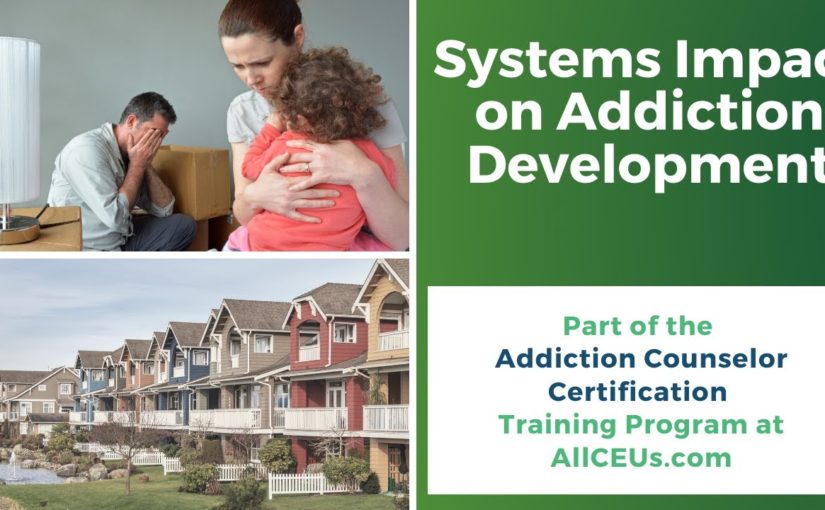
 Is gonna pick up if you are in a household where you know you’re in college and
you’ve got four other roommates and all of your your other roommates tend to be
negative and naysayers you’re either probably going to move or you may that
might start wearing off on you a little bit likewise if they are you know all
kinds of go-getters that can wear off on you too so you know there’s going to be
an impact risk factor is peer and family reinforcement of negative or unhealthy
norms and expectations so if your family says you know people suck they’re
always going to take advantage of you what are you going to take away from
that and is that going to contribute to you probably having difficulties with
trusting and maybe developing depression possibly so we want to look at what kind
of messages is the peer group or family sending to the individual that may
contribute to the development of mood or anxiety disorders early sexual activity
among peers could communicate that well this is the norm so everybody’s doing it
ties to deviant peers and gang involvement you know especially at that
particular group there’s a lot of pressure to conform or there’s a
negative consequences family members who don’t spend much time together and this
could be because parents work a lot this could be because everybody’s you know
involved in all kinds of other stuff but they found that
when families are disengaged the parents tend to miss out on subtle cues when
families are disengaged even if they don’t have children in the mix that
there tends to be a weakening of those bonds supportive bonds so people
are at higher risk for development of depression and anxiety because they
don’t have that you know everybody’s behind me sort of feeling parents who
have trouble keeping track of youth can indicate that the youth may be at risk
for developing substance or more mood disorders lack of clear rules and
consequences you think about even just being at work when there’s a lack of
clear rules and consequences you don’t exactly know what you’re supposed to do
I know for me that creates doodles of anxiety I like manuals and to date
pretty much every job I’ve ever taken I’ve walked in and there hasn’t been a
manual and I’ve been like okay there must be a manual written and that’s been
my first thing now I’m kind of on the structured side so I don’t expect
everybody is that way but most of us tend to experience a little bit of
anxiety about failure about acceptance if we don’t know what’s expected so it’s
important whether it’s a family or a job situation to make sure there’s clear
rules and consequences you know what’s expected and what’s going to happen if
you mess up or if you don’t meet this expectation there also needs to be
consistent expectations and limits you know when people especially children but
a lot of us tested our limits when we were kids and even as adults you know I
know you know going back to working in organizations I would have staff who
would test limits and see how long they could go without turning in a progress
note before I’d be knocking on their door going paperwork it’s natural for
people to kind of test limits especially with stuff they don’t want to do stuff
that’s not rewarding family conflict and abuse can cause a high risk of depression
and anxiety whether adults or children I mean if there’s a
a lot of conflict and chaos it’s exhausting and it can cause a lot of
dysphoric emotions and loss of employment that’s kind of
self-explanatory protective factors close family relationships so as
clinicians we can encourage people to identify who they consider their family
it may not be their blood relatives or their family who are there for them
who can they call it 2:00 in the morning and how can they nurture those
relationships encourage people to develop relationships with peers that
are involved in pro-social activities like hiking or volunteering in the
community consistency of parenting is important in terms of producing children
who are who are stronger healthier more resilient encouraging education and
parents who are actively involved can help prevent future depression because
they’re creating children who can join the workforce and have that
individual capital to prevent depression and anxiety and cope with stress
positively and this is a family protective factor and a peer for
protective factor why because we learn from observation so if our peers cope
with stress positively by prayer or exercise or whatever it is they do and
our family has other positive ways of coping with stress and we’re going to
have a greater venue of stuff to choose from supportive relationships with
caring for adults beyond the immediate family is encouraged so we want
children to grow up being able to interact with teachers coaches with
you know Scout leaders whomever and start seeing that people outside of the
nuclear family are trustworthy sharing and family responsibilities including
chores and decision making and that’s true for children teenagers and even
adults you know if you’re living in the same household it
important that everybody feels like they have a say in what’s happening
and participates in the upkeep of the family environment and family
members are nurturing and support each other and this is one where I tend to
stop and I do a love languages little mini class to help people remember that
we don’t always experience nurturance in the same way so understanding one
another’s love language is really important to be able to nurture in a
way that’s meaningful to that other person peer and family interventions are
designed to identify norms goals and expectations in the family foster family
problem-solving skills so there’s not just one person always fixing it develop
structure and consistency within the family unit promote healthy
relationships and engage peers and family of choice in the recovery process
so if somebody’s already depressed we need to be able to hopefully engage
everybody that’s involved in this person’s immediate environment in
helping them move towards recovery and you know preferably not dragging them
back down so we want to engage them and make sure that people have a supportive
others school and work risk factors lack of clear expectations both academic or
performance-wise and behavioral lack of commitment or sense of belonging at
school or at work if you just kind of go and you feel like a number you punch in
punch out that may not make you feel appreciated which can contribute
to depression and you know just bad feelings high numbers of students
failing academically at school and work translates to high amounts of
turnover if you never know who’s going to get laid off it increases stress and
anxiety and parents and community members who are not actively involved
in keeping kids in school and helping make sure that the workforce workforce
is strong but we want to make sure that people have access to how
when it’s needed we want to make sure that people have access to tutoring in
school if they need it to prevent failing school they have access to
transportation to get to work now those are things those are meta concepts that
are more on the community level but it’s important that as a community member you
know we look at different things that we may be able to participate in advocacy
and say you know it’s really important to get a bus system going I live out
about 30 miles east of Nashville and we must have the
the train that goes from my city out to Nashville so people have
access to more jobs so that was important for us to get past the City
Commission protective factors school and work positive attitudes gotta find a
reason why you’re doing this you know and sometimes it’s hard to find a reason
for algebra but we need to help kids find a reason for that we need to help
adults find a reason for why they’re going to work why are they doing what
they’re doing regular attendance shows you know it is associated with higher
mood less less risk of mood or addictive disorders because you’re able to get up
and do it and interface with people and get that social support hopefully from
your colleague’s high expectations are communicated effectively in setting
and positive social development is encouraged you know whether it’s at work
or at school, there are goals there are things you’ve got to accomplish there
are performance objectives but we also want to encourage morale and positive
social bonding whatever the setting having a positive instructional climate
again whether at work or school, I know we learn things when we’re on the
job we learn things and I don’t want people to feel like they’re having
difficulty like they’re stupid I want people to feel like anything that we
teach them as a challenge and something that may be beneficial down the road
leadership and decision-making opportunities are really important again
for students or employees to prevent burnout keep morale up reduce
anxiety and increase a sense of personal empower
and connection and active involvement for everybody is fostered and the school or
organization is responsive to the student’s needs making sure that in
school in the case of school they have access to tutoring resources it’s a safe
environment for them to be in and the children that are going to that school
have enough food in their bellies you know they can’t learn if they’re
hungry all the time workplace is a little bit different but we still need
to be responsive to people’s needs in terms of you know family requirements
whether they need to if they’re going back to school
shifting schedules a little bit we need to try to work with people instead of
being completely rigid and it’s my way or the highway when possible to
promote the best mental health characteristics of settings in which
relationships are often associated with the development of mood disorders and
addictive behaviors so we want to look at the characteristics of schools that are
they safe are they positive environments are they cheering squads or are they
places where people know they’re gonna go and get thrown under the bus
same thing with workplaces you know when you walk into a place you get most of
we get a sense and you’re either like oh this is a cool place to work or oh I
can’t wait til I can get out of here you know we want to go toward the
other end and neighborhoods when you go into a neighborhood – people take care
of their environment do they or do they have trash strewn all over their lawn
all of these things communicate how people feel about their environment and
generally how they feel about themselves and whether they have the energy to take
care of stuff or they just feel completely disenfranchised and don’t
care more about community risk factors no sense of
connection to the community neighborhood disorganization rapid changes high
unemployment a lack of strong social institutions lack of monitoring of youths
activities imbalanced media portrayals of safety health and appropriate
behavior misleading advertising and alcohol or drugs readily available
a lot of stuff we do we’re not going to be able to affect on the community level
so much but we’re gonna hit them real quick we want to improve the climate
process and policies within community schools and workplaces to make it safe and
promote positive health behaviors prevention strategies are designed to
reduce social isolation reduce and address stigma increase awareness of
local recovery models you know who’s out there that has recovered and can serve
as a role model improve economic and housing opportunities so people have a
house a safe roof over their head and they can you know earn money and feel
good about themselves increasing the accuracy and improving the positivity of
media messages and increasing physical and financial ability availability of
recovery so like I said I live in a little town so it’s nice that we have
a community mental health center here so people don’t have to rely on going into
Nashville but also making sure that services are financially available
whether you have a free clinic once a month or you know make sure you’ll you
take Medicaid but there are still a lot of people who have no insurance so where do
they go the socio-ecological model identifies
how the end the individual impacts and is impacted by not only his own
characteristics but also those of family peers community and culture prevention
takes the form of preventing the problem preventing the worsening of the problem and
preventing associated fallout like I said as clinicians a lot of what we’re
going to do is target the individual providing them with resiliency skills to deal
with some of this adversity that might be around them and to help them sort
through some of those media messages and go yeah
that’s not even true you know if I drink this vodka I’m not suddenly going to
have 14 supermodels hanging on me or whatever it is that’s being communicated
so encouraging people to be informed and Wylie consumers any change in the
the system will affect other parts of this system so if it’s a
positive change is probably going to have positive changes negative has
negative changes addressing addictive and mood disorder behaviors require a
the multi-pronged approach we need to look at the individual and you know provide
provide as many skills as possible there because that’s where we’re going to have
a lot of our impact especially in prevention but we also need to
realize that this person resides within a family you know whether they live
alone which sometimes is less problematic or they live in a household
with other people, we need to make sure that where they lay their heads at night
where they spend their non-working hours feel safe and is conducive to recovery
where they work or go to school also needs to feel safe and be conducive to
recovery and that’s part of the community so we need to kind of look at
these areas and if they aren’t safe or they don’t feel safe or aren’t conducive
to recovery, we need to help people how to figure out how they can fix that or
address it like I said they may not be able to move so what can you do to set
some boundaries to create as much safety as you can how can you do this and there
are a lot of different techniques that I’m sure you already have that you used
to help people but it’s important again not to just focus on the individual
because they don’t live in a bubble we need to look at everything right and are
Are there any questions now we have or I have added a Wednesday
class, so you don’t don’t have to come but if you have unlimited
membership same time same station Wednesday so Tuesday Wednesday and
Thursday we have a class from noon.
CST 1 p.m. EST 2 for an hour all righty I will talk to y’all maybe
tomorrow maybe on Thursday have a great day if you enjoy this podcast please like
and subscribe either in your podcast player or on YouTube you can attend and
participate in our live webinars with Doctor Snipes by subscribing at all CEUs
comm slash counselor toolbox this episode has been brought to you in part
by all CEUs com providing 24/7 multimedia continuing education and pre
certification training to counselors therapists and nurses since 2006 use
coupon code consular toolbox to get a 20% discount off your order this month.
As found on YouTube
I thought my anxiety disorder was for life… $49.⁰⁰ But I Discovered How Hundreds Of Former Anxiety Sufferers Melted Away Their Anxiety And Now Live Relaxed, Happy Lives – With No Trace Of Anxiety Or Depression At All!
http://flywait.anxiety4.hop.clickbank.net
We’ve seen so many people go anxiety-free that we have no hesitation in guaranteeing this program. So… If at any time within 60 days of you purchasing ‘Overthrowing Anxiety’, your anxiety hasn’t completely evaporated then you can have all your money back. No questions asked! You can do this for yourself today. You can start making a difference in your life right now. Click on the button below and you’ll receive your copy of Overthrowing Anxiety in just a few minutes. It’ll be one of the best decisions you’ve ever made – guaranteed!
http://flywait.anxiety4.hop.clickbank.net
Is gonna pick up if you are in a household where you know you’re in college and
you’ve got four other roommates and all of your your other roommates tend to be
negative and naysayers you’re either probably going to move or you may that
might start wearing off on you a little bit likewise if they are you know all
kinds of go-getters that can wear off on you too so you know there’s going to be
an impact risk factor is peer and family reinforcement of negative or unhealthy
norms and expectations so if your family says you know people suck they’re
always going to take advantage of you what are you going to take away from
that and is that going to contribute to you probably having difficulties with
trusting and maybe developing depression possibly so we want to look at what kind
of messages is the peer group or family sending to the individual that may
contribute to the development of mood or anxiety disorders early sexual activity
among peers could communicate that well this is the norm so everybody’s doing it
ties to deviant peers and gang involvement you know especially at that
particular group there’s a lot of pressure to conform or there’s a
negative consequences family members who don’t spend much time together and this
could be because parents work a lot this could be because everybody’s you know
involved in all kinds of other stuff but they found that
when families are disengaged the parents tend to miss out on subtle cues when
families are disengaged even if they don’t have children in the mix that
there tends to be a weakening of those bonds supportive bonds so people
are at higher risk for development of depression and anxiety because they
don’t have that you know everybody’s behind me sort of feeling parents who
have trouble keeping track of youth can indicate that the youth may be at risk
for developing substance or more mood disorders lack of clear rules and
consequences you think about even just being at work when there’s a lack of
clear rules and consequences you don’t exactly know what you’re supposed to do
I know for me that creates doodles of anxiety I like manuals and to date
pretty much every job I’ve ever taken I’ve walked in and there hasn’t been a
manual and I’ve been like okay there must be a manual written and that’s been
my first thing now I’m kind of on the structured side so I don’t expect
everybody is that way but most of us tend to experience a little bit of
anxiety about failure about acceptance if we don’t know what’s expected so it’s
important whether it’s a family or a job situation to make sure there’s clear
rules and consequences you know what’s expected and what’s going to happen if
you mess up or if you don’t meet this expectation there also needs to be
consistent expectations and limits you know when people especially children but
a lot of us tested our limits when we were kids and even as adults you know I
know you know going back to working in organizations I would have staff who
would test limits and see how long they could go without turning in a progress
note before I’d be knocking on their door going paperwork it’s natural for
people to kind of test limits especially with stuff they don’t want to do stuff
that’s not rewarding family conflict and abuse can cause a high risk of depression
and anxiety whether adults or children I mean if there’s a
a lot of conflict and chaos it’s exhausting and it can cause a lot of
dysphoric emotions and loss of employment that’s kind of
self-explanatory protective factors close family relationships so as
clinicians we can encourage people to identify who they consider their family
it may not be their blood relatives or their family who are there for them
who can they call it 2:00 in the morning and how can they nurture those
relationships encourage people to develop relationships with peers that
are involved in pro-social activities like hiking or volunteering in the
community consistency of parenting is important in terms of producing children
who are who are stronger healthier more resilient encouraging education and
parents who are actively involved can help prevent future depression because
they’re creating children who can join the workforce and have that
individual capital to prevent depression and anxiety and cope with stress
positively and this is a family protective factor and a peer for
protective factor why because we learn from observation so if our peers cope
with stress positively by prayer or exercise or whatever it is they do and
our family has other positive ways of coping with stress and we’re going to
have a greater venue of stuff to choose from supportive relationships with
caring for adults beyond the immediate family is encouraged so we want
children to grow up being able to interact with teachers coaches with
you know Scout leaders whomever and start seeing that people outside of the
nuclear family are trustworthy sharing and family responsibilities including
chores and decision making and that’s true for children teenagers and even
adults you know if you’re living in the same household it
important that everybody feels like they have a say in what’s happening
and participates in the upkeep of the family environment and family
members are nurturing and support each other and this is one where I tend to
stop and I do a love languages little mini class to help people remember that
we don’t always experience nurturance in the same way so understanding one
another’s love language is really important to be able to nurture in a
way that’s meaningful to that other person peer and family interventions are
designed to identify norms goals and expectations in the family foster family
problem-solving skills so there’s not just one person always fixing it develop
structure and consistency within the family unit promote healthy
relationships and engage peers and family of choice in the recovery process
so if somebody’s already depressed we need to be able to hopefully engage
everybody that’s involved in this person’s immediate environment in
helping them move towards recovery and you know preferably not dragging them
back down so we want to engage them and make sure that people have a supportive
others school and work risk factors lack of clear expectations both academic or
performance-wise and behavioral lack of commitment or sense of belonging at
school or at work if you just kind of go and you feel like a number you punch in
punch out that may not make you feel appreciated which can contribute
to depression and you know just bad feelings high numbers of students
failing academically at school and work translates to high amounts of
turnover if you never know who’s going to get laid off it increases stress and
anxiety and parents and community members who are not actively involved
in keeping kids in school and helping make sure that the workforce workforce
is strong but we want to make sure that people have access to how
when it’s needed we want to make sure that people have access to tutoring in
school if they need it to prevent failing school they have access to
transportation to get to work now those are things those are meta concepts that
are more on the community level but it’s important that as a community member you
know we look at different things that we may be able to participate in advocacy
and say you know it’s really important to get a bus system going I live out
about 30 miles east of Nashville and we must have the
the train that goes from my city out to Nashville so people have
access to more jobs so that was important for us to get past the City
Commission protective factors school and work positive attitudes gotta find a
reason why you’re doing this you know and sometimes it’s hard to find a reason
for algebra but we need to help kids find a reason for that we need to help
adults find a reason for why they’re going to work why are they doing what
they’re doing regular attendance shows you know it is associated with higher
mood less less risk of mood or addictive disorders because you’re able to get up
and do it and interface with people and get that social support hopefully from
your colleague’s high expectations are communicated effectively in setting
and positive social development is encouraged you know whether it’s at work
or at school, there are goals there are things you’ve got to accomplish there
are performance objectives but we also want to encourage morale and positive
social bonding whatever the setting having a positive instructional climate
again whether at work or school, I know we learn things when we’re on the
job we learn things and I don’t want people to feel like they’re having
difficulty like they’re stupid I want people to feel like anything that we
teach them as a challenge and something that may be beneficial down the road
leadership and decision-making opportunities are really important again
for students or employees to prevent burnout keep morale up reduce
anxiety and increase a sense of personal empower
and connection and active involvement for everybody is fostered and the school or
organization is responsive to the student’s needs making sure that in
school in the case of school they have access to tutoring resources it’s a safe
environment for them to be in and the children that are going to that school
have enough food in their bellies you know they can’t learn if they’re
hungry all the time workplace is a little bit different but we still need
to be responsive to people’s needs in terms of you know family requirements
whether they need to if they’re going back to school
shifting schedules a little bit we need to try to work with people instead of
being completely rigid and it’s my way or the highway when possible to
promote the best mental health characteristics of settings in which
relationships are often associated with the development of mood disorders and
addictive behaviors so we want to look at the characteristics of schools that are
they safe are they positive environments are they cheering squads or are they
places where people know they’re gonna go and get thrown under the bus
same thing with workplaces you know when you walk into a place you get most of
we get a sense and you’re either like oh this is a cool place to work or oh I
can’t wait til I can get out of here you know we want to go toward the
other end and neighborhoods when you go into a neighborhood – people take care
of their environment do they or do they have trash strewn all over their lawn
all of these things communicate how people feel about their environment and
generally how they feel about themselves and whether they have the energy to take
care of stuff or they just feel completely disenfranchised and don’t
care more about community risk factors no sense of
connection to the community neighborhood disorganization rapid changes high
unemployment a lack of strong social institutions lack of monitoring of youths
activities imbalanced media portrayals of safety health and appropriate
behavior misleading advertising and alcohol or drugs readily available
a lot of stuff we do we’re not going to be able to affect on the community level
so much but we’re gonna hit them real quick we want to improve the climate
process and policies within community schools and workplaces to make it safe and
promote positive health behaviors prevention strategies are designed to
reduce social isolation reduce and address stigma increase awareness of
local recovery models you know who’s out there that has recovered and can serve
as a role model improve economic and housing opportunities so people have a
house a safe roof over their head and they can you know earn money and feel
good about themselves increasing the accuracy and improving the positivity of
media messages and increasing physical and financial ability availability of
recovery so like I said I live in a little town so it’s nice that we have
a community mental health center here so people don’t have to rely on going into
Nashville but also making sure that services are financially available
whether you have a free clinic once a month or you know make sure you’ll you
take Medicaid but there are still a lot of people who have no insurance so where do
they go the socio-ecological model identifies
how the end the individual impacts and is impacted by not only his own
characteristics but also those of family peers community and culture prevention
takes the form of preventing the problem preventing the worsening of the problem and
preventing associated fallout like I said as clinicians a lot of what we’re
going to do is target the individual providing them with resiliency skills to deal
with some of this adversity that might be around them and to help them sort
through some of those media messages and go yeah
that’s not even true you know if I drink this vodka I’m not suddenly going to
have 14 supermodels hanging on me or whatever it is that’s being communicated
so encouraging people to be informed and Wylie consumers any change in the
the system will affect other parts of this system so if it’s a
positive change is probably going to have positive changes negative has
negative changes addressing addictive and mood disorder behaviors require a
the multi-pronged approach we need to look at the individual and you know provide
provide as many skills as possible there because that’s where we’re going to have
a lot of our impact especially in prevention but we also need to
realize that this person resides within a family you know whether they live
alone which sometimes is less problematic or they live in a household
with other people, we need to make sure that where they lay their heads at night
where they spend their non-working hours feel safe and is conducive to recovery
where they work or go to school also needs to feel safe and be conducive to
recovery and that’s part of the community so we need to kind of look at
these areas and if they aren’t safe or they don’t feel safe or aren’t conducive
to recovery, we need to help people how to figure out how they can fix that or
address it like I said they may not be able to move so what can you do to set
some boundaries to create as much safety as you can how can you do this and there
are a lot of different techniques that I’m sure you already have that you used
to help people but it’s important again not to just focus on the individual
because they don’t live in a bubble we need to look at everything right and are
Are there any questions now we have or I have added a Wednesday
class, so you don’t don’t have to come but if you have unlimited
membership same time same station Wednesday so Tuesday Wednesday and
Thursday we have a class from noon.
CST 1 p.m. EST 2 for an hour all righty I will talk to y’all maybe
tomorrow maybe on Thursday have a great day if you enjoy this podcast please like
and subscribe either in your podcast player or on YouTube you can attend and
participate in our live webinars with Doctor Snipes by subscribing at all CEUs
comm slash counselor toolbox this episode has been brought to you in part
by all CEUs com providing 24/7 multimedia continuing education and pre
certification training to counselors therapists and nurses since 2006 use
coupon code consular toolbox to get a 20% discount off your order this month.
As found on YouTube
I thought my anxiety disorder was for life… $49.⁰⁰ But I Discovered How Hundreds Of Former Anxiety Sufferers Melted Away Their Anxiety And Now Live Relaxed, Happy Lives – With No Trace Of Anxiety Or Depression At All!
http://flywait.anxiety4.hop.clickbank.net
We’ve seen so many people go anxiety-free that we have no hesitation in guaranteeing this program. So… If at any time within 60 days of you purchasing ‘Overthrowing Anxiety’, your anxiety hasn’t completely evaporated then you can have all your money back. No questions asked! You can do this for yourself today. You can start making a difference in your life right now. Click on the button below and you’ll receive your copy of Overthrowing Anxiety in just a few minutes. It’ll be one of the best decisions you’ve ever made – guaranteed!
http://flywait.anxiety4.hop.clickbank.net




 The Market Week
Sign Up For The Free Newsletter
No nonsense, no spam, unsubscribe anytime
You can unsubscribe at any time. Read our privacy policy.
Financial disclaimer: The Market Week is a general interest newsletter that is not liable for the suitability or future investment performance of any securities or strategies discussed. Readers are advised that the material contained herein should be used solely for informational purposes. As a financial newsletter publisher of general and regular circulation, we cannot tender individual investment advice. Read our full disclaimer.
The Market Week
Sign Up For The Free Newsletter
No nonsense, no spam, unsubscribe anytime
You can unsubscribe at any time. Read our privacy policy.
Financial disclaimer: The Market Week is a general interest newsletter that is not liable for the suitability or future investment performance of any securities or strategies discussed. Readers are advised that the material contained herein should be used solely for informational purposes. As a financial newsletter publisher of general and regular circulation, we cannot tender individual investment advice. Read our full disclaimer.
































 Snipes by subscribing
at all CEUs comm slash counselor toolbox, this episode has been brought to you in part by all
CEUs calmly provide 24/7 multimedia continuing education and pre-certification training to
counselors therapists and nurses since 2006 have used coupon code consular toolbox to get
a 20% discount on your order this month.
Snipes by subscribing
at all CEUs comm slash counselor toolbox, this episode has been brought to you in part by all
CEUs calmly provide 24/7 multimedia continuing education and pre-certification training to
counselors therapists and nurses since 2006 have used coupon code consular toolbox to get
a 20% discount on your order this month.





















 So you know focus on what the person has to say and what their heart has to say to engage, and you know likewise, you may not be written off the pages of Vogue either, but try to present yourself well, try to you know, dress appropriately Don’t show up all disheveled and smelly clothes like looking like you haven’t bathed in a week that that’s not helpful so make sure that you’re presenting your best face and you’re dealing with whatever face the client brings And still trying to build that engagement remember the way a client presents.
This tells us a lot about what’s contributing to their presenting issues: poor social skills, and ADHD pain.
You know there are a variety of things that can contribute to depression, anxiety, and substance use. So try to look at it from that way, even if it’s not your ideal client understand what’s causing this person to be negative and just argumentative and frustrating try to get under there and figure it out.
Why is this person so unhappy? What’s motivating is that first impressions impact engagement, so your professional presentation is promptly courteous and smooth handling paperwork.
If you walk in there with 15 sheets of paper – and you’re shuffling them around and it seems like you, don’t know what you’re doing.
You’re like just a second.
I know I had that form around here somewhere, they’re not going to feel very confident in anything.
You have to say so and put on a good first impression.
Put it together and make sure your paperwork is put together ahead of time.
If you have an electronic medical record, make sure you know how to use it because it’s disturbing to people, even though it happens when you’re, using an electronic medical health record to do a screening and you get stuck and you’ve got To call somebody else in to help you figure out how to get on the next screen make sure the environment is calm, clean and comfortable, not too formal or informal like we talked about it, avoids interruptions and provides the appropriate level of privacy.
You don’t want clients sitting in the waiting room being able to hear other clients that are in the therapy, rooms or screening rooms.
If you’re doing screenings, you may not even be in an office, you may be out at a festival or something so make sure that you’ve got. You know little pull-around screens or something, if appropriate, to give people privacy other people, shouldn’t be hearing their responses to what you are asking them, even if it’s, you know like I said, even if it’s at a Workplace festival or something other people should not hear their answers.
So how can you give them privacy if there’s, no way to do that where they can have auditory privacy put as much as possible on check sheets and forms that they can fill out? And then you can point to something and go so help me understand your answer to this right here.
Most of the time you want to try to do a screening in a private room.
In the initial interview you’re, developing trust and rapport so be empathetic.
They’re nervous, probably or they don’t want to be there or maybe they do want to be there and they’re, just hoping that you can help paraphrase that to them whatever vibe you’re getting off of them, paraphrase that and work With it convey warmth and respect and explores the clients, strengths, and skills, you know you’ve been dealing with this depression or this addiction for a long time.
I’m wondering how you’ve survived until now.
What has helped you deal with it? And keep on keeping on facilitating the clients, understanding the rationale, purpose, and procedures of the screening and assessment exploring the clients, problems, and expectations regarding treatment and recovery, and determining whether a further assessment is needed.
That’s your screening.
So the definition of screening is the process by which the counselor, client, and significant others, when possible, review the current situation, symptoms, and collateral information to determine the probability of a problem.
So we’re going to sit down and we’re going to go okay. What brings you here today? What makes you think you got a problem, you know, and then we’re going to start asking questions or using instruments to try to determine whether we think that there’s a probability that that problem exists screaming is used by all types of Human Service Personnel to determine eligibility and appropriateness of services and needed referrals, so it may be used by a physician by a nurse by a counselor by a caseworker to determine how can we best help this person achieve their goals and their maximum quality of life? It’s not unusual for caseworkers at the Department of Children and Families.
If people are coming in to get their food stamps or EBT that month, or they’re enrolling in the process to do a screening to determine how can we best help this person? You know be able to start earning more money, you know, maybe they just need a better job, or maybe they’re not able to maintain employment because their depression is so oppressive.
So you can see where screening may be used in a lot of different systems and situations to help people figure out how to help their customers.
Screening determines the immediacy of the need.
You know you could be doing a screening with somebody who’s like on the fence, or they don’t think they’ve got a problem and it you know there or their problem is minor, so the immediacy may not be great or you could Be screening somebody who is you know heavily intoxicated was just kicked out of his house is facing three DUIs.
You know they have a much more immediate need for their safety as well as, hopefully, they’re.
More motivated screening needs to be a trance process.
We don’t want to sit there with a clipboard and be asking questions and scribbling things down and going uh huh.
Well, I think you need to go for an assessment that’s not transparent.
The clients like, where did you come up with that I usually use screening instruments, and I talk with people when I’m writing things down. I tell them at the end.
If you want to see anything I wrote down, I would encourage you to know I don’t write well, and I’ve got poor penmanship, but I encourage you to read what I wrote and we’re going to talk about these instruments after you Take them so you know you know why were we asking these particular questions? What does it mean to me as a therapist doing your screening, so they understand how you’re arriving at your conclusions?
Screening does require informed consent.
You know it.
Doesn’t have to be a big thing, but it does have to happen before you start screening somebody you need to go.
You know I’d like to screen you for depression or anxiety, or this is a wellness screening that your agency is offered, but have them ideally have them sign a sheet acknowledging that they know that they’re being screened for whatever and screening identifies Early warning signs and helps provide early intervention, services and resources, so you know think about high blood pressure or diabetes or any of those physical things doctor screens for that regularly, and if they see that there might be a problem creeping in, they can do something right.
Then, to keep it from becoming a full-blown problem.
Mental health screening is the same.
We notice people are under a lot of stress.
We know that that’s probably going to wear them out after a while, and it might lead to depression. So we can start helping them, develop stress management skills, for example.
They may not need to go to treatment, maybe they need to go to psychoeducation and learn about stress management, or maybe you’ve got a book.
You can let them read or something.
But screening is a method of determining what the person needs.
Screening is the first opportunity to engage the client in the therapeutic relationship and treatment process, sometimes based on observations or other circumstances.
People may be referred directly for assessment, for example, if people come into the detoxification unit we kind of bypass screening.
We know there’s a problem and jump straight into assessment, so screening doesn’t always happen, but a lot of times.
It does because of that referral source – you know if you’re an Assessor that person came from somewhere.
You know their lawyer could have screened them.
Their doctor could have screened them whatever, but somebody along the way, probably screen them to determine yeah. You probably need to go over to this facility and talk to an Assessor of the clients.
Internal motivation is the primary reason for engaging in treatment.
So if they’re there because their wife told them they had to be or their boss or the courts that got them there, but to get them actually engaged in treatment and not just going through the motions they have to have internal motivation.
There has to be something in it for them, and that’s, what we want to work on developing throughout the whole process, help them see how this benefits them, what’s in it for them, how can it help them accomplish and get closer to their goals for their life, internal motivation may be fleeting, so rapid engagement is vital.
If you see a spark of interest or a spark of willingness, we kind of need to pounce on that spark and go alright.
It seems like you know you want to get on with this because you’re sick and tired of being sick and tired.
So let’s get you enrolled.
Now, if you have to make an appointment for an assessment that’s six weeks out, you may lose the person.
You know that engagement doesn’t last for long.
The engagement lasts while they’re in your office, and then you know you got to have somebody else, pick it up and keep that momentum going. Screening should be brief.
You know twenty-thirty minutes you don’t want to have somebody in there for three hours, that’s the assessment conducted in a variety of settings by a range of professionals on persons deemed to be at risk.
Some things we do Universal screenings for like domestic violence, other things you may do selected screenings for – and it also depends on your setting and all that kind of thing.
But the take-home point is that screenings are conducted in a variety of settings, whether it be a Health Fair at an employer,’s, a doctor,’s office, sometimes churches will even set up wellness days and do screenings screening represents the first part of a Collaboration among the multidisciplinary team because the screener is going to say, okay, I think I’ve identified that this person probably has an issue with this and needs to be referred to assessment over here, but they also need help with housing and food and affording their Prescriptions, so the screener will kind of link them to other team members in the multidisciplinary team.
Screening needs to be sensitive to racial, cultural, socio, economic, and gender-related concerns, so make sure that you’re, culturally responsive and it needs to be developed from information gathered from multiple sources when possible.
When you’re doing a screening a lot of times, the only person you’ve got to do.
The screening is the person sitting right in front of you, but if you’ve got other information.
When I do screenings on people in the criminal justice system, I want to see their criminal records.
You know that gives me some objective.
Information on you know how many times have they been caught? Dui, whether or not they’ve been convicted? How many times have they been caught DUI, that gives me a little bit more information than just what that person is telling me if they’ve been involved with the Department of Children and Families. I want them to bring their case report, especially if they’ve got an open case going on.
Screening assesses signs and symptoms of intoxication and withdrawal.
Three key elements: we want to verify that the behavior deviates from the norm and rule out all non-drug related causes.
So if somebody is having difficulty focusing or they’re agitated, we want to rule out ADHD and schizophrenia and some other things that might cause that, to rule in, if you will stimulant abuse, for example, you want to verify that there.
This is not how they normally behave.
You know some people are agitated and a little bit more bouncy or fidgety or whatever you want to say most of the time.
If that’s how they are, then you know that’s how they are and it’s not a drug, wants to rule out the drug-related causes, including physical causes.
You know if they’re in chronic pain if you know etc.
There are a lot of reasons somebody could be excessively sleepy have difficulty concentrating be overly agitated.
There are a lot of things that use diagnostic procedures to determine the types of drugs being used. So in screening, we’re going to ask them what they’ve been using.
But ideally, you can also do an on-site drug screening.
You know having a pee in a cup and the on-site.
Screenings are not super reliable, but it gives you something to look at.
You know most cases, it’s anywhere between 60 and 70 percent reliability, which is why, if it comes up positive and the person says, I didn’t use that it needs to be sent off to a lab for mass spectrometry.
To determine what happened, because you can get false positives and you can get false negatives, they may have used something and it doesn’t show up on the test.
So you don’t want to just trust the on sites as being a hundred percent, but it is a good tool to identify whether the person is telling you the truth about how much or what their current, whether they’re currently using or not assess Clients, mental health and trauma history.
You’re not going to get deep into the weeds here, just ask them if they have a history of depression, anxiety, or abuse of any sort and move on to their safety or environmental needs.
Do they have a safe place to sleep? You know if they have an address, you know, do they feel safe in their home? Do they eat well, how’s their nutrition? Do they have any physical health needs that are not getting met? Do they have any other wraparound needs? If they’ve got kids, do they have access to childcare? Are they having problems with transportation? Are they able to afford the medications that they’re already prescribed, etc? So we want to ask them about some basic things like that, and then we’re going to assess the danger to themselves and others.
Are they talking about harming themselves or someone else? And we also want to ask if they’re thinking about hurting themselves or someone else. Screening methods include interviewing the clients and significant others using screening instruments and lab tests like urinalysis that we talked about signs of substance, use disorders or mental health issues.
We want to look for number one, the circumstances of contact.
If the person was referred by the court, then that’s a pretty good sign that there may be a substance use disorder going on if they’re referred because of a DUI.
For example, if they’re referred because of a fight they got into, but they weren’t using at the time their blood alcohol was zero.
We want to look maybe for mental health issues and things like intermittent explosive disorder.
You want to look at the clients, demeanor, and behavior.
Are they acting like they’re under the influence when they come in for the screening? Are they showing signs of acute intoxication or withdrawal? Are there any physical signs of drug use or self-injury? Needle injection marks, if they have a get frequent bloody noses, you know if they get bloody noses, while they’re in your office or if they have signs that they’ve been picking.
Those can be all physical signs of drug use.
Emaciation and malnutrition are also signed some drugs will cause the pupils to be dilated.
Other drugs will cause the pupils to be pinpointed. So you want to know what the signs of different drugs are for drugs of intoxication and different signs that people have been using, especially injection, but, like I said, sometimes, drugs will cause people to pick or itch, and that will show indicate to you that there might Be an underlying issue and information spontaneously offered by the client or significant others can give you information about whether there’s a substance, use or mental health issue, and sometimes the significant other.
Let me just kind of back up: there may be the significance the spouse brought the person in and when you go out to meet them you, the person, the person being interviewed.
Doesn’t want their spouse in there.
They want.
They want to go back by themselves, okay, that’s cool, you go out and meet the person and then, if you can, with permission, bring the spouse back after the screening to give them both the results, and at that point the significant other the spouse may Spontaneously say: oh well, why didn’t you tell them about? You know the DUI you had three years ago or whatever.
So sometimes spouses will just kind of blurt things out because they suspect that the significant other didn’t already say it during the interview.
So if you can get that person in a private place where they have an opportunity to say something wonderful but remember you know you do have to have the client’s permission.
Screening instruments can be developed by the agency or use standardized instruments.
The cage is a common one and you ask a person: have they tried to cut down unsuccessfully, do they feel annoyed when people talk to them about their substance use, do they feel guilty about the substances about using their substances and do they sometimes have to Use first thing: in the morning to kind of wake up we call it an eye opener if they say yes to one or more of those, there’s a chance that they may have a problem.
The gain is another tool that you can use, as is the Michigan alcohol screening test or the Sasi. So all of those are standardized instruments, and some of them cost money.
Others, like Kay, don’t, so it may depend on your agency and what kind of budget you’ve got.
What instruments you’re using any instruments you do use must detail what action should be taken based on received scores.
So if a person takes the cage – and they say yes to one but not any of the others, does that mean they should be sent for a referral if they say yes to two, when at what point should they be sent for a full assessment? You want to screen when screening for mental health you want to screen for acute symptoms such as hallucinations, delusions or depression or anxiety, suicidal thoughts and behaviors, and other mood and thought disturbances.
So you’re going to ask them about time, place, purpose, and person.
Do you know what time it is? Do you know where you are? Do you know why you’re here and do you know who I am you’re going to ask them about short and long-term memory if they can tell you about something from their childhood great, but you’re also going to ask them If they can tell you about what they had for lunch, another thing you want to assess or another way to assess short term memory is to tell them.
I’m going to tell you four words and I want I’m going to.
Ask you in a few minutes to recall those four words for me and then tell them four words: make them easy words like dog cat, bird, and fish.
You know not something hard to remember and then in five or ten minutes.
Ask them what were the four words I told you and see if they can remember you’re going to ask them about prior involvement in mental health treatment. What worked and what didn’t if they have been in treatment? What prescription medications do they use, and this includes all prescriptions because physical health prescriptions can have mental health side effects? Ask them about recent traumas again, don’t get into it, but ask them if they’ve been victimized or experienced any sort of abuse and a family history of mental illness.
If they have a family history of mental illness, the chances of them developing mental illness are a little bit greater.
When screening for mental health, you’re going to use the modified mini screen, the Mental Status exam, the mini Mental Status exam.
The brief symptom inventory, a brief psychiatric rating scale, or the symptom checklist 9 t r.
So those are the ones that you’re, typically going to use a lot of times.
They’re already in your electronic medical record, so you’re not going to have to figure out what to use in terms of you know, knowing what the instruments are for certification and testing purposes.
These are the six that you want to be aware of.
So you can google each one of them and find out more about what each screening test can provide.
Your screening is the initial contact to decide if a person may need a more in-depth assessment.
Screening is brief but requires the person to be engaged in the process to get an accurate result. How well the person is engaged in the screening process is a direct predictor of whether he or she will continue in the process.
If you enjoy this podcast, please like and subscribe either in your podcast player or on YouTube, you can attend and participate in our live webinars with doctor Snipes by subscribing at all CEUs comm slash counselor toolbox.
This episode has been brought to you in part by all CEUs com providing 24 7 multimedia, continuing education, and pre-certification; training to counselors therapists, and nurses, since 2006 use coupon code consular toolbox to get a 20 discount off your order.
This month,
So you know focus on what the person has to say and what their heart has to say to engage, and you know likewise, you may not be written off the pages of Vogue either, but try to present yourself well, try to you know, dress appropriately Don’t show up all disheveled and smelly clothes like looking like you haven’t bathed in a week that that’s not helpful so make sure that you’re presenting your best face and you’re dealing with whatever face the client brings And still trying to build that engagement remember the way a client presents.
This tells us a lot about what’s contributing to their presenting issues: poor social skills, and ADHD pain.
You know there are a variety of things that can contribute to depression, anxiety, and substance use. So try to look at it from that way, even if it’s not your ideal client understand what’s causing this person to be negative and just argumentative and frustrating try to get under there and figure it out.
Why is this person so unhappy? What’s motivating is that first impressions impact engagement, so your professional presentation is promptly courteous and smooth handling paperwork.
If you walk in there with 15 sheets of paper – and you’re shuffling them around and it seems like you, don’t know what you’re doing.
You’re like just a second.
I know I had that form around here somewhere, they’re not going to feel very confident in anything.
You have to say so and put on a good first impression.
Put it together and make sure your paperwork is put together ahead of time.
If you have an electronic medical record, make sure you know how to use it because it’s disturbing to people, even though it happens when you’re, using an electronic medical health record to do a screening and you get stuck and you’ve got To call somebody else in to help you figure out how to get on the next screen make sure the environment is calm, clean and comfortable, not too formal or informal like we talked about it, avoids interruptions and provides the appropriate level of privacy.
You don’t want clients sitting in the waiting room being able to hear other clients that are in the therapy, rooms or screening rooms.
If you’re doing screenings, you may not even be in an office, you may be out at a festival or something so make sure that you’ve got. You know little pull-around screens or something, if appropriate, to give people privacy other people, shouldn’t be hearing their responses to what you are asking them, even if it’s, you know like I said, even if it’s at a Workplace festival or something other people should not hear their answers.
So how can you give them privacy if there’s, no way to do that where they can have auditory privacy put as much as possible on check sheets and forms that they can fill out? And then you can point to something and go so help me understand your answer to this right here.
Most of the time you want to try to do a screening in a private room.
In the initial interview you’re, developing trust and rapport so be empathetic.
They’re nervous, probably or they don’t want to be there or maybe they do want to be there and they’re, just hoping that you can help paraphrase that to them whatever vibe you’re getting off of them, paraphrase that and work With it convey warmth and respect and explores the clients, strengths, and skills, you know you’ve been dealing with this depression or this addiction for a long time.
I’m wondering how you’ve survived until now.
What has helped you deal with it? And keep on keeping on facilitating the clients, understanding the rationale, purpose, and procedures of the screening and assessment exploring the clients, problems, and expectations regarding treatment and recovery, and determining whether a further assessment is needed.
That’s your screening.
So the definition of screening is the process by which the counselor, client, and significant others, when possible, review the current situation, symptoms, and collateral information to determine the probability of a problem.
So we’re going to sit down and we’re going to go okay. What brings you here today? What makes you think you got a problem, you know, and then we’re going to start asking questions or using instruments to try to determine whether we think that there’s a probability that that problem exists screaming is used by all types of Human Service Personnel to determine eligibility and appropriateness of services and needed referrals, so it may be used by a physician by a nurse by a counselor by a caseworker to determine how can we best help this person achieve their goals and their maximum quality of life? It’s not unusual for caseworkers at the Department of Children and Families.
If people are coming in to get their food stamps or EBT that month, or they’re enrolling in the process to do a screening to determine how can we best help this person? You know be able to start earning more money, you know, maybe they just need a better job, or maybe they’re not able to maintain employment because their depression is so oppressive.
So you can see where screening may be used in a lot of different systems and situations to help people figure out how to help their customers.
Screening determines the immediacy of the need.
You know you could be doing a screening with somebody who’s like on the fence, or they don’t think they’ve got a problem and it you know there or their problem is minor, so the immediacy may not be great or you could Be screening somebody who is you know heavily intoxicated was just kicked out of his house is facing three DUIs.
You know they have a much more immediate need for their safety as well as, hopefully, they’re.
More motivated screening needs to be a trance process.
We don’t want to sit there with a clipboard and be asking questions and scribbling things down and going uh huh.
Well, I think you need to go for an assessment that’s not transparent.
The clients like, where did you come up with that I usually use screening instruments, and I talk with people when I’m writing things down. I tell them at the end.
If you want to see anything I wrote down, I would encourage you to know I don’t write well, and I’ve got poor penmanship, but I encourage you to read what I wrote and we’re going to talk about these instruments after you Take them so you know you know why were we asking these particular questions? What does it mean to me as a therapist doing your screening, so they understand how you’re arriving at your conclusions?
Screening does require informed consent.
You know it.
Doesn’t have to be a big thing, but it does have to happen before you start screening somebody you need to go.
You know I’d like to screen you for depression or anxiety, or this is a wellness screening that your agency is offered, but have them ideally have them sign a sheet acknowledging that they know that they’re being screened for whatever and screening identifies Early warning signs and helps provide early intervention, services and resources, so you know think about high blood pressure or diabetes or any of those physical things doctor screens for that regularly, and if they see that there might be a problem creeping in, they can do something right.
Then, to keep it from becoming a full-blown problem.
Mental health screening is the same.
We notice people are under a lot of stress.
We know that that’s probably going to wear them out after a while, and it might lead to depression. So we can start helping them, develop stress management skills, for example.
They may not need to go to treatment, maybe they need to go to psychoeducation and learn about stress management, or maybe you’ve got a book.
You can let them read or something.
But screening is a method of determining what the person needs.
Screening is the first opportunity to engage the client in the therapeutic relationship and treatment process, sometimes based on observations or other circumstances.
People may be referred directly for assessment, for example, if people come into the detoxification unit we kind of bypass screening.
We know there’s a problem and jump straight into assessment, so screening doesn’t always happen, but a lot of times.
It does because of that referral source – you know if you’re an Assessor that person came from somewhere.
You know their lawyer could have screened them.
Their doctor could have screened them whatever, but somebody along the way, probably screen them to determine yeah. You probably need to go over to this facility and talk to an Assessor of the clients.
Internal motivation is the primary reason for engaging in treatment.
So if they’re there because their wife told them they had to be or their boss or the courts that got them there, but to get them actually engaged in treatment and not just going through the motions they have to have internal motivation.
There has to be something in it for them, and that’s, what we want to work on developing throughout the whole process, help them see how this benefits them, what’s in it for them, how can it help them accomplish and get closer to their goals for their life, internal motivation may be fleeting, so rapid engagement is vital.
If you see a spark of interest or a spark of willingness, we kind of need to pounce on that spark and go alright.
It seems like you know you want to get on with this because you’re sick and tired of being sick and tired.
So let’s get you enrolled.
Now, if you have to make an appointment for an assessment that’s six weeks out, you may lose the person.
You know that engagement doesn’t last for long.
The engagement lasts while they’re in your office, and then you know you got to have somebody else, pick it up and keep that momentum going. Screening should be brief.
You know twenty-thirty minutes you don’t want to have somebody in there for three hours, that’s the assessment conducted in a variety of settings by a range of professionals on persons deemed to be at risk.
Some things we do Universal screenings for like domestic violence, other things you may do selected screenings for – and it also depends on your setting and all that kind of thing.
But the take-home point is that screenings are conducted in a variety of settings, whether it be a Health Fair at an employer,’s, a doctor,’s office, sometimes churches will even set up wellness days and do screenings screening represents the first part of a Collaboration among the multidisciplinary team because the screener is going to say, okay, I think I’ve identified that this person probably has an issue with this and needs to be referred to assessment over here, but they also need help with housing and food and affording their Prescriptions, so the screener will kind of link them to other team members in the multidisciplinary team.
Screening needs to be sensitive to racial, cultural, socio, economic, and gender-related concerns, so make sure that you’re, culturally responsive and it needs to be developed from information gathered from multiple sources when possible.
When you’re doing a screening a lot of times, the only person you’ve got to do.
The screening is the person sitting right in front of you, but if you’ve got other information.
When I do screenings on people in the criminal justice system, I want to see their criminal records.
You know that gives me some objective.
Information on you know how many times have they been caught? Dui, whether or not they’ve been convicted? How many times have they been caught DUI, that gives me a little bit more information than just what that person is telling me if they’ve been involved with the Department of Children and Families. I want them to bring their case report, especially if they’ve got an open case going on.
Screening assesses signs and symptoms of intoxication and withdrawal.
Three key elements: we want to verify that the behavior deviates from the norm and rule out all non-drug related causes.
So if somebody is having difficulty focusing or they’re agitated, we want to rule out ADHD and schizophrenia and some other things that might cause that, to rule in, if you will stimulant abuse, for example, you want to verify that there.
This is not how they normally behave.
You know some people are agitated and a little bit more bouncy or fidgety or whatever you want to say most of the time.
If that’s how they are, then you know that’s how they are and it’s not a drug, wants to rule out the drug-related causes, including physical causes.
You know if they’re in chronic pain if you know etc.
There are a lot of reasons somebody could be excessively sleepy have difficulty concentrating be overly agitated.
There are a lot of things that use diagnostic procedures to determine the types of drugs being used. So in screening, we’re going to ask them what they’ve been using.
But ideally, you can also do an on-site drug screening.
You know having a pee in a cup and the on-site.
Screenings are not super reliable, but it gives you something to look at.
You know most cases, it’s anywhere between 60 and 70 percent reliability, which is why, if it comes up positive and the person says, I didn’t use that it needs to be sent off to a lab for mass spectrometry.
To determine what happened, because you can get false positives and you can get false negatives, they may have used something and it doesn’t show up on the test.
So you don’t want to just trust the on sites as being a hundred percent, but it is a good tool to identify whether the person is telling you the truth about how much or what their current, whether they’re currently using or not assess Clients, mental health and trauma history.
You’re not going to get deep into the weeds here, just ask them if they have a history of depression, anxiety, or abuse of any sort and move on to their safety or environmental needs.
Do they have a safe place to sleep? You know if they have an address, you know, do they feel safe in their home? Do they eat well, how’s their nutrition? Do they have any physical health needs that are not getting met? Do they have any other wraparound needs? If they’ve got kids, do they have access to childcare? Are they having problems with transportation? Are they able to afford the medications that they’re already prescribed, etc? So we want to ask them about some basic things like that, and then we’re going to assess the danger to themselves and others.
Are they talking about harming themselves or someone else? And we also want to ask if they’re thinking about hurting themselves or someone else. Screening methods include interviewing the clients and significant others using screening instruments and lab tests like urinalysis that we talked about signs of substance, use disorders or mental health issues.
We want to look for number one, the circumstances of contact.
If the person was referred by the court, then that’s a pretty good sign that there may be a substance use disorder going on if they’re referred because of a DUI.
For example, if they’re referred because of a fight they got into, but they weren’t using at the time their blood alcohol was zero.
We want to look maybe for mental health issues and things like intermittent explosive disorder.
You want to look at the clients, demeanor, and behavior.
Are they acting like they’re under the influence when they come in for the screening? Are they showing signs of acute intoxication or withdrawal? Are there any physical signs of drug use or self-injury? Needle injection marks, if they have a get frequent bloody noses, you know if they get bloody noses, while they’re in your office or if they have signs that they’ve been picking.
Those can be all physical signs of drug use.
Emaciation and malnutrition are also signed some drugs will cause the pupils to be dilated.
Other drugs will cause the pupils to be pinpointed. So you want to know what the signs of different drugs are for drugs of intoxication and different signs that people have been using, especially injection, but, like I said, sometimes, drugs will cause people to pick or itch, and that will show indicate to you that there might Be an underlying issue and information spontaneously offered by the client or significant others can give you information about whether there’s a substance, use or mental health issue, and sometimes the significant other.
Let me just kind of back up: there may be the significance the spouse brought the person in and when you go out to meet them you, the person, the person being interviewed.
Doesn’t want their spouse in there.
They want.
They want to go back by themselves, okay, that’s cool, you go out and meet the person and then, if you can, with permission, bring the spouse back after the screening to give them both the results, and at that point the significant other the spouse may Spontaneously say: oh well, why didn’t you tell them about? You know the DUI you had three years ago or whatever.
So sometimes spouses will just kind of blurt things out because they suspect that the significant other didn’t already say it during the interview.
So if you can get that person in a private place where they have an opportunity to say something wonderful but remember you know you do have to have the client’s permission.
Screening instruments can be developed by the agency or use standardized instruments.
The cage is a common one and you ask a person: have they tried to cut down unsuccessfully, do they feel annoyed when people talk to them about their substance use, do they feel guilty about the substances about using their substances and do they sometimes have to Use first thing: in the morning to kind of wake up we call it an eye opener if they say yes to one or more of those, there’s a chance that they may have a problem.
The gain is another tool that you can use, as is the Michigan alcohol screening test or the Sasi. So all of those are standardized instruments, and some of them cost money.
Others, like Kay, don’t, so it may depend on your agency and what kind of budget you’ve got.
What instruments you’re using any instruments you do use must detail what action should be taken based on received scores.
So if a person takes the cage – and they say yes to one but not any of the others, does that mean they should be sent for a referral if they say yes to two, when at what point should they be sent for a full assessment? You want to screen when screening for mental health you want to screen for acute symptoms such as hallucinations, delusions or depression or anxiety, suicidal thoughts and behaviors, and other mood and thought disturbances.
So you’re going to ask them about time, place, purpose, and person.
Do you know what time it is? Do you know where you are? Do you know why you’re here and do you know who I am you’re going to ask them about short and long-term memory if they can tell you about something from their childhood great, but you’re also going to ask them If they can tell you about what they had for lunch, another thing you want to assess or another way to assess short term memory is to tell them.
I’m going to tell you four words and I want I’m going to.
Ask you in a few minutes to recall those four words for me and then tell them four words: make them easy words like dog cat, bird, and fish.
You know not something hard to remember and then in five or ten minutes.
Ask them what were the four words I told you and see if they can remember you’re going to ask them about prior involvement in mental health treatment. What worked and what didn’t if they have been in treatment? What prescription medications do they use, and this includes all prescriptions because physical health prescriptions can have mental health side effects? Ask them about recent traumas again, don’t get into it, but ask them if they’ve been victimized or experienced any sort of abuse and a family history of mental illness.
If they have a family history of mental illness, the chances of them developing mental illness are a little bit greater.
When screening for mental health, you’re going to use the modified mini screen, the Mental Status exam, the mini Mental Status exam.
The brief symptom inventory, a brief psychiatric rating scale, or the symptom checklist 9 t r.
So those are the ones that you’re, typically going to use a lot of times.
They’re already in your electronic medical record, so you’re not going to have to figure out what to use in terms of you know, knowing what the instruments are for certification and testing purposes.
These are the six that you want to be aware of.
So you can google each one of them and find out more about what each screening test can provide.
Your screening is the initial contact to decide if a person may need a more in-depth assessment.
Screening is brief but requires the person to be engaged in the process to get an accurate result. How well the person is engaged in the screening process is a direct predictor of whether he or she will continue in the process.
If you enjoy this podcast, please like and subscribe either in your podcast player or on YouTube, you can attend and participate in our live webinars with doctor Snipes by subscribing at all CEUs comm slash counselor toolbox.
This episode has been brought to you in part by all CEUs com providing 24 7 multimedia, continuing education, and pre-certification; training to counselors therapists, and nurses, since 2006 use coupon code consular toolbox to get a 20 discount off your order.
This month,



 If you will, I don’t keep them in the house, but I will allow myself occasionally to buy a small snack-size pack of M Ms, when I’m out or I will get a regular-size pack and I’ll share it with my daughter, so I’m not restricting it.
I’m not saying I can never M. Ms again, I’m just not making it available to myself when I might have some unrestricted time, try to avoid buying a bunch of comfort foods and keeping them around the house, and when you’ve got kids when you’ve got family, it’s not entirely possible, usually to not have some of that stuff around but try to avoid having the things that you particularly used for comfort, because if it’s not readily available, then you’ve got to focus on guess what dealing with the emotions.
Instead of stuffing them with food, try not to go too long without eating.
Like I said earlier, if you go too long, then by the time you get to the food, your blood, Sugar,’s low and you’re just shoveling it as fast as you can initially distract.
If you know that you’re getting you’re eating and you’re, like I’m – really not hungry, but I want to eat, take a bath, take a walk, call a friend, heaven forbid get on Facebook.
Whatever it is, you can do to distract yourself for 10 or 15 minutes if, after 10 or 15 minutes, you’re still going, I want whatever it is, then you can decide what to do about it.
Then, most of the time when people stop and go, I’m not hungry.
Let me distract myself.
They get caught up in that distraction and before they know it, they’ve forgotten about the craving, and identify the emotions.
If you know that you’re not hungry, but you want to eat, then say: okay, what’s going on what’s going on with me? It doesn’t mean that the person is never going to eat when, when they’re upset, because a lot of people do, and is it the end of the world, probably not necessary if they can start reducing the frequency of times that they eat.
In response to emotional distress that’s, what we want, we want to progress, not perfect if it’s, depression, what’s causing them to feel hopeless or helpless right now, if it’s, stress, anxiety, or anger, remember our big kind of lump together stuff. What are they stressing out about? Do they feel like they’re overwhelmed? Are they afraid of failure, rejection, and loss of control of the unknown? We’ve gone through those things.
We want them to identify what’s going on with them, and then they can make better choices about how to deal with it.
So general coping helps them develop, alternate ways of coping with distress.
Distract we’ve, already kind of gone over that one.
I encourage people – and you know it’s – one of those DBT things – that a lot of therapists encourage their clients to keep a list of things.
They can do to distract themselves because it’s not always practical to get up and go on a walk.
If you’re at work or it’s, you know two in the morning.
So what else can you do to distract yourself? Talk it out with a friend with yourself with your dog? Sometimes you just got to get it out.
People who are more auditory will prefer talking it out as opposed to journaling it now.
If they talk it out with themselves, they can record it if they want to, or sometimes it’s just better to have a dialogue with themself. If it worked for Freud, it can work for other people journaling.
If your clients are inclined to journal, encourage them to write it down.
Sometimes just getting stuff out of your head and onto paper will help the feelings dissipate a little bit.
So you’re not mulling them over and obsessing over them and getting stuck in those thoughts and feelings.
Additionally, while you’re distracted talking it out or journaling, this is also your break.
Your stop between the urge and the behavior make a pro and con list of the de-stress, not the eating whatever it is, that’s stressing you out and how can you fix it or what are the pros of this situation and what are the downsides To this situation, encourage them to focus on the positive.
You know.
If something stressing you out at work, you know you’ve got a big meeting coming up or something you don’t want to do or what it is.
You can get stuck on focusing on that or you can focus on the positive that you do have a job.
That meeting only comes around once a month. You can it’s time you don’t have to be doing paperwork whatever the pros are for that person encourage them to focus on the positive.
If you’re distressed because of some kind of a failure or perceived failure, figure out what you learned from it, whether it was a relationship failure, or maybe you learned what not to do in a relationship anymore. Maybe you learned things that you may have ignored.
Maybe you learned what you should have done instead, but how can it be a learning opportunity, instead of somewhere to stay stuck and finally, if something’s making you upset if something’s causing anxiety, depression, hopelessness, helplessness, whatever the negative feeling figure out.
If it’s worth your energy to get stuck here, is it worth the turmoil? Is it worth you know having to pacify yourself with food or whatever? It is a lot of times people say you know what now it’s, just it’s, not even worth my effort.
It’s not worth moving me away from my goals, because my goal is to stop emotional eating.
My goal is to eat for hunger, so I can go to dinner with people and feel comfortable.
I can be at a party where there’s a buffet and not feel stressed out that I’m going to go and eat half the stuff on the buffet that’s my goal so is holding on to whatever this de-stress is getting me Closer to being able to do those things and generally the answer:’s no develop alternate ways of coping with the stress the ABCs, the a is the activating event.
What is stressing you out and what’s causing the de-stress C is the emotional reaction.
Angry depressed stressed, whatever be: are your behaviors? What behaviors or B are your beliefs? Sorry, what are the beliefs that are in there that may need to be addressed? What kind of things are you telling yourself, and, and how can you counter them? Cognitively eliminate your vulnerabilities.
You knew we couldn’t get through a presentation without talking about vulnerabilities. If someone is well-rested.
Well, the fed has a good social support network, not stretch timewise.
Then it will be easier to deal with stress or stressors when they come your way.
You’ll have more energy to deal with it, so there won’t be this overwhelming feeling of I just want to bury my head in a jar of peanut butter, be compassionate with yourself.
Some days, you know you’re, just going to feel anxious.
You’re going to feel depressed.
You’re going to get angry.
You can beat yourself up over it and you know a lot of people do.
Is that the best use of your energy or can you be compassionate? Can you learn from it? Can you give yourself a break and go? You know what I’m having a bad day today and that’s okay, I’m not going to unpack and stay here, but I’m not going to fight.
It either helps clients learn how to urge surf help. They understand that, just like a panic attack just like a wave just like a lot of other things in life, it will come, it will crest and it will go out again, so they can sort of identify where they are on the energy of that Urge other tools people can use close the kitchen once I have the kitchen cleaned and you know all the dishes are done and it looks pretty.
I hate going in there and finding dishes in the sink again now I’ve got teenagers, so we always have dishes in the sink.
But before I had children, you know at seven o’clock.
I finished all the dishes and closed the kitchen, and that would be enough motivation for me to not go in there and at least not use plates and stuff to eat.
So if we’re saying that we’re going to only eat using utensils plates and sitting and all that stuff that we already talked about, then once you close the kitchen, you’re not going back in, there turn off the light.
That also helps so you’re not being attracted to the pretty lights, and you know all the goodies that are in the kitchen to brush your teeth.
This is something my grandmother used to do and it works.
There’s some research behind it.
Minty flavors reduce our appetite.
So if you brush your teeth, you get all the other flavors out of your mouth and it reduces your urges to eat because it again it’s clean and fresh. And do you really want to brush your teeth again, and meditate, sometimes just getting in a space where you’re, not obsessing about anything, can help people get past that urge to self-soothe by eating a CT for emotional eating.
What am I feeling or thinking about what’s going on with me right now? What is important to me? So if I am thinking I want to eat, I want to you know just dive into this jar of peanut butter, and then I think about what’s important to me.
Is it important to me to get control of this? Is it important to me to you know, be able to fit into my clothes in six months or not? So what is it in? What way is controlling my eating habits and eliminating emotional eating important to me, and how does that get me closer to other things that are important to me, and what other things could I do? That would get me closer to my goals.
So if the goal is to have improved relationships, be able to feel more comfortable around food reduce the stress around going out to eat, and just around food in general, what else can you do when you are stressed out? Somebody also suggested that adding a blue light in the refrigerator decreases the appeal of foods, which is interesting because yellow red and orange, and browns, I think Pizza Hut – are all foods that increase people’s, hunger and desire to eat.
But blue is just a completely different primary color, and adding a blue hue seems like that would be effective, so cool thanks for that.
Little tidbit there holiday help, and you know we’re coming into the holidays.
So I’ve got to bring that up at every single glass and choose lower-calorie foods.
If you tend to get stressed out or caught up or mindlessly eat when you are at family gatherings.
Okay, you know cut yourself a break, know that that’s, probably going to happen, and fill up on the lower-calorie foods.
The carrot sticks the broccoli, the white meat, turkey, anything that’s available, that’s, not like sweet potato pie or brownies, keep water or low-calorie beverage. In your hand, if you’ve got your hand full, you can’t eat at the same time.
So you know if you walk around with a cup in your hand, it helps talk to people.
Hopefully, you don’t talk with your mouth open or talk with food in your mouth.
So if you’re talking to people, you’re not going to be as inclined to go and get something to eat because you’re wanting to stay engaged in that conversation.
Stay away from the buffet, especially if you know that it could get stressful, or maybe you know for me, I turn into a pumpkin at like 7 30 at night.
I get up at 4 00, but I turn into a pumpkin at 7, 30 and a lot of times holiday parties and those sorts of things are at eight, nine, o’clock at night, and you know I’ve already turned into a pumpkin.
So I know that if I go to those I’m going to be more likely to eat just to kind of stay away because I’m tired and it’s a bad habit.
It’s not because I’m hungry.
So I know I need to stay away from the buffet during those times we rehearse refusal skills.
If somebody says. Oh, you, I’ve got to try it by two.
This figure out how you’re going to address that ahead of time, because there’s generally probably a lot of really good foods, and you may really want to taste some, but sometimes people who emotionally eat know if they start eating.
If they start eating high-fat high calorie foods, they’re going to want to eat everything.
So if I start with one bite of a brownie, I’m going to want to eat every suit that’s on the table.
If they know that, then they may want to choose to not even go down that road at that juncture, encourage people to stay mindful of their distress meter before they go back for another helping and ask themselves, am I hungry? Am I just wanting to taste what’s here and how do I feel about that? Or am I eating just because I don’t want to be here and I’m bored and I want to fill the time? Have people keep an index card with their coping mantra and two reasons they don’t want to emotionally eat, so I need to be here.
I can do this whatever the mantra is that’s going to get them through the night, whatever they’re.
Telling themselves that it’s going to help them plow through and make the right choices, but also two reasons that they don’t want to eat, or they’re going to get around it.
Maybe they’ve got something at home that they can eat when they get home eating before they go to.
The party may also help prevent some grazing holidays, bringing out a lot of emotions in people.
Some people struggle with depression, anxiety, jealousy, grief, and anger. You know the whole gamut during this time and during this time there’s food everywhere I mean starting at Halloween when your kids bring home the Halloween candy, which usually lasts about a week in our house baby.
Oh, Halloween candy followed by getting ready for Thanksgiving, followed by doing all the baking or whatever you do, and the holiday parties coming up on the December holiday season.
There’s just food everywhere, so it’s really easy to cope.
If you will, with stress being overwhelmed with being tired by not eating enough healthy food by binging on unhealthy and soothing food if you will so it’s, encouraged it’s important to encourage people to stay.
Mindful of why they’re eating what they’re eating, when constantly bombarded with high-fat high carbohydrate foods, people are tempted to eat to feel calm yeah.
I challenge anybody to say that they’ve never eaten and go okay.
You know I’m.
Just focused on this right now I’m not thinking about everything out here and it feels good um.
I’m good now, good, probably not the word I should use, but it does help people distract themselves sometimes when they eat, especially those high-intensity foods.
You feel happier serotonins are released. Dopamine is released.
You’re, like oh, that’s good.
I want to do that again or you just feel numb.
You can get into a zone where you’re just eating and not caring about it’s.
Not that you’re feeling calm, you’re just not feeling anything, and a lot of times when people get into that zone.
They’re not tasting the food either.
They’re just kind of on autopilot for emotional eating, like most other escape behaviors.
Never addresses the underlying emotions and their causes, so we need to look at them.
Are you feeling anxious? Are you feeling jittery? Are you feeling depressed because your blood Sugar’s low, because you’re nutritionally deficient because you’re not getting enough sleep or because there’s something cognitive going on, or all of the above emotional eating, often results in physical issues like weight gain Poor sleep and reduced energy weight gain, are you know in and of itself a few pounds here and they’re not a big deal, but some people can start emotionally eating to feel better.
They gained a lot of weight. Then they start feeling less energetic.
It starts being harder to move around.
They get to the point where they are clinically obese.
Then they’re going.
I’m never going to take all this weight off.
They feel hopeless and helpless.
You see where this is going, so they eat some more.
Can cause poor sleep apnea, it’s hard to get it’s also hard to get comfortable.
Sometimes, if you’ve eaten a whole bunch of food right before you go to bed, you know your bellies are all full, and little you wake up.
The next morning and your belly are still awful, which means you probably didn’t, sleep very well the night before and emotional eating often results in reduced energy because the foods we binge on the foods we eat for self-soothing often end up causing a sugar Crash some people try to undo emotional eating by restricting other calories which can lead to nutritional deficits and more cravings. I had a girlfriend when I was in high school and you know think back to I don’t know if they still do it, but when we were in high school there was always some kind of candy sale going on and she would always forgo all Other food, so she could have two chocolate bars each day and you know we’re not going to get into the all the other issues surrounding only eating two chocolate bars.
But the point I’m making it right now is the fact she wasn’t getting protein.
She wasn’t getting it.
You know most of her vitamins and minerals and stuff that her body needed to make the neurotransmitter.
So she could feel happy and she was contributing to a sugar crash, but I also know that it’s common around the holidays for people to do this.
They’ll let go all day without eating because they know they’re going to a party tonight and there’s going to be a lot of really good food doing that once in a while.
Not a big deal doing that 10 or 15 times in a month could start to have problems.
Emotional eaters need to first find a way to stop before they eat, so, whether it’s writing in a journal or adding.
There are a lot of apps on your phone that you can put your food in, even if you’re, not writing about your emotions and your cravings and all that kind of stuff.
Sometimes it’s enough to make people stop before they reach. For the food – or you know, kind of an extreme way to go is to not keep pre-processed or prepackaged foods in the house.
So anything that you’re going to eat you’ve got to make second identify the underlying reason for your eating figure out.
Do I generally eat in response to and then address the thoughts and emotions leading to the urges?
So if you figure out the underlying emotions for your eating or your depression, then what thoughts are maintaining that depression? And how can you address it once you address the underlying issues, some of the emotional eating will go away, but some of its habits?
We’re going to have to break that habit and, throughout you know, the past couple of decades of working with people.
My experience has been the majority of the time people don’t want to hear.
Well, once you deal with your emotional issues, the emotional eating will go away now.
They’re there because they want to stop that behavior right now.
So, yes, we need to work on all the underlying issues but give them a tip or a trick or a tool whatever you want to call it to use before they walk out of your office after every single session.
That way, they have something else they can put in their toolbox and feel more empowered to have control over what’s going on with them. And what’s coming their way, having the knowledge of what and why is 80 of helping them get to the recovery point now, if there’s co-occurring or if the eating issues are more than just emotional eating, if there’s, the person meets The criteria for binge eating disorder, bulimia or anorexia.
There are a lot of other underlying issues they’re going to have to be dealt with.
So I don’t want to trivialize that, but I do want people to feel like they’ve got some hope over what’s going on.
Are there any questions? If you enjoy this podcast, please like and subscribe either in your podcast player or on YouTube, you can attend and participate in our live webinars with doctor Snipes by subscribing at all CEUs comm slash counselor toolbox.
This episode has been brought to you in part by all CEUs com providing 24 7 multimedia, continuing education, and pre-certification; training to counselors therapists, and nurses, since 2006 use coupon code consular toolbox to get a 20 discount off your order.
This month,
If you will, I don’t keep them in the house, but I will allow myself occasionally to buy a small snack-size pack of M Ms, when I’m out or I will get a regular-size pack and I’ll share it with my daughter, so I’m not restricting it.
I’m not saying I can never M. Ms again, I’m just not making it available to myself when I might have some unrestricted time, try to avoid buying a bunch of comfort foods and keeping them around the house, and when you’ve got kids when you’ve got family, it’s not entirely possible, usually to not have some of that stuff around but try to avoid having the things that you particularly used for comfort, because if it’s not readily available, then you’ve got to focus on guess what dealing with the emotions.
Instead of stuffing them with food, try not to go too long without eating.
Like I said earlier, if you go too long, then by the time you get to the food, your blood, Sugar,’s low and you’re just shoveling it as fast as you can initially distract.
If you know that you’re getting you’re eating and you’re, like I’m – really not hungry, but I want to eat, take a bath, take a walk, call a friend, heaven forbid get on Facebook.
Whatever it is, you can do to distract yourself for 10 or 15 minutes if, after 10 or 15 minutes, you’re still going, I want whatever it is, then you can decide what to do about it.
Then, most of the time when people stop and go, I’m not hungry.
Let me distract myself.
They get caught up in that distraction and before they know it, they’ve forgotten about the craving, and identify the emotions.
If you know that you’re not hungry, but you want to eat, then say: okay, what’s going on what’s going on with me? It doesn’t mean that the person is never going to eat when, when they’re upset, because a lot of people do, and is it the end of the world, probably not necessary if they can start reducing the frequency of times that they eat.
In response to emotional distress that’s, what we want, we want to progress, not perfect if it’s, depression, what’s causing them to feel hopeless or helpless right now, if it’s, stress, anxiety, or anger, remember our big kind of lump together stuff. What are they stressing out about? Do they feel like they’re overwhelmed? Are they afraid of failure, rejection, and loss of control of the unknown? We’ve gone through those things.
We want them to identify what’s going on with them, and then they can make better choices about how to deal with it.
So general coping helps them develop, alternate ways of coping with distress.
Distract we’ve, already kind of gone over that one.
I encourage people – and you know it’s – one of those DBT things – that a lot of therapists encourage their clients to keep a list of things.
They can do to distract themselves because it’s not always practical to get up and go on a walk.
If you’re at work or it’s, you know two in the morning.
So what else can you do to distract yourself? Talk it out with a friend with yourself with your dog? Sometimes you just got to get it out.
People who are more auditory will prefer talking it out as opposed to journaling it now.
If they talk it out with themselves, they can record it if they want to, or sometimes it’s just better to have a dialogue with themself. If it worked for Freud, it can work for other people journaling.
If your clients are inclined to journal, encourage them to write it down.
Sometimes just getting stuff out of your head and onto paper will help the feelings dissipate a little bit.
So you’re not mulling them over and obsessing over them and getting stuck in those thoughts and feelings.
Additionally, while you’re distracted talking it out or journaling, this is also your break.
Your stop between the urge and the behavior make a pro and con list of the de-stress, not the eating whatever it is, that’s stressing you out and how can you fix it or what are the pros of this situation and what are the downsides To this situation, encourage them to focus on the positive.
You know.
If something stressing you out at work, you know you’ve got a big meeting coming up or something you don’t want to do or what it is.
You can get stuck on focusing on that or you can focus on the positive that you do have a job.
That meeting only comes around once a month. You can it’s time you don’t have to be doing paperwork whatever the pros are for that person encourage them to focus on the positive.
If you’re distressed because of some kind of a failure or perceived failure, figure out what you learned from it, whether it was a relationship failure, or maybe you learned what not to do in a relationship anymore. Maybe you learned things that you may have ignored.
Maybe you learned what you should have done instead, but how can it be a learning opportunity, instead of somewhere to stay stuck and finally, if something’s making you upset if something’s causing anxiety, depression, hopelessness, helplessness, whatever the negative feeling figure out.
If it’s worth your energy to get stuck here, is it worth the turmoil? Is it worth you know having to pacify yourself with food or whatever? It is a lot of times people say you know what now it’s, just it’s, not even worth my effort.
It’s not worth moving me away from my goals, because my goal is to stop emotional eating.
My goal is to eat for hunger, so I can go to dinner with people and feel comfortable.
I can be at a party where there’s a buffet and not feel stressed out that I’m going to go and eat half the stuff on the buffet that’s my goal so is holding on to whatever this de-stress is getting me Closer to being able to do those things and generally the answer:’s no develop alternate ways of coping with the stress the ABCs, the a is the activating event.
What is stressing you out and what’s causing the de-stress C is the emotional reaction.
Angry depressed stressed, whatever be: are your behaviors? What behaviors or B are your beliefs? Sorry, what are the beliefs that are in there that may need to be addressed? What kind of things are you telling yourself, and, and how can you counter them? Cognitively eliminate your vulnerabilities.
You knew we couldn’t get through a presentation without talking about vulnerabilities. If someone is well-rested.
Well, the fed has a good social support network, not stretch timewise.
Then it will be easier to deal with stress or stressors when they come your way.
You’ll have more energy to deal with it, so there won’t be this overwhelming feeling of I just want to bury my head in a jar of peanut butter, be compassionate with yourself.
Some days, you know you’re, just going to feel anxious.
You’re going to feel depressed.
You’re going to get angry.
You can beat yourself up over it and you know a lot of people do.
Is that the best use of your energy or can you be compassionate? Can you learn from it? Can you give yourself a break and go? You know what I’m having a bad day today and that’s okay, I’m not going to unpack and stay here, but I’m not going to fight.
It either helps clients learn how to urge surf help. They understand that, just like a panic attack just like a wave just like a lot of other things in life, it will come, it will crest and it will go out again, so they can sort of identify where they are on the energy of that Urge other tools people can use close the kitchen once I have the kitchen cleaned and you know all the dishes are done and it looks pretty.
I hate going in there and finding dishes in the sink again now I’ve got teenagers, so we always have dishes in the sink.
But before I had children, you know at seven o’clock.
I finished all the dishes and closed the kitchen, and that would be enough motivation for me to not go in there and at least not use plates and stuff to eat.
So if we’re saying that we’re going to only eat using utensils plates and sitting and all that stuff that we already talked about, then once you close the kitchen, you’re not going back in, there turn off the light.
That also helps so you’re not being attracted to the pretty lights, and you know all the goodies that are in the kitchen to brush your teeth.
This is something my grandmother used to do and it works.
There’s some research behind it.
Minty flavors reduce our appetite.
So if you brush your teeth, you get all the other flavors out of your mouth and it reduces your urges to eat because it again it’s clean and fresh. And do you really want to brush your teeth again, and meditate, sometimes just getting in a space where you’re, not obsessing about anything, can help people get past that urge to self-soothe by eating a CT for emotional eating.
What am I feeling or thinking about what’s going on with me right now? What is important to me? So if I am thinking I want to eat, I want to you know just dive into this jar of peanut butter, and then I think about what’s important to me.
Is it important to me to get control of this? Is it important to me to you know, be able to fit into my clothes in six months or not? So what is it in? What way is controlling my eating habits and eliminating emotional eating important to me, and how does that get me closer to other things that are important to me, and what other things could I do? That would get me closer to my goals.
So if the goal is to have improved relationships, be able to feel more comfortable around food reduce the stress around going out to eat, and just around food in general, what else can you do when you are stressed out? Somebody also suggested that adding a blue light in the refrigerator decreases the appeal of foods, which is interesting because yellow red and orange, and browns, I think Pizza Hut – are all foods that increase people’s, hunger and desire to eat.
But blue is just a completely different primary color, and adding a blue hue seems like that would be effective, so cool thanks for that.
Little tidbit there holiday help, and you know we’re coming into the holidays.
So I’ve got to bring that up at every single glass and choose lower-calorie foods.
If you tend to get stressed out or caught up or mindlessly eat when you are at family gatherings.
Okay, you know cut yourself a break, know that that’s, probably going to happen, and fill up on the lower-calorie foods.
The carrot sticks the broccoli, the white meat, turkey, anything that’s available, that’s, not like sweet potato pie or brownies, keep water or low-calorie beverage. In your hand, if you’ve got your hand full, you can’t eat at the same time.
So you know if you walk around with a cup in your hand, it helps talk to people.
Hopefully, you don’t talk with your mouth open or talk with food in your mouth.
So if you’re talking to people, you’re not going to be as inclined to go and get something to eat because you’re wanting to stay engaged in that conversation.
Stay away from the buffet, especially if you know that it could get stressful, or maybe you know for me, I turn into a pumpkin at like 7 30 at night.
I get up at 4 00, but I turn into a pumpkin at 7, 30 and a lot of times holiday parties and those sorts of things are at eight, nine, o’clock at night, and you know I’ve already turned into a pumpkin.
So I know that if I go to those I’m going to be more likely to eat just to kind of stay away because I’m tired and it’s a bad habit.
It’s not because I’m hungry.
So I know I need to stay away from the buffet during those times we rehearse refusal skills.
If somebody says. Oh, you, I’ve got to try it by two.
This figure out how you’re going to address that ahead of time, because there’s generally probably a lot of really good foods, and you may really want to taste some, but sometimes people who emotionally eat know if they start eating.
If they start eating high-fat high calorie foods, they’re going to want to eat everything.
So if I start with one bite of a brownie, I’m going to want to eat every suit that’s on the table.
If they know that, then they may want to choose to not even go down that road at that juncture, encourage people to stay mindful of their distress meter before they go back for another helping and ask themselves, am I hungry? Am I just wanting to taste what’s here and how do I feel about that? Or am I eating just because I don’t want to be here and I’m bored and I want to fill the time? Have people keep an index card with their coping mantra and two reasons they don’t want to emotionally eat, so I need to be here.
I can do this whatever the mantra is that’s going to get them through the night, whatever they’re.
Telling themselves that it’s going to help them plow through and make the right choices, but also two reasons that they don’t want to eat, or they’re going to get around it.
Maybe they’ve got something at home that they can eat when they get home eating before they go to.
The party may also help prevent some grazing holidays, bringing out a lot of emotions in people.
Some people struggle with depression, anxiety, jealousy, grief, and anger. You know the whole gamut during this time and during this time there’s food everywhere I mean starting at Halloween when your kids bring home the Halloween candy, which usually lasts about a week in our house baby.
Oh, Halloween candy followed by getting ready for Thanksgiving, followed by doing all the baking or whatever you do, and the holiday parties coming up on the December holiday season.
There’s just food everywhere, so it’s really easy to cope.
If you will, with stress being overwhelmed with being tired by not eating enough healthy food by binging on unhealthy and soothing food if you will so it’s, encouraged it’s important to encourage people to stay.
Mindful of why they’re eating what they’re eating, when constantly bombarded with high-fat high carbohydrate foods, people are tempted to eat to feel calm yeah.
I challenge anybody to say that they’ve never eaten and go okay.
You know I’m.
Just focused on this right now I’m not thinking about everything out here and it feels good um.
I’m good now, good, probably not the word I should use, but it does help people distract themselves sometimes when they eat, especially those high-intensity foods.
You feel happier serotonins are released. Dopamine is released.
You’re, like oh, that’s good.
I want to do that again or you just feel numb.
You can get into a zone where you’re just eating and not caring about it’s.
Not that you’re feeling calm, you’re just not feeling anything, and a lot of times when people get into that zone.
They’re not tasting the food either.
They’re just kind of on autopilot for emotional eating, like most other escape behaviors.
Never addresses the underlying emotions and their causes, so we need to look at them.
Are you feeling anxious? Are you feeling jittery? Are you feeling depressed because your blood Sugar’s low, because you’re nutritionally deficient because you’re not getting enough sleep or because there’s something cognitive going on, or all of the above emotional eating, often results in physical issues like weight gain Poor sleep and reduced energy weight gain, are you know in and of itself a few pounds here and they’re not a big deal, but some people can start emotionally eating to feel better.
They gained a lot of weight. Then they start feeling less energetic.
It starts being harder to move around.
They get to the point where they are clinically obese.
Then they’re going.
I’m never going to take all this weight off.
They feel hopeless and helpless.
You see where this is going, so they eat some more.
Can cause poor sleep apnea, it’s hard to get it’s also hard to get comfortable.
Sometimes, if you’ve eaten a whole bunch of food right before you go to bed, you know your bellies are all full, and little you wake up.
The next morning and your belly are still awful, which means you probably didn’t, sleep very well the night before and emotional eating often results in reduced energy because the foods we binge on the foods we eat for self-soothing often end up causing a sugar Crash some people try to undo emotional eating by restricting other calories which can lead to nutritional deficits and more cravings. I had a girlfriend when I was in high school and you know think back to I don’t know if they still do it, but when we were in high school there was always some kind of candy sale going on and she would always forgo all Other food, so she could have two chocolate bars each day and you know we’re not going to get into the all the other issues surrounding only eating two chocolate bars.
But the point I’m making it right now is the fact she wasn’t getting protein.
She wasn’t getting it.
You know most of her vitamins and minerals and stuff that her body needed to make the neurotransmitter.
So she could feel happy and she was contributing to a sugar crash, but I also know that it’s common around the holidays for people to do this.
They’ll let go all day without eating because they know they’re going to a party tonight and there’s going to be a lot of really good food doing that once in a while.
Not a big deal doing that 10 or 15 times in a month could start to have problems.
Emotional eaters need to first find a way to stop before they eat, so, whether it’s writing in a journal or adding.
There are a lot of apps on your phone that you can put your food in, even if you’re, not writing about your emotions and your cravings and all that kind of stuff.
Sometimes it’s enough to make people stop before they reach. For the food – or you know, kind of an extreme way to go is to not keep pre-processed or prepackaged foods in the house.
So anything that you’re going to eat you’ve got to make second identify the underlying reason for your eating figure out.
Do I generally eat in response to and then address the thoughts and emotions leading to the urges?
So if you figure out the underlying emotions for your eating or your depression, then what thoughts are maintaining that depression? And how can you address it once you address the underlying issues, some of the emotional eating will go away, but some of its habits?
We’re going to have to break that habit and, throughout you know, the past couple of decades of working with people.
My experience has been the majority of the time people don’t want to hear.
Well, once you deal with your emotional issues, the emotional eating will go away now.
They’re there because they want to stop that behavior right now.
So, yes, we need to work on all the underlying issues but give them a tip or a trick or a tool whatever you want to call it to use before they walk out of your office after every single session.
That way, they have something else they can put in their toolbox and feel more empowered to have control over what’s going on with them. And what’s coming their way, having the knowledge of what and why is 80 of helping them get to the recovery point now, if there’s co-occurring or if the eating issues are more than just emotional eating, if there’s, the person meets The criteria for binge eating disorder, bulimia or anorexia.
There are a lot of other underlying issues they’re going to have to be dealt with.
So I don’t want to trivialize that, but I do want people to feel like they’ve got some hope over what’s going on.
Are there any questions? If you enjoy this podcast, please like and subscribe either in your podcast player or on YouTube, you can attend and participate in our live webinars with doctor Snipes by subscribing at all CEUs comm slash counselor toolbox.
This episode has been brought to you in part by all CEUs com providing 24 7 multimedia, continuing education, and pre-certification; training to counselors therapists, and nurses, since 2006 use coupon code consular toolbox to get a 20 discount off your order.
This month,