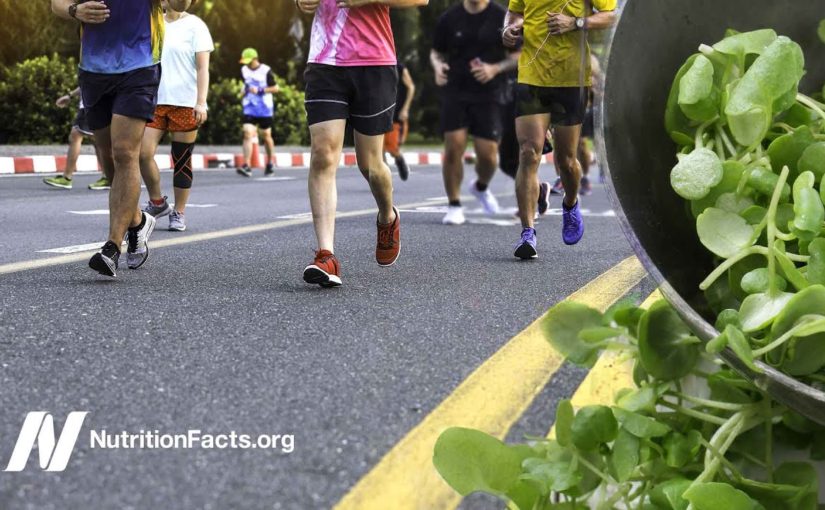
“Exercise Stress and Watercress” If oxidizing glucose to produce
energy for our bodies is so messy, creating free radicals the
way cars burn their fuel produces combustion by-products
out the exhaust, even if we’re just idling,
living our day-to-day lives, what if we rev up our lives and start
exercising, really start burning fuel? Then we create more free radicals,
more oxidative stress and so need to eat even more
antioxidant-rich foods. Why do we care about
oxidative stress? Well, it’s “implicated in virtually
every known human disease” “and there is an increasing body of evidence linking
free radical production to the process of aging”. Why? Because free radicals
can damage DNA, our very genetic code. Well if free radicals damage DNA, and exercise produces free radicals, does physical activity induce DNA damage if we don’t have enough antioxidants
in our system to douse the radicals? Yes, in fact, ultra-marathoners
show evidence of DNA damage in about 10% of their cells
tested during a race, which may last for up to
two weeks after a marathon.
But what about just
short bouts of exercise? We didn’t know until recently. After just 5 minutes of
moderate or intense cycling, you can get an uptick in DNA damage. We think it’s the oxidative stress, but “regardless of the mechanism
of exercise-induced DNA damage” “the fact that a very short
bout of high-intensity exercise” “can cause an increase
in damage to DNA” “is a cause for concern.” But we can block oxidative damage with antioxidant-rich foods. Of course when drug and supplement
companies hear antioxidant-rich foods they think, pills! You can’t make billions on broccoli, so “Pharmacological antioxidant
vitamins have been investigated” “for a prophylactic effect against
exercise-induced oxidative stress.” However, large doses
are often required and in pill form may ironically
lead to a state of pro-oxidation and even more oxidative damage.
For example, guys doing arm curls
taking 500 mg of vitamin C appeared to have more muscle damage, inflammation, and oxidative stress. So, instead of vitamin supplementation, how about supplementation with watercress, the badass of the broccoli family? What if two hours before exercise
you eat a serving of raw watercress, then get thrown on a treadmill whose slope gets cranked up higher
and higher until you basically collapse? In the control group, without
the watercress preload, which I imagine would
describe most athletes, here’s the amount of free radicals
in their bloodstream at rest and after exhaustive exercise, which is what you’d expect. So, if you eat a super-healthy
antioxidant-packed plant food like watercress before you exercise
can you blunt this effect? Even better. You end up
better than you started! At rest after the watercress, you may
start out with fewer free radicals, but only when you stress
your body to exhaustion can you see the watercress really
flex its antioxidant muscle. So, what happens to DNA damage? Well in a test tube, you take
some human blood cells bathed in free radicals you can
reduce the DNA damage it causes by 70% within minutes of dripping
some watercress on them.
But does that happen within the human body if you just eat it? We didn’t know until recently. If you exercise without
watercress in your system, DNA damage shoots up, but if you’ve been eating a single
serving a day for two months your body’s so juiced up
on green leafy goodness no significant damage after punishing yourself
on the treadmill. So, a healthy diet can
you can get all the benefits of strenuous exercise
without the potential risks? We know regular physical exercise — a key component of a healthy lifestyle, but it can elicit oxidative stress. To reduce that stress
some have suggested pills to improve one’s
antioxidant defense system, but “those eating more plant-based
diets may naturally” “have an enhanced antioxidant defense system” without pills to counter
exercise-induced oxidative stress due to the increased
quantities of plants.
Remember plant foods’ average
64 times more antioxidants than meat, fish, eggs, and dairy. And on top of that the
animal protein itself can have a pro-oxidant effect. But look, anyone eating sufficient
quantities of whole healthy plant foods could plausibly reach
an antioxidant status similar to those eating vegetarians. It’s not just about what
you’re eating less of, saturated fat and cholesterol, but what you’re eating more of,
the phytonutrients. Whether it’s about training longer or living longer, we’ve got to eat more plants.
As found on YouTube
15 Modules Of Intimate Video Training With Dr. Joe Vitale – You’re getting simple and proven steps to unlock the Awakened Millionaire Mindset: giving you a path to MORE money, …
You may not be familiar with the term “squamous cell carcinoma,” but you’ve undoubtedly heard of skin cancer! Find out more about this form of the disease.
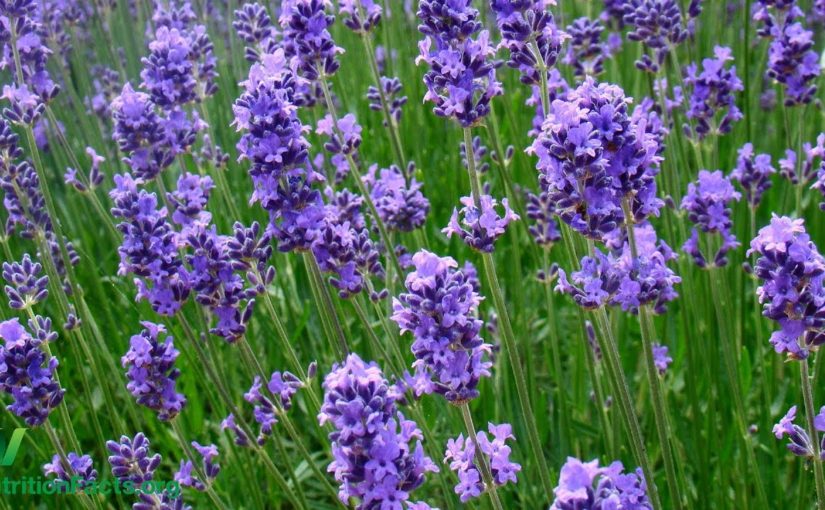
“Lavender for Generalized
Anxiety Disorder” Lavender oil,
distilled from lavender flowers, is most often used
in aromatherapy and massage. Despite its popularity, only recently have scientifically-based
investigations have been undertaken into its biological activity, however. There have been small-scale studies
suggesting a benefit from lavender massage, but maybe it’s the massage,
not the lavender. There was a study on patients
in intensive care comparing massage with odorless oil
to massage with lavender oil, and through patients
massaged with lavender oil did say they felt less anxious
and more positive, there were no objective differences
found in terms of blood pressure, breathing, or heart rate.
Frankly, maybe the lavender was just
covering up the nasty hospital smells. Subsequent studies
using more sensitive tests did find physiological changes, though. We know, for example, the smell
of lavender changes brain wave patterns, but what effect does this have? Well, it makes people
feel better, and perform math better, faster,
and more accurately, whereas the smell of rosemary,
for example, seemed to enable folks
only to do the math faster —not necessarily
with greater accuracy. What if you
eat lavender flowers, or in this case take capsules
of lavender-infused oil so you could double-blind the study
to compare lavender head-to-head to a drug like valium,
lorazepam, known as Ativan, for generalized anxiety disorder? Generalized and persistent
anxiety is a frequent problem and is treated with benzodiazepines,
“benzos”, or downers like valium. Unfortunately, these substances not only
make you feel like you have a hangover, but have a high potential
for drug abuse and addiction, so they decided to give lavender a try. The drug Ativan certainly
reduces anxiety… but so does lavender. By the end,
you couldn’t tell which was which! And in fact, among those
that responded to either, the lavender
seemed to work better.
Since lavender oil has no potential
for drug abuse and causes no hangover effects, it appears to be an effective
and well-tolerated alternative to benzodiazepine drugs for the amelioration
of generalized anxiety. One cautionary note, however. There was a case series published
in the New England Journal of Medicine. Prepuberty gynecomastia
linked to lavender. Reports of young boys exposed
to lavender-containing lotions, soaps, hair gel, and shampoo,
starting to develop breasts, which disappeared after these
products were discontinued, suggesting that lavender oil
may possess hormone-disrupting activity. Indeed, when dripped on estrogen receptor
positive human breast cancer cells, lavender does show estrogenic effects
and a decline in male hormone activity, though it’s unknown if similar reactions
occur inside the body when lavender flowers
or lavender oil is ingested.
As found on YouTubeSeanCooper🗯 The Shyness & Social Guy ⇝ The 3 WORST Mistakes You Must AVOID If You Want To Overcome Shyness (PLUS: 1 weird trick that targets the root biological cause of shyness so you can stop being nervous, awkward, and quiet around people…) By Sean Cooper, The Shyness & Social Anxiety Guy. The fact that you’re reading this article tells me you may have already reached a point where you feel your shyness is NOT going away on its own… or you fear it’s getting worse and worse. And I don’t want you to waste one more day living a life where you feel left out, bored, or depressed because you don’t have the relationships which would make you happy. That’s why I’ve put together this page to help you avoid the worst mistakes that keep many people stuck with shyness for years… often giving up hope of ever improving as you watch other people have interesting “normal” lives without you. Yet this doesn’t have to happen.
> And you speak a little bit about the
importance of that continuity. > Yes. What we try to do is we try to be very
consistent with the patient’s calling them every two weeks once they…
especially if they started a new medication we want to know like how
they’re doing if they’re having any reported side effects, that we can
communicate with the primary care doctor. The other thing that we do is call
them on a monthly basis and we asked the same questions on the ph-9
questionnaire to see if there’s been any progress made.
This helps us monitor you
know their feelings and also you know we are there to link them to providers
psychiatry, psychology. We stress the importance… –To close that gap — that’s that gap in care like
we say right. [VidConnect vidp=’149898′ vidn=’4′ vidt=’default’ vidv=’oEpOK9fWmmI’] Let’s talk dr. Frankel a little bit about gg7. > So that GED seven
are our anxiety screening questionnaire depression and anxiety oftentimes go
hand-in-hand and patients may come in seeing that they’re having anxiety or
panic attacks and this is another screening tool we do to basically
quantify the symptoms patients are expressing with their words and kind of
give us an idea of how much anxiety they’re having many times we will then
give them a ph-9 and kind of put the depression anxiety together if they have
both of those overlying diagnoses is the treatment is also very similar the
support of the supportive network with the empowerment program you know getting
patients linked into mental health or some sort of behavioral therapy and the
medications we use to treat depression are also used to treat anxiety it
oftentimes coexists.
What are the general principles that guide how patients and doctors use antiepileptic medications?
See More Epilepsy Videos at http://www.healthguru.com
Suddenly developing allergies in your 20’s, 30’s, or older, hardly seems fair, but research indicates that adult onset allergies are increasingly common. Watch this to learn more! And for more answers to your allergy questions, visit: http://conditions.healthguru.com/
Over-the-counter nasal decongestant sprays can provide quick relief for seasonal allergies, but they can also be seriously addictive. If you’ve got a habit, watch this for ways to kick it. And for more, visit: http://conditions.healthguru.com/
An allergy is an immune system reaction to a normally harmless substance, such as pollen, dust, pet dander, or a food protein. Watch this to get a better understanding of what that reaction entails. And for more, visit: http://conditions.healthguru.com/
We all have negative thoughts sometimes. However, when they cycle through your mind over and over, negative thoughts can cause problems and can be a sign that you have a more fundamental problem. Recurring negative thoughts can be a symptom of anxiety. At this seminar, learn about the warning signs and strategies for coping with anxiety.
Presented By:
Seema Sehgal, MD
Psychiatrist
Seema Sehgal’s WTMF Physician Page: https://tinyurl.com/to34q53
Original Date:
11/12/19
****SOURCES AND LINKS****
Learn more about Washington Hospital visit:
https://www.whhs.com/
Watch more Health & Wellness videos on InHealth’s Channel:
https://www.youtube.com/whhsinhealth
#InHealth #WashingtonHospital #Anxiety
 But does that happen within the human body if you just eat it? We didn’t know until recently. If you exercise without
watercress in your system, DNA damage shoots up, but if you’ve been eating a single
serving a day for two months your body’s so juiced up
on green leafy goodness no significant damage after punishing yourself
on the treadmill. So, a healthy diet can
you can get all the benefits of strenuous exercise
without the potential risks? We know regular physical exercise — a key component of a healthy lifestyle, but it can elicit oxidative stress. To reduce that stress
some have suggested pills to improve one’s
antioxidant defense system, but “those eating more plant-based
diets may naturally” “have an enhanced antioxidant defense system” without pills to counter
exercise-induced oxidative stress due to the increased
quantities of plants.
Remember plant foods’ average
64 times more antioxidants than meat, fish, eggs, and dairy. And on top of that the
animal protein itself can have a pro-oxidant effect. But look, anyone eating sufficient
quantities of whole healthy plant foods could plausibly reach
an antioxidant status similar to those eating vegetarians. It’s not just about what
you’re eating less of, saturated fat and cholesterol, but what you’re eating more of,
the phytonutrients. Whether it’s about training longer or living longer, we’ve got to eat more plants.
As found on YouTube
15 Modules Of Intimate Video Training With Dr. Joe Vitale – You’re getting simple and proven steps to unlock the Awakened Millionaire Mindset: giving you a path to MORE money, …
But does that happen within the human body if you just eat it? We didn’t know until recently. If you exercise without
watercress in your system, DNA damage shoots up, but if you’ve been eating a single
serving a day for two months your body’s so juiced up
on green leafy goodness no significant damage after punishing yourself
on the treadmill. So, a healthy diet can
you can get all the benefits of strenuous exercise
without the potential risks? We know regular physical exercise — a key component of a healthy lifestyle, but it can elicit oxidative stress. To reduce that stress
some have suggested pills to improve one’s
antioxidant defense system, but “those eating more plant-based
diets may naturally” “have an enhanced antioxidant defense system” without pills to counter
exercise-induced oxidative stress due to the increased
quantities of plants.
Remember plant foods’ average
64 times more antioxidants than meat, fish, eggs, and dairy. And on top of that the
animal protein itself can have a pro-oxidant effect. But look, anyone eating sufficient
quantities of whole healthy plant foods could plausibly reach
an antioxidant status similar to those eating vegetarians. It’s not just about what
you’re eating less of, saturated fat and cholesterol, but what you’re eating more of,
the phytonutrients. Whether it’s about training longer or living longer, we’ve got to eat more plants.
As found on YouTube
15 Modules Of Intimate Video Training With Dr. Joe Vitale – You’re getting simple and proven steps to unlock the Awakened Millionaire Mindset: giving you a path to MORE money, …

 Since lavender oil has no potential
for drug abuse and causes no hangover effects, it appears to be an effective
and well-tolerated alternative to benzodiazepine drugs for the amelioration
of generalized anxiety. One cautionary note, however. There was a case series published
in the New England Journal of Medicine. Prepuberty gynecomastia
linked to lavender. Reports of young boys exposed
to lavender-containing lotions, soaps, hair gel, and shampoo,
starting to develop breasts, which disappeared after these
products were discontinued, suggesting that lavender oil
may possess hormone-disrupting activity. Indeed, when dripped on estrogen receptor
positive human breast cancer cells, lavender does show estrogenic effects
and a decline in male hormone activity, though it’s unknown if similar reactions
occur inside the body when lavender flowers
or lavender oil is ingested.
Since lavender oil has no potential
for drug abuse and causes no hangover effects, it appears to be an effective
and well-tolerated alternative to benzodiazepine drugs for the amelioration
of generalized anxiety. One cautionary note, however. There was a case series published
in the New England Journal of Medicine. Prepuberty gynecomastia
linked to lavender. Reports of young boys exposed
to lavender-containing lotions, soaps, hair gel, and shampoo,
starting to develop breasts, which disappeared after these
products were discontinued, suggesting that lavender oil
may possess hormone-disrupting activity. Indeed, when dripped on estrogen receptor
positive human breast cancer cells, lavender does show estrogenic effects
and a decline in male hormone activity, though it’s unknown if similar reactions
occur inside the body when lavender flowers
or lavender oil is ingested.