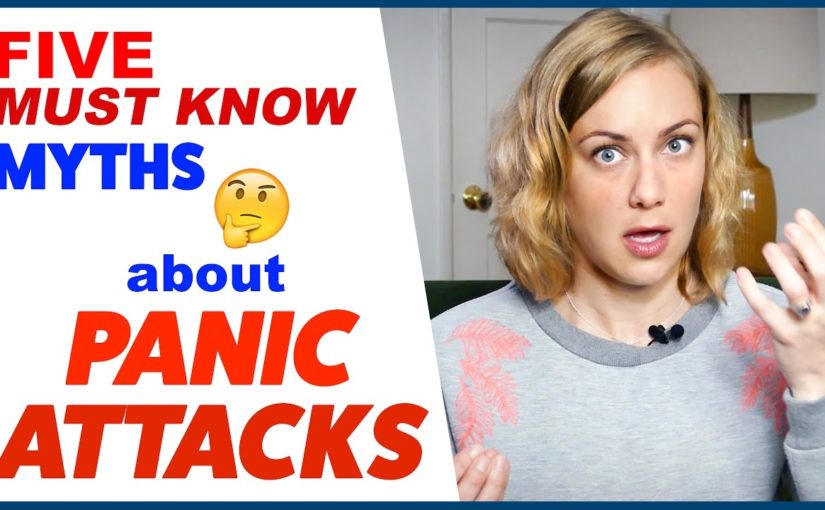
5 PANIC ATTACK MYTHS | Kati Morton


Hey everybody! Today we're gonna be talking about the five myths of panic attacks. So let's get into them. *intro music* Now the first myth is that they're caused by stress and anxiety. If you yourself have ever suffered with a panic attack you know that they come out of nowhere we don't even know what necessarily triggers us, something may not even trigger us. It's not necessarily something that environmental or something that's occurring right now. Panic attacks honestly happen because our system gets overwhelmed and overloaded and sends us into a fight or flight response, AKA, a panic! I also don't like this myth because it implies that we have control over it like we can stop our panic attacks if we just change our environment and the truth is the panic attacks will happen in a wide variety of places for a wide variety of reasons those of which we aren't even privy too.


We don't even know why they happen. And the second myth is that they're going to make us go crazy. Panic attacks, if they happen for too long we're just gonna go insane. I've heard a lot of my clients say this, that it feels like they're losing their mind and they wonder if it can cause other mental illnesses to occur and the truth is the panic attacks usually happen because we have some underlying mental illness, whether it be another anxiety disorder or depressive disorder, any kind of mood disorder can be a lot of different components that can lead us to having panic attacks and being more predisposed for panic.


The truth is that panic attacks in no way affect the functioning of our brain as a whole in the hormones, like dopamine, norepinephrine or any kind of neurotransmitter that could cause another mental illness or psychosis or quote, unquote, make us go crazy. The third myth about panic attacks is that having a severe one is going to cause us to go into cardiac arrest. I've heard from a lot of my clients that because a racing heart is one of the symptoms that they experience most with panic attacks, or even the build-up to a panic attack, they'll start feeling their heart race and they worry that if they're in a really extreme or intense panic attack for a sustained period of time, let's say for an hour, that they're going to go into cardiac arrest and this is going to be how they're going to die and it sends them into panic even more quickly and keeps them there longer.


But the truth is and this is something important to kind of note and to tell yourself, maybe when you're, you feel those symptoms happening is that our heart is extremely strong it can beat at over 200 beats per minute for days, if not weeks especially if we're young, it can be four weeks at that rate without sustaining any damage. I just want to take a second to let that sink in. We can essentially be in panic for a really really long period of time without our heart ever being hurt or even potentially considering it going into cardiac arrest or having any kind of malfunction.


Therefore on average, panic attacks last from three to ten minutes so a three to ten minute panic attack is not in any way going to harm your heart or cause a heart attack. The fourth myth is that they're used as a way to get out of something we just don't want to do. Uh, if we hear that one more time. Am I right? For those of you who don't understand what a panic attack is or what can cause a panic attack, like I stated earlier, they come out of nowhere. They are not triggered by our environment, it's not due to an over reaction by up if usually a result of another underlying mental illness and these feel like they come out of nowhere, happen quickly and can stay and they're extremely uncomfortable, so if you found yourself having these attacks anytime you went into the grocery store, then you would start to not want to go to the grocery store or whenever you're in a crowded place, like I've had a lot of clients are like, "If I'm ever in a busy thing like a club or a concert or even like a really busy day at the mall," they've had panic attacks, we don't really know why but they're then attaching busyness and a lot of people with panic attacks therefore if someone's going to call you, if a friends going to ask you to go out to a party, and you think it's going to be a small group you're like sure, then later you find out there's going to be like 50 people there, you're like I'm gonna have to say no.



But we need to understand that panic attacks and panic disorder is a real diagnosable mental illness and because we don't know what triggers them and they come out of nowhere we fear the next one may be just around the corner. So of course we're going to limit the amount of things that we do until we can get them more under control. And the fifth and final myth about panic attacks is that there is nothing that we can do to treat them. Meeh. That's wrong, there are a lot of things we can do to treat them. Yay! Number one, and something that I've been reading because if any of you follow me or have been on the live streams or follow me on snapchat or Instagram, I have been working very hard at your anxiety workbook and I'm super excited for it to come out, but the thing that I learned through all the research I've been doing, is that progressive relaxation, you know like clench your feet, relax your feet, clench your calves, relax your calves, that type of exercise, doing that 20 to 30 minutes a day can calm our system down to such an amount that those who struggle with panic disorder may rarely, if never again, if they continue to do the progressive relaxation each day, they may never have the symptoms again.


They're still doing more studies on it but progressive relaxation is, surprising to me, but it's so amazing and been so helpful and beneficial. And the other is that CBT, so cognitive behavioral therapy, is also helpful with panic disorder and those of us who struggle with panic attacks because a lot of times we build up the panic and our system's fight-or-flight response by worrying about all of those things like it's going to cause a heart attack, I'm going to be super embarrassed, I'm going to go crazy, I may fall over or faint, all those worries and kind of falsely held beliefs that we have, CBT can really help us challenge those.


Also medications have been shown to be extremely beneficial SSRIs, SNRIs, and benzodiazepine have been shown to be extremely helpful for those of us who struggle with panic disorder and I know that not all of you are interested in taking medication this is another option that's available and if you're out there and you're struggling with panic attacks and you feel like they're happening with more frequency, it's controlling the way you live your life please reach out, please talk to someone. There are different professionals and a ton of help available, we just have to ask for it and we just have to reach out and I know it's scary to do the first reach out, but know that we're used to managing it we can handle it. We are kind, calm, wonderful people and maybe bring an extra supportive person with you to that first appointment or maybe they make the call and set up the appointment for you.


Find ways, use your resources to get the support and help that you need. Please share this video, I think a lot of people talk poorly about panic attacks or don't understand and I also put some in here, if you didn't notice for those of us who struggle and the myths that we tell ourselves about panic attack because I think both are really important to note, and leave in the comments what are some myths that you've heard. What is the way that you talk back to that, so that we have as a community are raising the stigma associated with mental health. I love you all and I will see you next time. Bye!.


As found on YouTube

Discover the First-To-Market Revolutionary SPR “Static” Conversion Tech Which Dramatically Speeds Up & Secures Existing WordPress Sites & Cloud Affiliate Pages With Just A Few Clicks

Calm a Panic Attack in 3 Easy Steps

What do Emma Stone, John Mayer and Amanda Seyfried all have in common? They've all publicly admitted to suffering from panic attacks. Those who've experienced one will tell you it can feel crippling, life threatening. But, it doesn't have to be. Psychiatrist, Dr. Dominick Sportelli joins us now via Skype to give us three tips to help calm a panic attack. So, Dom. Hey guys. Dr. Sportelli, I love that we're going over this because obviously, there are medications that people will take if they're having a panic attack, but these are non-medicinal ways that you can potentially break the spell if you will of a panic attack, so talk us through what people can do. Yeah, you got it so, listen guys, four million people suffer from panic attacks, and most people don't even report it.

So, that number's probably so much higher than that and guess what you can add one name to your list and that's me, I have suffered from panic attacks. They're horrifying, they're incredibly scary, and psychiatrists are not immune. I'm glad you admitted that doc, because sometimes those people who seem the most cool, calm, and collected and who are can still have panic attacks, and it's not anything to be ashamed of. At all. So I am glad that you're personally someone who knows how to treat it, but also have experienced it, can you do us a favor.

Can you, before you go into the three tips, can you talk about even in your own, personal experience, what happens when you're having a panic attack? It's a physiologic response, it's actually an evolutionary response to save our lives believe it or not. Here's the thing your body thinks that it's running from a Saber tooth tiger. So, your heart rate increases, you get short of breath, you start to sweat, your muscles tense up, blood goes to different places in your body so your G.I. system gets crampy and you get nauseous. So, the thing is that you're not running from a tiger you're probably just at a business meeting or you know on the stage of The Doctor's or on Skype right. So, here's the important thing, it's an over reaction to a perceived threat, people become afraid of being afraid, so if you understand what causes the panic attack and you understand how to deal with it, it's less scary so what we want to do is put the brakes on the sympathetic nervous system and activate what's called the vagus nerve.

And the vagus nerve is the parasympathetic nervous system. But its basically, slows down all of those symptoms. The racing heart, the shortness of breath, the nausea, the shaky, the sweaty feeling, and we have ways to activate that vagus nerve and calm your body down without medications. So, what's tip number one Dr. Sportelli? All right, this is literally, when I say literally ground yourself, I mean it. I mean take off your shoes, get comfortable, put your feet on the ground, make sure you're in a safe place if you're driving, pull over for example. But if you're in your house or in your office, take your shoes off, put your feet on the ground. Feel the ground, and at that point you're gonna take slow deep breathes. Taking slow deep breathes activates that vagus nerve, that we were talking about. So, you're gonna take a deep breath in for five seconds, you're gonna hold for two and you're gonna go out for five.

Just that act is gonna slow your heart rate down, and prevent that snowball that we're feeling. And I love your second tip, because this is something that we can use sometimes in the ER, something, sometimes we all do for fun after a hot run, but what is your tip number two? So tip number two, if you have the availability, guys fill up your sink with a really, really cold sink full of water, ice cold, as cold as you can make it. And dunk you head directly into the water. That will, or has been shown to slow your heart rate, down by up to 25%, and that can break a panic attack in and of itself. And talk to us about this last tip that involves, whether it be caressing or self massaging, what is that? Yeah, I love this one, so this one's great, and I rolled up my sleeves, for you guys.

So, this is called the wrist-forearm technique. And what you're gonna do, is again keep in mind grounding, feet on the floor, comfortable, the breathing techniques that we talked about, and at the same time, grab your elbows and drag your hands along your forearms, down to your wrists, and then just repeat. Do that again, it's just a little self massage, nice and easy, it's very, very soothing at the same time breathing, and before you know it you're gonna be super calm, super chill. Focus on that act, on that exercise, it does have a calming effect. Yeah. Exactly, 'cause a part of it is just distracting your mind from thinking something horrible's gonna happen.

3 Tips to Manage Anxiety & Panic Attacks

Managing anxiety and panic attacks may seem to bring about more panic and anxiety. But, today, Dr. Jennie Byrne gives you 3 tips to help you manage your anxiety and panic. Learn more at http://www.cognitive-psychiatry.com

How to Survive Anxiety & Panic Attacks | Black Friday

Weird tips and “brain hacks” I’ve found useful that I wanted to share for those of us, blessed as we are, with panic or anxiety disorders. Particularly needed at this weird and sucky time! ☥ Become a Belfry Bat ❥ http://bit.ly/1v9fZZN ☥ Support my videos: http://www.patreon.com/blackfriday ☥ Facebook: http://www.facebook.com/itisblackfriday ☥ Instagram: http://instagram.com/itsblackfriday ☥ Merch: https://shop.spreadshirt.com/itsblackfriday/ ☥ My Website: http://www.itsblackfriday.com ☥ Amazon Wishlist: http://amzn.to/231HFAm ☥ Equipment I Use: ~ Main camera: http://amzn.to/2beVtDw ~ Underwater camera: http://amzn.to/2biIenw ~ V/O Microphone: http://amzn.to/2hSdNdA ~ Tripod: http://amzn.to/2beVXtc ~ Flexible tripod: http://amzn.to/2beVjfp ☥ Notey Notes: This video was not paid for. All opinions expressed herein are genuine and my own, and always will be 🙂 Some links may be affiliate links.

Coronavirus | Dealing with anxiety & mental health during a pandemic

Coronavirus can stir up all sorts of feelings, like fear, anxiety or stress. A little stress can be helpful. It can be the motivator that keeps us self-isolating or washing our hands. But constant or high levels of stress can negatively affect our mental and physical health. Taking care of the mind is always important, but doing so in the midst of a pandemic can be tricky. So watch this video for some tips and techniques to help get you through your day. For more information about coronavirus, updated by doctors daily, visit our guide: https://www.babylonhealth.com/coronavirus

Nerbyos, Anxiety at Panic Attack – Payo ni Doc Willie Ong #780

Nerbyos, Anxiety at Panic Attack Payo ni Doc Willie at Liza Ong #780 Kapag: 1. Kinabhan ka 2. Inaway o naapi ka 3. May nararamdaman 4. Walang pera 5. Seryosong sakit Panoorin po:

Anxiety during Pregnancy: 8 Helpful Tips!!!

Anxiety during pregnancy is extremely common, I wanted to share some tips that are helping me relieve anxiety during pregnancy. Tip #1: http://www.crystalgeyserasw.com/ Tip #2: Exercise Tip #3: http://earthmamaangelbaby.com/products/organic-peaceful-mama-pregnancy-tea Tip #4: http://www.quebellabeauty.com/product/que-bella-intensive-foot-mask/ Tip #5: Apply a mask Tip #6: Light a candle Tip #7: Read a book Tip #8: https://itunes.apple.com/us/app/hypnobirthing-hypnosis-by/id715265578?mt=8 Contact for questions or business inquiries: wehaveisshoes@gmail.com Website: http://www.wehaveisshoes.com eBay store: http://www.ebay.com/usr/wehaveisshoes Store Social: http://www.instagram.com/shopluznrev Linda’s Socials Instagram: http://www.instagram.com/luzwarrior Twitter: http://www.twitter.com/luzwarrior Snapchat: OG.luzwarrior

WHY I TAKE ANXIETY MEDICATION EVERYDAY | Lauren Elizabeth

Thank you for listening, if you are feeling hopeless please call: 1-800-273-8255 for help, you are not alone. » MY NEW WEBSITE! http://lovelaurenelizabeth.com/ » SHOP my JEWELRY: https://goo.gl/jXUhQd » SUBSCRIBE: http://bit.ly/1aPKGre » https://twitter.com/LaurenElizabeth » http://www.facebook.com/LoveLaurenEli… » Snapchat: Littleswagx Business inquires only: businesslaurenelizabeth@gmail.com

Living with Social Anxiety | my story & advice

Opening Up About My Social Anxiety | childhood, high school, college, and post grad life | Sign up for BetterHelp here: https://betterhelp.com/renee | Crisis text line: https://www.crisistextline.org just text “HI” to 741-741 Peer support: https://www.7cups.com/ Support in UK: https://www.samaritans.org/ IN AN EMERGENCY // If you or your friend needs urgent help, call 911 immediately. Or even take your friend to the emergency room for assistance. If you feel it’s safe, stay with your friend or find someone to stay with them until help arrives. IN A CRISIS // Get immediate support 24/7 by calling 1-800-273-8255 or text SEIZE to 741741. It’s free, and free of judgment. Everything you tell them is confidential, unless it’s essential to contact emergency services to keep you or a loved one safe. ♡ More Vlogs: https://goo.gl/w8Ec94 ♡ More of My Routine Videos:
♡ More Law Of Attraction (Manifestation Wednesday) Videos: https://goo.gl/KuEY3i ♡ My Camera: https://amzn.to/323Bum3 ♡ How To Teach Kids English Online w QKids: http://teacher.qkids.net/ref?code=OTJLUC Referral Code: OTJLUC Let’s be Friends! ♡ Instagram/Twitter: @reneeamberg ♡ Goodreads : Current Books I’m Reading : https://goo.gl/dRTfz5 ♡ Spotify / Music Playlists: https://open.spotify.com/user/499i88qeschl8yz5pkjnx3yqs?si=W9ngJKu4Sb-xnoy7zEfrtA ♡ For Business Inquiries Only: reneeamberg1@gmail.com #socialanxiety #anxiety #mentalhealth ♡ Music Deets: All music from Epidemic Sound https://www.epidemicsound.com FTC: Thank you to BetterHelp for sponsoring this video! This video may contain affiliate links, which means I may receive a commission for purchases made through my links.

5 Tips to Boost Your Mental Health in Urdu||5 ٹوٹکے ذہنی صلاحیت بہتر بنانے کے

5 Tips to Boost Your Mental Health in Urdu||5 ٹوٹکے ذہنی صلاحیت بہتر بنانے کے subscribe us on youtube https://www.youtube.com/c/pakinfotube join us on facebook https://www.facebook.com/adminPakinfotube/ https://pakinfotube.webs.com join us on https://plus.google.com/+PakInfoTube …………………………………………… ……………………………………………. Try these tips to help find the right balance in your life.* 1. Value yourself: Treat yourself with kindness and respect, and avoid self-criticism. Make time for your hobbies and favorite projects, or broaden your horizons. Do a daily crossword puzzle, plant a garden, take dance lessons, learn to play an instrument or become fluent in another language. 2. Take care of your body: Taking care of yourself physically can improve your mental health. Be sure to: Eat nutritious meals Avoid cigarettes — see Tobacco Cessation Help Drink plenty of water Exercise, which helps decrease depression and anxiety and improve moods Get enough sleep. Researchers believe that lack of sleep contributes to a high rate of depression in college students. See Sleep. 3. Surround yourself with good people: People with strong family or social connections are generally healthier than those who lack a support network. Make plans with supportive family members and friends, or seek out activities where you can meet new people, such as a club, class or support group. 4. Give yourself: Volunteer your time and energy to help someone else. You’ll feel good about doing something tangible to help someone in need — and it’s a great way to meet new people. See Fun and Cheap Things to do in Ann Arbor for ideas. 5. Learn how to deal with stress: Like it or not, stress is a part of life. Practice good coping skills: Try One-Minute Stress Strategies, do Tai Chi, exercise, take a nature walk, play with your pet or try journal writing as a stress reducer. Also, remember to smile and see the humor in life. Research shows that laughter can boost your immune system, ease pain, relax your body and reduce stress. 6. Quiet your mind: Try meditating, Mindfulness and/or prayer. Relaxation exercises and prayer can improve your state of mind and outlook on life. In fact, research shows that meditation may help you feel calm and enhance the effects of therapy. To get connected, see spiritual resources on Personal Well-being for Students 7. Set realistic goals: Decide what you want to achieve academically, professionally and personally, and write down the steps you need to realize your goals. Aim high, but be realistic and don’t over-schedule. You’ll enjoy a tremendous sense of accomplishment and self-worth as you progress toward your goal. Wellness Coaching, free to U-M students, can help you develop goals and stay on track. 8. Break up the monotony: Although our routines make us more efficient and enhance our feelings of security and safety, a little change of pace can perk up a tedious schedule. Alter your jogging route, plan a road-trip, take a walk in a different park, hang some new pictures or try a new restaurant. See Rejuvenation 101 for more ideas. 9. Avoid alcohol and other drugs: Keep alcohol use to a minimum and avoid other drugs. Sometimes people use alcohol and other drugs to “self-medicate” but in reality, alcohol and other drugs only aggravate problems. For more information, see Alcohol and Other Drugs. 10. Get help when you need it: Seeking help is a sign of strength — not a weakness. And it is important to remember that treatment is effective. People who get appropriate care can recover from mental illness and addiction and lead full, rewarding lives. See Resources for Stress and Mental Health for campus and community resources. -~-~~-~~~-~~-~- Please watch: “سال 2018 میں دنیا کے 15 امیر ترین ممالک کی فہرست کونسا اسلامی ملک پہلے نمبر پر ہے حیران کن معلومات”
-~-~~-~~~-~~-~-