Depression affects many of us around the globe. According to the World Health Organization,
300 million people of all ages battle with it Depression is a sneaky mental disorder. It’s difficult to catch during the early
stages. Most of us realize we have depression when
we are deep in the grips of it. Those with this mental disorder feel hopeless,
empty or sad, fatigued, irritable, and restless. Depression not only takes your motivation
away, but you can have problems concentrating and making decisions.
Those of us with this disorder can act in
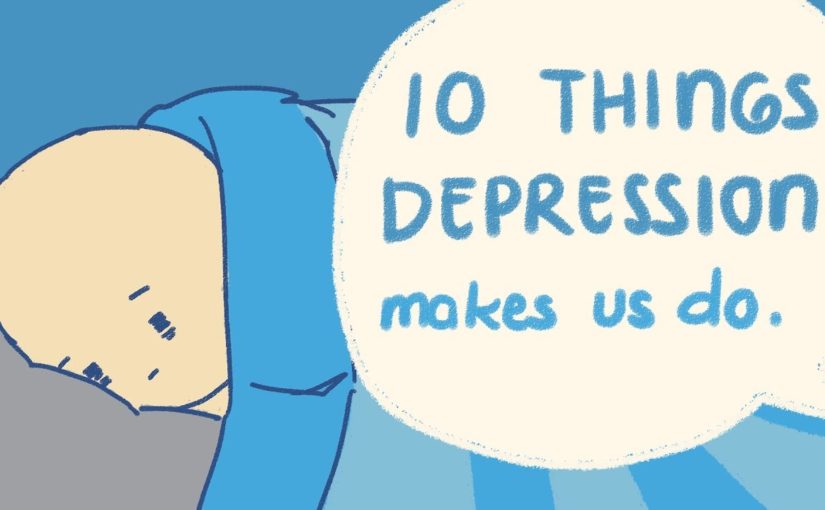
ways that will worsen the situation. Here’s a list of 10 things depression makes
you do. 1. Isolating yourself. Individuals with depression isolate themselves
for different reasons. Some will keep to themselves because they
feel overwhelmed socializing, and others believe it’s better to be alone. In other cases, the person may feel so much
self-hatred that they prefer to not interact with people. Those with severe depression may even stay
in their house for weeks. 2. Being disorganized. Depression leaves you feeling exhausted, so
cleaning a room or home becomes an endeavor.
Dirty dishes and clothes start piling up while
your garbage is overflowing the trash. It becomes an even bigger a physical challenge
to walk around your room because everything is on the floor. Living in a cluttered place leaves you feeling
uneasy, but the lack of energy doesn’t help. 3. Poor hygiene. Depression zaps all your energy. It’s difficult enough to get out of bed, so
showering, brushing your teeth, washing your hair and taking care of your body, it goes
out the window.
Those without depression may see this behavior
as lazy, but the truth is, showering or changing into clean clothes is exhausting and painful
at times. 4. Struggling with sleep. Depression affects your sleeping schedule,
some of you may stay up and sleep very little. It keeps you up with your intrusive unwanted
thoughts. These may end up making you feel anxious
all through the night. In other cases, some of you will sleep excessively
and still feel unrested. 5. Catastrophizing every situation. Depression plays tricks on your mind, making
you believe negative things. It can get to a point where you’re constantly
looking out for bad things to reassure your pessimistic thinking. Every time something bad happens, you use
it as evidence to prove how bad life is.
This slippery slope makes it difficult to
see life under a brighter light. 6. Terrible eating habits. Those with depression will either eat too
much or hardly anything at all. Some of you may find yourself in the kitchen
eating everything in side, trying to eat away the emptiness or sadness you’re feeling while others don’t have an appetite and may even feel disgusted by food.
In other cases, some of you may feel so exhausted
that that thought of preparing a meal is overwhelming. 7. Lack of motivation. Depression steals your interests and desires
right from under you. Your favorite pastimes and hobbies no longer
satisfy you, slowly you find yourself feeling dead and numb inside. If you aren’t careful you’ll end up staying
in bed all day. 8. Evading your problems. Depression by itself is overwhelming, you
can feel devastated and out of control most days, so trying to face situations and problems
head-on is difficult enough.
Instead you ignore or set the problem aside,
and this in turn can bring trouble because it will continue to pile up. 9. Feeling guilty and feeling self-hatred. If you allow depression to take over your
thoughts, then you’ll most likely feel self-hatred. You’ll continue to talk down to yourself and
this often leads to the development of self-esteem issues along with poor self-image, eventually
you’ll believe you aren’t worth it anymore. Some people with this mental disorder can
even feel guilt by thinking all their problems are their fault. And 10: living in fear. People with depression fear that terrible
things will happen to them. In severe cases, some of you will sabotage a good situation, believing that it will turn bad. Other times individuals will reject opportunities
and stop pursuing their dreams.
It’s a twisted way to protect yourself because
this prevents you from living and achieving amazing things. Depression affects us in different ways. The list mentioned in this video contains
some of the common behaviors those with the disorder have. Do you agree with these points? What other behaviors have you noticed? Let us know in the comment section below. <3.
As found on YouTubeBrain Booster | Blue Heron Health News ⇝ I was losing my memory, focus – and mind! And then… I got it all back again. Case study: Brian Thompson There’s nothing more terrifying than watching your brain health fail. You can feel it… but you can’t stop it. Over and over I asked myself, where is this going to end? What am I going to end up like? And nobody could tell me. Doesn’t matter now. I’m over it. Completely well. This is how I did it!
Questioner: Sadhguru, I wanted to know that when we are silent, still we feel that mind chattering, which always bothers us. And our thought always shifts back to past and future imaginations, which will not be any of the output. How to get rid of it? Sadhguru: There’s a whole lot of thought about this thoughtlessness. Thoughtlessness, no mind, these kinds of terms have been propagated all over the place, and these terms have been badly misunderstood and made into all kinds of things, and people are striving “how to stop my mind.” It took millions of years of evolution to get a mind of this kind of capability.
Hmm? Isn’t it? Millions of years of the tremendous amount of nature’s work that today you have a mind of this kind of scope. And now, you want to stop it. [Chuckles] Why is it that you want to stop it? If your mind was constantly producing absolute pleasantness for you, would you think about how to stop this mind? Would you? No. It’s producing a lot of unpleasantness, and that’s why you’re thinking of how to stop the mind. This is the first thing, wherever you go in the world, this has gone so much into people’s minds; if you tell them, “You meditate,” they say, “But Sadhguru, I’m not able to stop my mind.” I said, “That will happen only after you stop your kidneys, liver, heart…
[Laughter] If you stop all these things, then the mind will also stop. Do you want it to stop?” “No.” Then why do you want the mind to stop? Why do you have such a horrible prejudice against the mind? You don’t mind if your heart is beating, you can meditate. You don’t mind if your liver is working, you can meditate. Your kidneys are functioning, you can meditate. If your brain functions, you can’t meditate. What is the problem? You seem to have something against intelligence, isn’t it? [Laughs] This is the conspiracy of the stupid against human intelligence, that to meditate means your brain must be frozen. No. You don’t have to freeze your brain. We were looking at this yesterday itself. We will initiate you into Shambhavi – it’s a simple process. There are many ways to do it, this is one simple way, but it’s a powerful process. If you sit here, you will see, your body is here, your mind is somewhere, and who you are is somewhere else.
Once there is space between you and the mind, then what the mind is not doing, what the mind is doing, is not even an issue. It is like you’re stuck in a traffic jam; you know, you’re struggling through the traffic – that’s one experience. Suppose you are either standing on Chamundi Hill, or you are floating in a hot air balloon, and looking down at all the traffic. Very peacefully, “Traffic.
Hmm…” [Laughter] Why? Because of distance, isn’t it? When you’re in it, traffic is a different experience. From really high up there, sitting in a hot air balloon, you look down, and you can’t even hear the sounds, looks wonderful traffic, isn’t it? Yes, or no? Participants: Yes. Sadhguru: Because there’s a distance. So, once there’s a distance between you and your mind’s activity, the mind is not a problem – the mind is a miracle, it is not a problem. And anyway, if thoughts are going continuously, if you’re having mental diarrhea, [Laughter] you ate some bad food, isn’t it? Yes? If you’re having physical diarrhea, you ate some bad food, isn’t it? If you’re having mental diarrhea, you consumed something wrong. What this wrong thing could be is, the moment you identify yourself with something that you’re not, then you’re finished – your mind is a continuous run. There is no other way. Do what you want, and try as hard as you want, it is not going to stop.
If you do not identify yourself with anything that you are not, you know how to be with everything, you know how to use everything, but you’re not identified with it, then you will see, if you sit here, simply, the mind will be like this; [Gestures] if you want to use it you can use it, otherwise, it’ll be like this. Right now your hands are like this; oh, you’re holding it tied up because it’ll go all over, is it? No, you can keep it like this. You can keep it like this, you can keep it like this. [Gestures] When you want to use it, you can use it. So, it’s a useful instrument. Suppose your hands become like this. [Gestures] You know, some people have become like this? Yes, or no? [Gestures] If it becomes like this, you will become ridiculous, isn’t it? If it happens to your mind, also you’re equally ridiculous. It is just that you are living in the comfort that nobody else can see it.
But people can see it; if they watch you closely enough, they can see it, isn’t it? And whether they can see it or not, that’s not the point; the point is, the most important faculty of your life is out of control. It doesn’t matter whether they can see it or not, that’s not the issue; the issue is, the most important faculty in your life is out of control, doing its rubbish all the time, not doing what you want it to do. So, if you have to be freed from this ailment, you should stop eating bad food. Wrong food, or bad food means, you are identifying yourself with things that you’re not. If you sit here, if you’re not identified with this, and with this, [Gestures] then you will see, everything is just fine. Then your mind will do what you want it to do; otherwise, it’ll simply hang there, and that’s how it should be. The mind should not be telling its own stories all the time; it should tell the story that you want it to tell, isn’t it? Otherwise, it’s quite a nuisance.
As found on YouTubeBrain Booster | Blue Heron Health News ⇝ I was losing my memory, focus – and mind! And then… I got it all back again. Case study: Brian Thompson There’s nothing more terrifying than watching your brain health fail. You can feel it… but you can’t stop it. Over and over I asked myself, where is this going to end? What am I going to end up like? And nobody could tell me. Doesn’t matter now. I’m over it. Completely well. This is how I did it!
Whatever your state of mind has been from your childhood to now need not be the state of your mind for the rest of your life find something that you’re passionate about you need to develop some intensity of attention will naturally come [Music] the easiest thing to do is change the framework of our mind [Music] see when it comes to physical body and the mind no two human beings have come with the same capabilities isn’t it physically mentally what one human being can do another human being cannot do it’s in so many different ways [Music] so instead of getting a title that i’m attention deficiency and add a b c x y z so many things [Music] the thing is how to maximize who you are isn’t it you have attention deficiency but i had another kind of problem i had too much attention if i pay attention to this one i can’t shift my attention to this i’m just looking at this only for hours that also people thought is a problem people thought it is a problem he’s just looking at one thing all the time i remember this situation so well it was so insane you know my father is academically excelled all his life but unfortunately he produces a son like me who has no concern about academics of any kind so he thinks he’s a very strict disciplinarian and evening seven to nine every day in the evening we must all the four siblings all of us must study textbook i pick up some textbooks because it doesn’t matter for me what and i open somewhere i don’t care which page i just open some page and i i find some small speck on the page a tiny speck some flaw in the paper i just look at that that’s about it it just grabs my attention in such a way i just sit there two hours just looking at this spec i don’t read a single word but i never looked up and looked here and there because it really held my attention two hours i’m just looking at the speck because there is so much in a bloody speck you know there’s an entire world in a spec people have spent their lifetimes looking after microscopic molecule or an atom isn’t it speck is much bigger than an atom so people thought i was going crazy because i had too much attention so don’t go on labeling yourself this and that who who decides you have attention deficiency is there some standard how much attention you must have or how much attention you must get there is no such standard anywhere isn’t it you making it up the problem is right from childhood children are labeled and they are supposed to carry this label for the rest of their life what level of attention you have at five what level you may have at six at seven at eight at fifteen or twenty can be entirely different haven’t many of you evolved through this process huh haven’t you first day school you couldn’t figure a damn thing maybe later on you did well or maybe first day you look like you understood everything by the end of the year you did nothing yes or no you you’re a young man there are girls in the neighborhood i’m a mechanical engineer no that’s okay i’m i’m a mechanical engineer are there girls in the neighborhood i asked no engineers generally tend to have neighborhoods which do not have a lot of girls so [Music] they must be moving away for some reason where does this come from mechanical engineer mechanical in the head so you’re at a certain age now you get drawn to somebody you don’t have to concentrate isn’t it hello you don’t have to concentrate they will invade [Music] so it is only a level of interest if you have a deep level of interest in something attention will come why will it not come you still have not found any interest in anything i don’t know which part of the mechanics you’re handling in london i heard the clock is not working so if you become profoundly drawn to something why will you not have attention attention will come do i have as much attention as somebody else maybe not i never had any attention for what was happening in the classroom but i didn’t find that interesting i was but my attention was in all kinds of things does it mean to say i don’t have it i have attention deficiency no i’m not interested in what they’re putting up on the blackboard that’s all so right now unfortunately all the girls have moved out of the neighborhood so you have attention deficiency find something that you’re passionate about attention will come why will it not come not necessarily what i said just anything i’m taking that example of a girl because there is a chemical support yes there is a chemistry working for your attention other things need little more effort to pay attention to you need to develop some intensity of passion that’s something that is important what you think is important if this comes into your perspective attention will naturally come i know others will say other things but what i am telling you is whatever your state of mind has been from your childhood to now need not be the state of your mind for the rest of your life the easiest thing to do is change the framework of our mind isn’t it to change the framework of our body is very difficult to change the framework of our mind is the easiest thing to do because that is the most flexible thing but that you have made it like a concrete block what do you want to use your head for just headbutting [Music] you must keep this as flexible as possible isn’t it hello you have made this into a concrete block what is the intention that’s why i think so many are i mean the such passionate football fans the only thing that you appreciate is this that is also a good thing when it’s done well but head can be used for many more things and you can do many more things only if you keep it completely fluid and flexible otherwise a concrete block is useful only for certain things so it doesn’t matter what labels they put on you if you wish you can change the structure of your mind [Music] my [Music] you
As found on YouTubeBrain Booster | Blue Heron Health News ⇝ I was losing my memory, focus – and mind! And then… I got it all back again. Case study: Brian Thompson There’s nothing more terrifying than watching your own brain health fail. You can feel it… but you can’t stop it. Over and over I asked myself, where is this going to end? What am I going to end up like? And nobody could tell me. Doesn’t matter now. I’m over it. Completely well. This is how I did it!
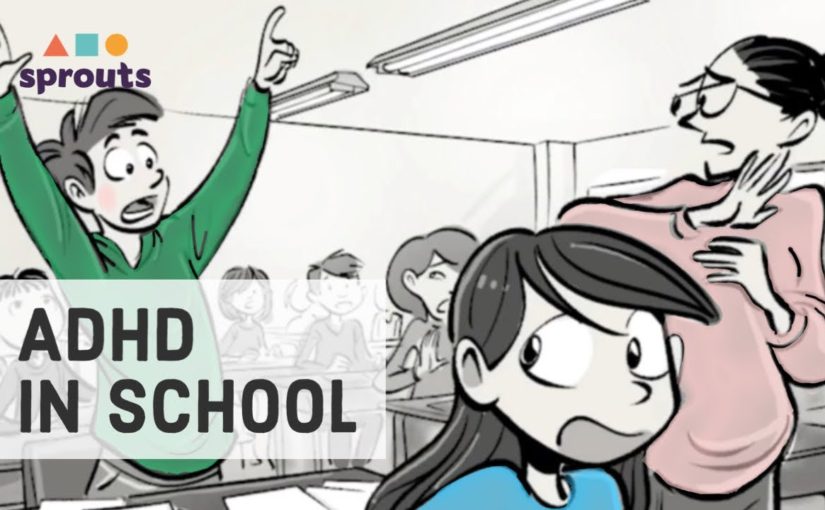
ADHD stands for attention deficit
hyperactivity disorder and is often described as a mental disorder. children
with ADHD have trouble paying attention are hyperactive and often have
difficulty controlling their behavior. it is estimated that it affects around five
percent of all children aged 3 to 17 globally and that for every girl around
three boys are diagnosed with it. to understand how it affects children in
school let’s look at the story of Leo, a 12-year-old boy who goes to school with
the best intentions but struggles hard to succeed. attention deficit is his biggest problem.
Leo gets distracted so easily it happens even when he tries his hardest to focus.
he often realizes that he has suddenly zoned out and has spent the last 15
minutes thinking about something entirely different. just the tiniest
thing can get him off track. to him it feels like his brain is broken.
he is also forgetful books and homework are often left at home and if he doesn’t
miss an assignment he often loses it somewhere or forgets to turn it in.
His
grades are terrible and some teachers are beginning to think that he is a lost
case. then there is his hyperactivity: when
they have to do group work he is restless and has trouble staying focused.
staying calm and listening while others speak can completely drain him, making
any normal conversation a serious challenge. to him it feels like there is
no capacity left in his brain to deal with all the input that needs to be
processed. he then feels angry about not being able
to follow along. to help cope with his hyperactivity he likes to keep his hands
busy all the time. last, there is his impulsive behavior: he
often cannot refrain from saying things that come to his mind. sometimes he tries
hard to control himself but then just blurts out and interrupts others. his
classmates find this annoying. he leader regrets his hot-headed behavior but he
knows that unfortunately, he will do it again and again. it seems to him that he
can’t learn from his mistakes. teachers get frustrated trying to get
him to behave.
Others become impatient, give up or distance themselves. after he
is diagnosed and receives support through concrete steps, things begin to
get better: at school, he is seated next to a supportive student in the front row
of the class, he gets a notebook that lists all his assignments to help him
remember and to make homework easier to track he receives it for all subjects
only once a week. to relax he is allowed to use fidget objects during lessons and
take short breaks when needed. after school he practices speaking and
listening routines with the specialist. additionally, his dad bikes with him to
school every morning and in the afternoon he is allowed to play the ball
as long as he wishes. for severe cases of ADHD prescription drugs are often
prescribed. before that happens children like Leo need to undergo a
professional age-appropriate diagnosis by a child psychologist who will try to
look below the surface.
ADHD could just be the tip of the
iceberg the root cause might be drama at home, bullying at school, poor sleep or
the wrong diet. Sir Ken Robinson told the story of Gillian Lynne, an 8-year-old
girl that was said to have a learning disorder. she could not concentrate and
never sat still. when she was brought to the specialist who didn’t subscribe any
therapy but instead played music on the radio, the girl started dancing. he then
told her mother: “Gillian isn’t sick, she’s a dancer. take her to a dance school!”
Gillian Lynne later became a famous dancer and then responsible for some of
the most successful musicals in Broadway history. please share your thoughts in
the comments below. if you are hyperactive or if you are diagnosed with
ADHD please tell us about your coping mechanisms so we can learn more about it
from reading your insights. if you want to support our Channel, enabling us
to make more such videos, visit patreon.com/sprouts and check out
what we do.
As found on YouTubeBrain Booster | Blue Heron Health News ⇝ I was losing my memory, focus – and mind! And then… I got it all back again. Case study: Brian Thompson There’s nothing more terrifying than watching your own brain health fail. You can feel it… but you can’t stop it. Over and over I asked myself, where is this going to end? What am I going to end up like? And nobody could tell me. Doesn’t matter now. I’m over it. Completely well. This is how I did it!
When we say health if someone says you have no ailment it does not mean you’re healthy when I wake up in the morning or you feel alive and bouncy but not the word health comes from the word hope you must have a certain sense of wholeness of body mind energy and the fundamental nature of your existence if all these things are in alignment now when you wake up in the morning you feel like you just born if this happens to you that means you’re healthy one simple thing all your girls can do is just bring 40 to 50% of the food in its raw form that means it’s alive it must be a live cell it can be a vegetable it can be of fruit it can be enacted can be sprouted gram at least forty to fifty percent the food that you eat must be alive you eat dead food and you want to live this is a little difficult thing to do because you have to raise the dead now when you cook the fruit to tie just the food all the ingredients necessary for touches are not in the body alone the food also brings the enzymes when you cook the food you are largely destroying these enzymes – the enzymes when you eat now the body has to struggle to reconstruct that part that has been destroyed and then only it can digest normally first one one and a half hours after eating it tends to take the body down after that slowly it’s a Commerce so food is for energy but we are making the food in such a way that it takes our energy in the first one and a half hours only after that slowly it comes back anyway however good your digestive process is still you can never reconsider reconstitute all the enzymes that we have destroyed by cooking only partly we can do that if your digestive process is very strong and good you reconstitute about 40 to 50 percent of what’s been destroyed if it is a little timid kind of digestion it’s much less so whichever way if you’re eating cooked food 50 to 60 percent of the food that you’re eating is generally going waste but the body has to still process that and the amount of energy that it spends and the amount of trauma that it goes through is very big would means many things to many people but essentially for the body it’s a few out if you put the right kind of fuel this will be on in a certain way if you put the wrong kind of you will somehow it will manage I’m not telling you eat this way eat that way this experiment and see alright just experiment and see tonight if you go in so we thing whatever cooked food just eat fruits and see tomorrow morning you will not need an alarm bell you will wake up before the alarm bell and you will see all these eyes will not be sticking like this like that you wake up instantly your bright and alert people do not know what it means to be at absolute ease within their body 95% of the people do not know this unfortunately because you put the wrong kind of fuel you can keep this body like grease simply it goes ahead of you you don’t have to drag it wherever you go it must float ahead of you you can do this just put in the right kind of fuel [Music] [Music] you
As found on YouTubeBrain Booster | Blue Heron Health News ⇝ I was losing my memory, focus – and mind! And then… I got it all back again. Case study: Brian Thompson There’s nothing more terrifying than watching your brain health fail. You can feel it… but you can’t stop it. Over and over I asked myself, where is this going to end? What am I going to end up like? And nobody could tell me. Doesn’t matter now. I’m over it. Completely well. This is how I did it!
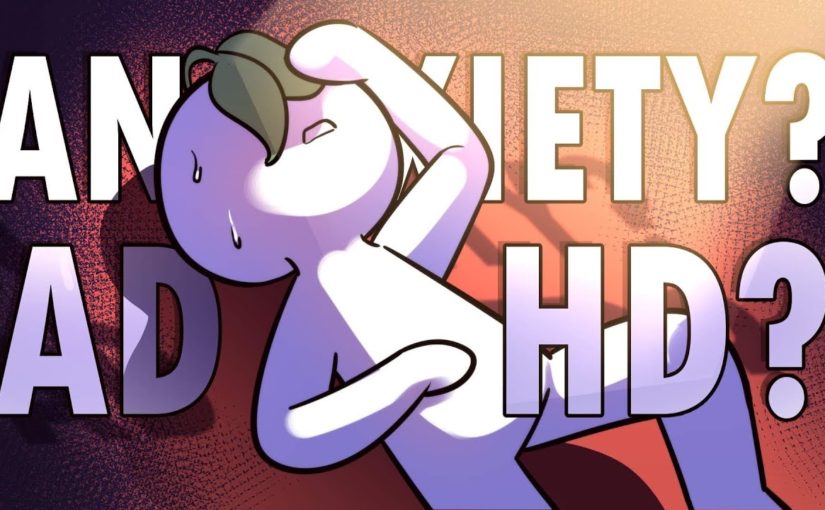
– Hey, Psych2Goers. Do you have trouble paying attention? For example, zoning out
while watching this video? Do you think you have
ADHD because of this? Oftentimes, people mistake
symptoms of anxiety for ADHD because of some of the
similar traits they share. According to the Centers
for Disease Control and Prevention data, about 3 in 10 children
with ADHD have anxiety. So to help you get a better understanding of the difference
between ADHD and anxiety, here are six signs to look out for. Number one, you have poor focus because of worrying thoughts.
Are you always distracted by your worries, so much so that you’re unable to focus on the things you’re doing? When fear and apprehension
dominate your thoughts, it may cause you to become restless, and have trouble sitting
still, paying attention, or staying focused in class. According to John Waldrop, MD from Weill Cornell Medical College, when you experience anxiety, your prefrontal cortex, the part of the brain which is essential for thinking, learning, and
remembering, is shut down. Your brain is concentrated
on staying safe.
In contrast with ADHD, you aren’t consumed by worrying thoughts. Instead, it has more
to do with an imbalance in your hormones: dopamine
and norepinephrine, which causes you to be distracted. Number two, you don’t tend to have as many problems with impulsivity. Do you often find yourself
speaking out loud in class without raising your hand? Perhaps you were even labeled
as the troublemaker in school because of the way you
can never sit still. According to Dr. John, a
person with ADHD may feel as if there are dozens of controllers trying to control their
brains at the same time without checking in with each other first. So if you find that you
don’t appear to have as many problems with impulsivity but just struggle to speak up or stand up because of your nerves, then you may have anxiety rather than ADHD. Number three, you have trouble
completing your schoolwork because of perfectionism. Do you have trouble
completing your schoolwork? Perhaps you find yourself procrastinating even if you only have just
one assignment to you.
This struggle could be because
you have so many points you wanna make in so many
ways to phrase the words that leave you wanting
to throw up your hands and ignore them. You’re avoiding starting your assignments because you can’t have
it is less than perfect. If you can relate to this, then it’s more likely you’re struggling with anxiety and not ADHD. Dr. John stated that
while people with ADHD may experience difficulty
completing their schoolwork or performing tasks, it’s often due to trouble
with concentration rather than perfectionism.
Number four, you are
generally more sensitive to social cues. Are you very sensitive to how you come across to other people? Do you find yourself often uncomfortable with your social environment? Perhaps you find it challenging to eat in front of other people, or tend to avoid speaking in public because of an overwhelming fear that people will judge you negatively. According to Dr. John,
if your answers are yes to the above questions, it’s more likely that you
have anxiety rather than ADHD. This is because people
with ADHD usually struggle with understanding or missing social cues rather than being hypersensitive to them. Number five, you experience
a racing heart, clamminess, tense muscles, headaches,
nausea, or dizziness. Do you often experience
headaches, nausea, or dizziness? These are just some of
the symptoms of anxiety. Dr. John stated that anxiety comes from a tiny almond-shaped part at the back of your brain
called the amygdala.
As a watchman for your brain, it is constantly watching out for danger. And whenever it detects danger, it triggers a fight or flight response. However, for anxious people, the amygdala is large and hypersensitive. Because of this, it ends up sending out
a lot of false alarms. You can think of it as a watchman
who cries wolf too often. As a result, your brain may sense threats even in non-threatening situations. And number six, you are unlikely
to show problem behaviors when you’re feeling calm, safe,
and doing things you enjoy.
How do you act when you’re having fun? Whether it’s listening
to your favorite music or playing video games, you
may find yourself feeling calm and safe while doing the things
that you genuinely enjoy. You are neither restless nor feel like you need
to catch your breath. According to Dr. John, anxious
individuals are unlikely to display any problem behaviors
when feeling calm and safe and doing something they enjoy. On the contrary, people with ADHD will experience problem behaviors even when they engage in a particular fun or exciting activity. For example, a person with ADHD may become so engrossed
with painting a picture that they tune out or completely
ignore everything else. This behavior is known as hyperfocus. Did you relate to any of
the signs we’ve mentioned? Let us know in the comments below. If you found this video helpful, be sure to like, subscribe,
and share this video with those who might benefit from it. And don’t forget to hit
the notification bell icon to get notified whenever
Psych2Go posts a new video. As always, the references and
studies used in this video are added in the description below.
Thanks so much for watching
and see you in our next video. (light music).
As found on YouTubeAnimated Video Maker – Create Amazing Explainer Videos | VidToon™ #1 Top Video Animation Software To Make Explainer, Marketing, Animated Videos Online It’s EASIER, PRODUCTIVE, FASTER Get Commercial Rights INCLUDED when you act NOW Get Vidtoon™
Searching for a sign of anxiety attacks is kind of looking for a needle in a haystack. The thing it is not quite as concrete. At least with the needle, once you’ve found it you know that it’s a needle; it feels like a needle, it looks like a needle, and it likely is a needle. An anxiety attack could just as likely be a symptom of a great misdiagnosed problem as it could be a sign of anxiety attacks. Seeking good professional help is the most important key to solving this mystery.
Fear is your body’s natural reaction to a lot of outside stimuli. It is normal for the body to react in such a way as to become anxious or fearful because this often protected our ancestors from a lot of problems and harm. It is not normal, however, for our bodies to be overtaken with fear to the point that physical symptoms begin to arise because of it. When this happens, it is usually a sign of a larger problem.
There are many common types of anxiety: fear, panic, worry, dread, obsession, and compulsion are just a few. Anxiety comes in a variety of forms and is not only represented by fear. It is also quite common. Most people experience anxiety in some form, experiencing it before or after stressful situations like a traumatic event or an important meeting with the boss of your company. Other times the anxiety comes quickly and without warning and for no reason at all.
Anxiety can affect your Relationships
An anxiety disorder is a more disabling feeling of anxiety that is constant and consuming. Anxiety disorder causes people to completely withdraw emotionally and often physically from their family and friends. It can cause people to withdraw indoors and avoid social activities for reasons involving fear. An anxiety attack, conversely, is an unexpected episode that usually involves fear as opposed to an overwhelming feeling.
A sign of anxiety attacks can be anything from irregular heartbeats to chest pain. They also include: shaking, twitching, trembling, hot flashes, chills, “rubber legs”, tingling in extremities, difficulty sleeping, unpredictable sleeping patterns, body tension, aches and pains, sweating, clamminess, and stomach problems such as nausea or “butterflies”.
There are also emotional signs including fearfulness, a feeling of terror, insecurity, incredible self-consciousness, irritability, apprehension, dread, a desire to escape, a feeling you are going to perish, and other frightening emotions. These emotions are sometimes very hard to deal with. It is always recommended that you discuss your findings and experience with your doctor. Your doctor can direct you in the right direction for getting help and ending your anxiety.
Feel free to visit some of my sites Stop Anxiety Attacks and Stop Anxiety Now
You may not realize it, but you may suffer from something that can take over your whole world if you let it. You’ll recognize the symptoms, but you’ll have no idea what’s behind them.
Panic attacks are debilitating. One moment, you’re living your day-to-day lifestyle, and the next, you find yourself paralyzed with the feeling that you’ve lost all control. You worry about the possibility of something happening to you. It all comes on so quickly and unexpectedly, that you’re blown away and the only thing you want to do is go right back home.
While they can be caused by a number of things – heredity, biological forces even exaggerated thinking – the main culprit is usually stress. As stress plays such a huge factor in our day-to-day lives, we don’t realize just how profoundly we’re affected until something highly stressful approaches and we’re stuck with a panic attack, afraid of absolutely everything that may come our way. Finding proper stress relief is crucial in order to help limit the number of panic attacks a person has at any given point in their life. If stress is controlled before panic and anxiety set in, there is a better likelihood of being able to stop panic attacks before they start.
The symptoms of a panic attack are obvious enough: the rapid heartbeat, difficulty breathing, the feeling of dizziness and dread, trembling, sudden chills, and the pins and needles feeling in your fingers and toes are only a few of many symptoms. In any given year, their millions of people who experience a panic attack – some of which experience repeated panic attacks.
The best course of action for panic attacks would be to talk to your doctor, who can prescribe medications and forms of therapy to assist with the treatment of those feelings of panic. Only your doctor would know the treatment that is best for you. While a panic attack may leave you feeling the need to hide and can feel as though it controls every aspect of your life, it doesn’t have to. With proper treatment and reduced stress, you can reduce the number of panic attacks you have, and can even eliminate them! A happy, healthy life is once again within your reach.
Your heart pounds, your palms sweat, you start shaking, you get short of breath. You experience a fear that seems overwhelming that came absolutely out of nowhere, and for no reason. You could have been driving your car, or awakened out of sleep, or at your desk performing your daily routine at your job. Perhaps it’s the first time it’s happened, perhaps not. If it’s not you probably know that you aren’t going to die, but you feel like it. If it’s the first time you are scared to death.
No one really knows what causes a panic attack to come on. Some medical professionals say that they can be related to heredity, some say to stress. Some say if you have a history of other mental disorders, such as depression or some phobias you are more likely to experience panic attacks. Know that you are not alone. It is estimated that one out of three adults will suffer a panic attack in their lifetime.
Some professionals have broken down panic attacks into three distinct types, spontaneous, specific, and situational. A spontaneous panic attack would be as suggested by its name, one that happens unexpectedly. Panic attacks called specific are brought on, as also suggested by its name by specific repeated situations, and situational panic attacks may come while doing a certain type of activity, such as riding a bike, even though there is no panic or fright involved with the activity.
If you want to make money with YouTube – but don’t know how then this is for YOU…
“Discover How To Generate A Regular Income Direct From YouTube Without Creating Any Of Your Own Videos!”
Fortunes have been made using ‘Other People’s Money’ and now there’s a smart way to make money from other people’s videos on YouTube with just 30 minute weekly updates generating monthly payments from YouTube, wired directly to your bank account – STARTING TODAY!
Some people suffer from a panic attack only once. These may be panic attacks which are brought on by major life stresses and ease after the stress is eliminated. Some suffer from repeated panic attacks. The type of help you seek for panic attacks and the type of help you are given by medical professionals will be based on how many panic attacks you suffer from. Some health care professionals and organizations seek to treat people who suffer from infrequent panic attacks with a step program, similar to that used with alcoholics anonymous. Some medical professionals will treat more severe and recurrent panic attacks with medication. Generally, patients who suffer from repeated panic attacks will benefit by being referred to a psychologist or psychiatrist for counseling.
 This slippery slope makes it difficult to
see life under a brighter light. 6. Terrible eating habits. Those with depression will either eat too
much or hardly anything at all. Some of you may find yourself in the kitchen
eating everything in side, trying to eat away the emptiness or sadness you’re feeling while others don’t have an appetite and may even feel disgusted by food.
In other cases, some of you may feel so exhausted
that that thought of preparing a meal is overwhelming. 7. Lack of motivation. Depression steals your interests and desires
right from under you. Your favorite pastimes and hobbies no longer
satisfy you, slowly you find yourself feeling dead and numb inside. If you aren’t careful you’ll end up staying
in bed all day. 8. Evading your problems. Depression by itself is overwhelming, you
can feel devastated and out of control most days, so trying to face situations and problems
head-on is difficult enough.
Instead you ignore or set the problem aside,
and this in turn can bring trouble because it will continue to pile up. 9. Feeling guilty and feeling self-hatred. If you allow depression to take over your
thoughts, then you’ll most likely feel self-hatred. You’ll continue to talk down to yourself and
this often leads to the development of self-esteem issues along with poor self-image, eventually
you’ll believe you aren’t worth it anymore. Some people with this mental disorder can
even feel guilt by thinking all their problems are their fault. And 10: living in fear. People with depression fear that terrible
things will happen to them. In severe cases, some of you will sabotage a good situation, believing that it will turn bad. Other times individuals will reject opportunities
and stop pursuing their dreams.
It’s a twisted way to protect yourself because
this prevents you from living and achieving amazing things. Depression affects us in different ways. The list mentioned in this video contains
some of the common behaviors those with the disorder have. Do you agree with these points? What other behaviors have you noticed? Let us know in the comment section below. <3.
As found on YouTube
Brain Booster | Blue Heron Health News ⇝ I was losing my memory, focus – and mind! And then… I got it all back again. Case study:
This slippery slope makes it difficult to
see life under a brighter light. 6. Terrible eating habits. Those with depression will either eat too
much or hardly anything at all. Some of you may find yourself in the kitchen
eating everything in side, trying to eat away the emptiness or sadness you’re feeling while others don’t have an appetite and may even feel disgusted by food.
In other cases, some of you may feel so exhausted
that that thought of preparing a meal is overwhelming. 7. Lack of motivation. Depression steals your interests and desires
right from under you. Your favorite pastimes and hobbies no longer
satisfy you, slowly you find yourself feeling dead and numb inside. If you aren’t careful you’ll end up staying
in bed all day. 8. Evading your problems. Depression by itself is overwhelming, you
can feel devastated and out of control most days, so trying to face situations and problems
head-on is difficult enough.
Instead you ignore or set the problem aside,
and this in turn can bring trouble because it will continue to pile up. 9. Feeling guilty and feeling self-hatred. If you allow depression to take over your
thoughts, then you’ll most likely feel self-hatred. You’ll continue to talk down to yourself and
this often leads to the development of self-esteem issues along with poor self-image, eventually
you’ll believe you aren’t worth it anymore. Some people with this mental disorder can
even feel guilt by thinking all their problems are their fault. And 10: living in fear. People with depression fear that terrible
things will happen to them. In severe cases, some of you will sabotage a good situation, believing that it will turn bad. Other times individuals will reject opportunities
and stop pursuing their dreams.
It’s a twisted way to protect yourself because
this prevents you from living and achieving amazing things. Depression affects us in different ways. The list mentioned in this video contains
some of the common behaviors those with the disorder have. Do you agree with these points? What other behaviors have you noticed? Let us know in the comment section below. <3.
As found on YouTube
Brain Booster | Blue Heron Health News ⇝ I was losing my memory, focus – and mind! And then… I got it all back again. Case study:  Brian Thompson There’s nothing more terrifying than watching your brain health fail. You can feel it… but you can’t stop it. Over and over I asked myself, where is this going to end? What am I going to end up like? And nobody could tell me. Doesn’t matter now. I’m over it. Completely well. This is how I did it!
 Hmm…” [Laughter] Why? Because of distance, isn’t it? When you’re in it, traffic is a different experience. From really high up there, sitting in a hot air balloon, you look down, and you can’t even hear the sounds, looks wonderful traffic, isn’t it? Yes, or no? Participants: Yes. Sadhguru: Because there’s a distance. So, once there’s a distance between you and your mind’s activity, the mind is not a problem – the mind is a miracle, it is not a problem. And anyway, if thoughts are going continuously, if you’re having mental diarrhea, [Laughter] you ate some bad food, isn’t it? Yes? If you’re having physical diarrhea, you ate some bad food, isn’t it? If you’re having mental diarrhea, you consumed something wrong. What this wrong thing could be is, the moment you identify yourself with something that you’re not, then you’re finished – your mind is a continuous run. There is no other way. Do what you want, and try as hard as you want, it is not going to stop.
If you do not identify yourself with anything that you are not, you know how to be with everything, you know how to use everything, but you’re not identified with it, then you will see, if you sit here, simply, the mind will be like this; [Gestures] if you want to use it you can use it, otherwise, it’ll be like this. Right now your hands are like this; oh, you’re holding it tied up because it’ll go all over, is it? No, you can keep it like this. You can keep it like this, you can keep it like this. [Gestures] When you want to use it, you can use it. So, it’s a useful instrument. Suppose your hands become like this. [Gestures] You know, some people have become like this? Yes, or no? [Gestures] If it becomes like this, you will become ridiculous, isn’t it? If it happens to your mind, also you’re equally ridiculous. It is just that you are living in the comfort that nobody else can see it.
But people can see it; if they watch you closely enough, they can see it, isn’t it? And whether they can see it or not, that’s not the point; the point is, the most important faculty of your life is out of control. It doesn’t matter whether they can see it or not, that’s not the issue; the issue is, the most important faculty in your life is out of control, doing its rubbish all the time, not doing what you want it to do. So, if you have to be freed from this ailment, you should stop eating bad food. Wrong food, or bad food means, you are identifying yourself with things that you’re not. If you sit here, if you’re not identified with this, and with this, [Gestures] then you will see, everything is just fine. Then your mind will do what you want it to do; otherwise, it’ll simply hang there, and that’s how it should be. The mind should not be telling its own stories all the time; it should tell the story that you want it to tell, isn’t it? Otherwise, it’s quite a nuisance.
Hmm…” [Laughter] Why? Because of distance, isn’t it? When you’re in it, traffic is a different experience. From really high up there, sitting in a hot air balloon, you look down, and you can’t even hear the sounds, looks wonderful traffic, isn’t it? Yes, or no? Participants: Yes. Sadhguru: Because there’s a distance. So, once there’s a distance between you and your mind’s activity, the mind is not a problem – the mind is a miracle, it is not a problem. And anyway, if thoughts are going continuously, if you’re having mental diarrhea, [Laughter] you ate some bad food, isn’t it? Yes? If you’re having physical diarrhea, you ate some bad food, isn’t it? If you’re having mental diarrhea, you consumed something wrong. What this wrong thing could be is, the moment you identify yourself with something that you’re not, then you’re finished – your mind is a continuous run. There is no other way. Do what you want, and try as hard as you want, it is not going to stop.
If you do not identify yourself with anything that you are not, you know how to be with everything, you know how to use everything, but you’re not identified with it, then you will see, if you sit here, simply, the mind will be like this; [Gestures] if you want to use it you can use it, otherwise, it’ll be like this. Right now your hands are like this; oh, you’re holding it tied up because it’ll go all over, is it? No, you can keep it like this. You can keep it like this, you can keep it like this. [Gestures] When you want to use it, you can use it. So, it’s a useful instrument. Suppose your hands become like this. [Gestures] You know, some people have become like this? Yes, or no? [Gestures] If it becomes like this, you will become ridiculous, isn’t it? If it happens to your mind, also you’re equally ridiculous. It is just that you are living in the comfort that nobody else can see it.
But people can see it; if they watch you closely enough, they can see it, isn’t it? And whether they can see it or not, that’s not the point; the point is, the most important faculty of your life is out of control. It doesn’t matter whether they can see it or not, that’s not the issue; the issue is, the most important faculty in your life is out of control, doing its rubbish all the time, not doing what you want it to do. So, if you have to be freed from this ailment, you should stop eating bad food. Wrong food, or bad food means, you are identifying yourself with things that you’re not. If you sit here, if you’re not identified with this, and with this, [Gestures] then you will see, everything is just fine. Then your mind will do what you want it to do; otherwise, it’ll simply hang there, and that’s how it should be. The mind should not be telling its own stories all the time; it should tell the story that you want it to tell, isn’t it? Otherwise, it’s quite a nuisance.



 Others become impatient, give up or distance themselves. after he
is diagnosed and receives support through concrete steps, things begin to
get better: at school, he is seated next to a supportive student in the front row
of the class, he gets a notebook that lists all his assignments to help him
remember and to make homework easier to track he receives it for all subjects
only once a week. to relax he is allowed to use fidget objects during lessons and
take short breaks when needed. after school he practices speaking and
listening routines with the specialist. additionally, his dad bikes with him to
school every morning and in the afternoon he is allowed to play the ball
as long as he wishes. for severe cases of ADHD prescription drugs are often
prescribed. before that happens children like Leo need to undergo a
professional age-appropriate diagnosis by a child psychologist who will try to
look below the surface.
ADHD could just be the tip of the
iceberg the root cause might be drama at home, bullying at school, poor sleep or
the wrong diet. Sir Ken Robinson told the story of Gillian Lynne, an 8-year-old
girl that was said to have a learning disorder. she could not concentrate and
never sat still. when she was brought to the specialist who didn’t subscribe any
therapy but instead played music on the radio, the girl started dancing. he then
told her mother: “Gillian isn’t sick, she’s a dancer. take her to a dance school!”
Gillian Lynne later became a famous dancer and then responsible for some of
the most successful musicals in Broadway history. please share your thoughts in
the comments below. if you are hyperactive or if you are diagnosed with
ADHD please tell us about your coping mechanisms so we can learn more about it
from reading your insights. if you want to support our Channel, enabling us
to make more such videos, visit patreon.com/sprouts and check out
what we do.
Others become impatient, give up or distance themselves. after he
is diagnosed and receives support through concrete steps, things begin to
get better: at school, he is seated next to a supportive student in the front row
of the class, he gets a notebook that lists all his assignments to help him
remember and to make homework easier to track he receives it for all subjects
only once a week. to relax he is allowed to use fidget objects during lessons and
take short breaks when needed. after school he practices speaking and
listening routines with the specialist. additionally, his dad bikes with him to
school every morning and in the afternoon he is allowed to play the ball
as long as he wishes. for severe cases of ADHD prescription drugs are often
prescribed. before that happens children like Leo need to undergo a
professional age-appropriate diagnosis by a child psychologist who will try to
look below the surface.
ADHD could just be the tip of the
iceberg the root cause might be drama at home, bullying at school, poor sleep or
the wrong diet. Sir Ken Robinson told the story of Gillian Lynne, an 8-year-old
girl that was said to have a learning disorder. she could not concentrate and
never sat still. when she was brought to the specialist who didn’t subscribe any
therapy but instead played music on the radio, the girl started dancing. he then
told her mother: “Gillian isn’t sick, she’s a dancer. take her to a dance school!”
Gillian Lynne later became a famous dancer and then responsible for some of
the most successful musicals in Broadway history. please share your thoughts in
the comments below. if you are hyperactive or if you are diagnosed with
ADHD please tell us about your coping mechanisms so we can learn more about it
from reading your insights. if you want to support our Channel, enabling us
to make more such videos, visit patreon.com/sprouts and check out
what we do.



 Number four, you are
generally more sensitive to social cues. Are you very sensitive to how you come across to other people? Do you find yourself often uncomfortable with your social environment? Perhaps you find it challenging to eat in front of other people, or tend to avoid speaking in public because of an overwhelming fear that people will judge you negatively. According to Dr. John,
if your answers are yes to the above questions, it’s more likely that you
have anxiety rather than ADHD. This is because people
with ADHD usually struggle with understanding or missing social cues rather than being hypersensitive to them. Number five, you experience
a racing heart, clamminess, tense muscles, headaches,
nausea, or dizziness. Do you often experience
headaches, nausea, or dizziness? These are just some of
the symptoms of anxiety. Dr. John stated that anxiety comes from a tiny almond-shaped part at the back of your brain
called the amygdala.
As a watchman for your brain, it is constantly watching out for danger. And whenever it detects danger, it triggers a fight or flight response. However, for anxious people, the amygdala is large and hypersensitive. Because of this, it ends up sending out
a lot of false alarms. You can think of it as a watchman
who cries wolf too often. As a result, your brain may sense threats even in non-threatening situations. And number six, you are unlikely
to show problem behaviors when you’re feeling calm, safe,
and doing things you enjoy.
How do you act when you’re having fun? Whether it’s listening
to your favorite music or playing video games, you
may find yourself feeling calm and safe while doing the things
that you genuinely enjoy. You are neither restless nor feel like you need
to catch your breath. According to Dr. John, anxious
individuals are unlikely to display any problem behaviors
when feeling calm and safe and doing something they enjoy. On the contrary, people with ADHD will experience problem behaviors even when they engage in a particular fun or exciting activity. For example, a person with ADHD may become so engrossed
with painting a picture that they tune out or completely
ignore everything else. This behavior is known as hyperfocus. Did you relate to any of
the signs we’ve mentioned? Let us know in the comments below. If you found this video helpful, be sure to like, subscribe,
and share this video with those who might benefit from it. And don’t forget to hit
the notification bell icon to get notified whenever
Psych2Go posts a new video. As always, the references and
studies used in this video are added in the description below.
Thanks so much for watching
and see you in our next video. (light music).
Number four, you are
generally more sensitive to social cues. Are you very sensitive to how you come across to other people? Do you find yourself often uncomfortable with your social environment? Perhaps you find it challenging to eat in front of other people, or tend to avoid speaking in public because of an overwhelming fear that people will judge you negatively. According to Dr. John,
if your answers are yes to the above questions, it’s more likely that you
have anxiety rather than ADHD. This is because people
with ADHD usually struggle with understanding or missing social cues rather than being hypersensitive to them. Number five, you experience
a racing heart, clamminess, tense muscles, headaches,
nausea, or dizziness. Do you often experience
headaches, nausea, or dizziness? These are just some of
the symptoms of anxiety. Dr. John stated that anxiety comes from a tiny almond-shaped part at the back of your brain
called the amygdala.
As a watchman for your brain, it is constantly watching out for danger. And whenever it detects danger, it triggers a fight or flight response. However, for anxious people, the amygdala is large and hypersensitive. Because of this, it ends up sending out
a lot of false alarms. You can think of it as a watchman
who cries wolf too often. As a result, your brain may sense threats even in non-threatening situations. And number six, you are unlikely
to show problem behaviors when you’re feeling calm, safe,
and doing things you enjoy.
How do you act when you’re having fun? Whether it’s listening
to your favorite music or playing video games, you
may find yourself feeling calm and safe while doing the things
that you genuinely enjoy. You are neither restless nor feel like you need
to catch your breath. According to Dr. John, anxious
individuals are unlikely to display any problem behaviors
when feeling calm and safe and doing something they enjoy. On the contrary, people with ADHD will experience problem behaviors even when they engage in a particular fun or exciting activity. For example, a person with ADHD may become so engrossed
with painting a picture that they tune out or completely
ignore everything else. This behavior is known as hyperfocus. Did you relate to any of
the signs we’ve mentioned? Let us know in the comments below. If you found this video helpful, be sure to like, subscribe,
and share this video with those who might benefit from it. And don’t forget to hit
the notification bell icon to get notified whenever
Psych2Go posts a new video. As always, the references and
studies used in this video are added in the description below.
Thanks so much for watching
and see you in our next video. (light music).


