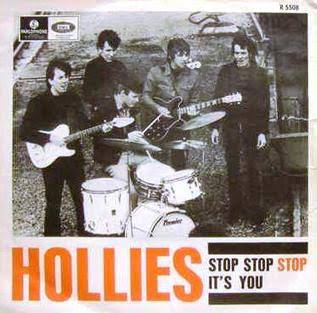
The Hollies – Stop, Stop, Stop (1967)

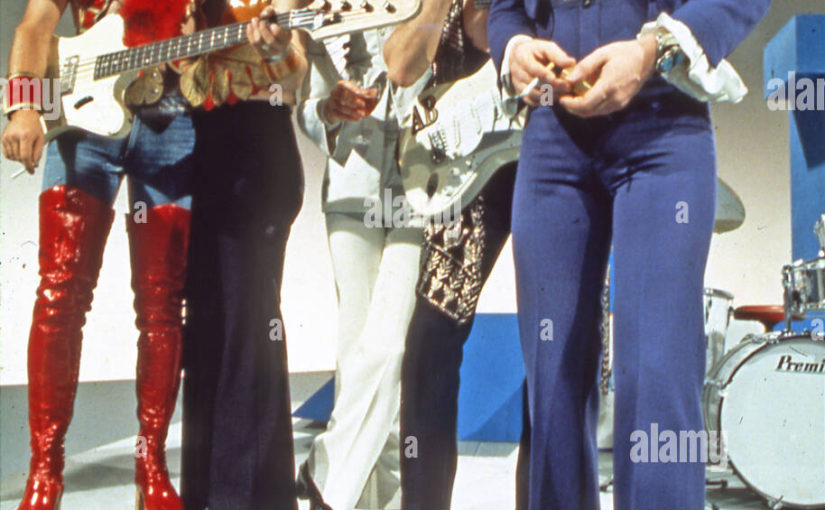
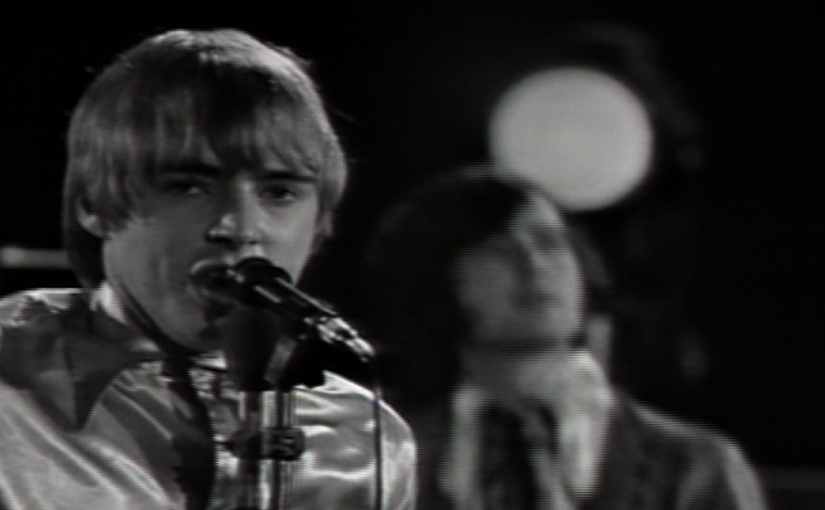
The Hollies are a British pop/rock group best known for their pioneering and distinctive three-part vocal harmony style. The Hollies became one of the leading British groups of the 1960s (231 weeks on the UK singles charts during the 1960s, the 9th highest of any artist of the decade) and into the mid 1970s. It was formed by Allan Clarke and Graham Nash in 1962 as a Merseybeat-type music group in Manchester, although some of the band members came from towns north of there. Graham Nash left the group in 1968 to form the supergroup Crosby, Stills & Nash. They enjoyed considerable popularity in many countries (at least 60 singles or EPs and 26 albums charting somewhere in the world, spanning over five decades), although they did not achieve major US chart success until 1966 with “Bus Stop”. The Hollies had over 30 charting singles on the UK Singles Chart, and 22 on the Billboard Hot 100, with major hits on both sides of the Atlantic that included “Just One Look”, “Look Through Any Window”, “I Can’t Let Go”, “Bus Stop”, “Stop Stop Stop”, “On a Carousel”, “Carrie Anne”, “Jennifer Eccles”, and later “He Ain’t Heavy, He’s My Brother”, “Long Cool Woman in a Black Dress”, and “The Air That I Breathe”. They are one of the few British groups of the early 1960s, along with the Rolling Stones, that have never disbanded and continue to record and perform. In recognition of their achievements, the Hollies were inducted into the Rock and Roll Hall of Fame in 2010. https://www.facebook.com/share/r/1JJv7uj7vS/
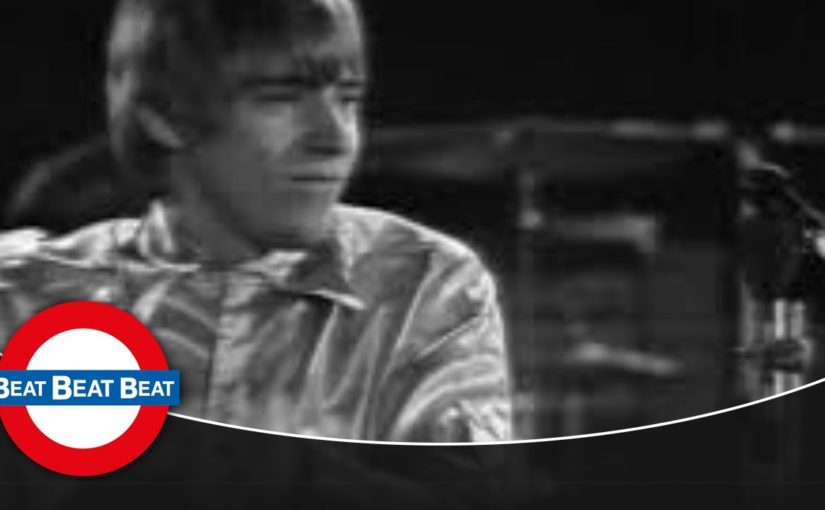
The Yardbirds (feat. Jimmy Page) – Happenings Ten Years Time Ago (1967)

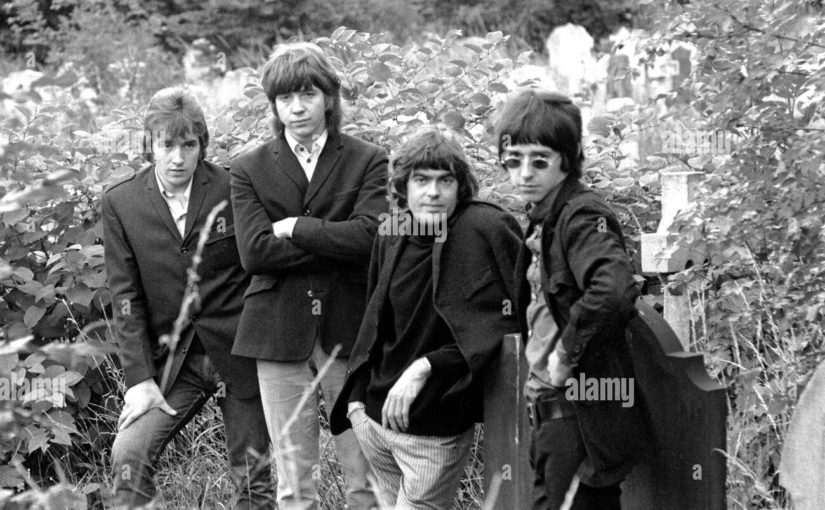
The Yardbirds are an English rock band, formed in London in 1963. The band’s core lineup featured vocalist and harmonica player Keith Relf, drummer Jim McCarty, rhythm guitarist/bassist Chris Dreja, and bassist/producer Paul Samwell-Smith. The band is known for starting the careers of three of rock’s most famous guitarists, Eric Clapton, Jimmy Page, and Jeff Beck, all of whom ranked in the top five of Rolling Stone magazine’s list of 100 greatest guitarists. The band had a string of hits throughout the mid-1960s, including “For Your Love”, “Heart Full of Soul”, “Shapes of Things” and “Over Under Sideways Down”.

Mott The Hoople – You Really Got Me (1970)

Mott the Hoople is an English rock band popular in the early to mid-1970s glam rock era. They are best known for the song “All the Young Dudes”, written for them by David Bowie and appearing on their 1972 album of the same name. Mott the Hoople was formed in 1966 as the Doc Thomas Group with Mick Ralphs on guitar, Stan Tippins on vocals, and Pete Overend Watts on bass. Ralphs and Tippins had been in a local Hereford band the Buddies, and Watts had been in a local Ross-on-Wye band the Soulents with Dale “Buffin” Griffin on drums. The Doc Thomas Group had a concert residency at a nightclub in a resort town in Italy. The group was offered a recording contract with the Italian label Dischi Interrecord and released an eponymous album in January 1967. By 1968, Griffin and organist Verden Allen had joined the band.

Introduction – The Creation (1966)

The Creation was an English rock band, formed in 1966. Their best-known songs are “Making Time”, which was one of the first rock songs to feature a guitar played with a bow, and “Painter Man”, which made the Top 40 in the UK Singles Chart in late 1966 and reached No. 8 in the German chart in April 1967. It was later covered by Boney M in 1979 and reached the No. 10 position in the UK chart. “Making Time” was used in the movie Rushmore. Creation biographer Sean Egan defined their style as “a unique hybrid of pop, rock, psychedelia, and the avant-garde.”

Rory Gallagher – Pistol Slapper Blues (1972)

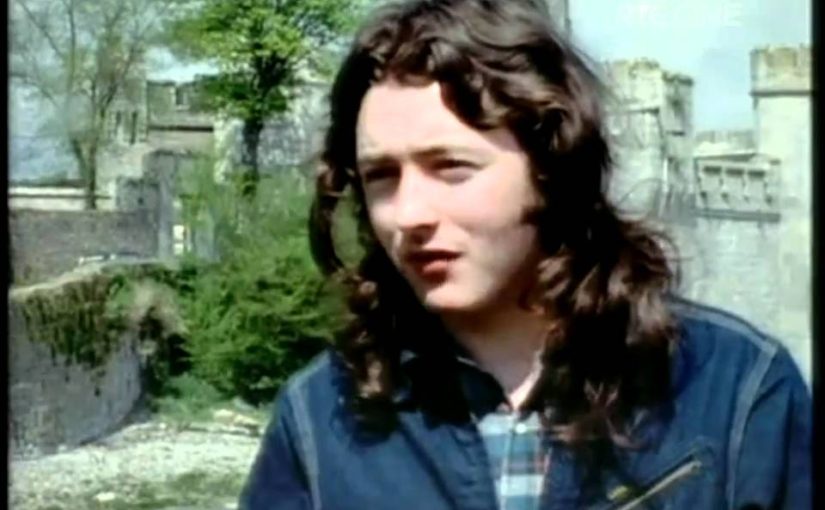
William Rory Gallagher (2 March 1948 – 14 June 1995) was an Irish blues and rock multi-instrumentalist, songwriter, and producer. Born in Ballyshannon, County Donegal, and brought up in Cork, Gallagher recorded solo albums throughout the 1970s and 1980s, after forming the band Taste during the late 1960s. His albums have sold over 30 million copies worldwide. Gallagher received a liver transplant in 1995, but died of complications later that year in London at the age of 47.

The Yardbirds (feat. Jimmy Page) – Over Under Sideways Down (1967)

The Yardbirds are an English rock band, formed in London in 1963. The band’s core lineup featured vocalist and harmonica player Keith Relf, drummer Jim McCarty, rhythm guitarist/bassist Chris Dreja, and bassist/producer Paul Samwell-Smith. The band is known for starting the careers of three of rock’s most famous guitarists, Eric Clapton, Jimmy Page, and Jeff Beck, who ranked in the top five of Rolling Stone magazine’s list of 100 greatest guitarists. The band had a string of hits throughout the mid-1960s, including “For Your Love”, “Heart Full of Soul”, “Shapes of Things” and “Over Under Sideways Down”.

The Yardbirds (feat. Jimmy Page) – Shapes Of Things (1967)

The Yardbirds are an English rock band, formed in London in 1963. The band’s core lineup featured vocalist and harmonica player Keith Relf, drummer Jim McCarty, rhythm guitarist/bassist Chris Dreja, and bassist/producer Paul Samwell-Smith. The band is known for starting the careers of three of rock’s most famous guitarists, Eric Clapton, Jimmy Page, and Jeff Beck, all of whom ranked in the top five of Rolling Stone magazine’s list of 100 greatest guitarists. The band had a string of hits throughout the mid-1960s, including “For Your Love”, “Heart Full of Soul”, “Shapes of Things” and “Over Under Sideways Down”.

Johnny Cash & June Carter – If I Were A Carpenter (1972)

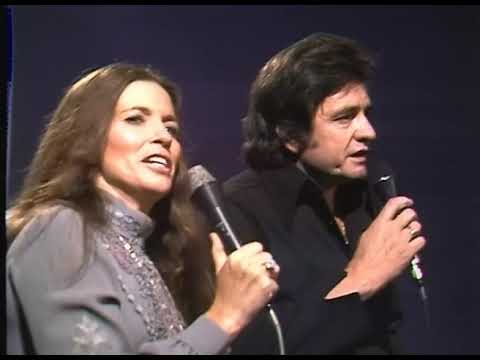
Johnny Cash (born J.R. Cash, February 26, 1932 – September 12, 2003) was an American singer-songwriter, guitarist, actor, and author. He is one of the best-selling music artists of all time, having sold more than 90 million records worldwide. Although primarily remembered as a country music icon, his genre-spanning songs and sound embraced rock and roll, rockabilly, blues, folk and gospel. This crossover appeal won Cash the rare honor of being inducted into the Country Music, Rock and Roll, and Gospel Music Halls of Fame. Cash was known for his deep, calm bass-baritone voice, the distinctive sound of his Tennessee Three backing band, which is characterized by train-sound guitar rhythms, a rebelliousness coupled with an increasingly somber and humble demeanor, free prison concerts, and a trademark, all-black stage wardrobe, which earned him the nickname “The Man in Black.” He traditionally began his concerts by simply introducing himself, “Hello, I’m Johnny Cash,” followed by his signature song “Folsom Prison Blues”.

Donny Osmond – Puppy Love (1972)

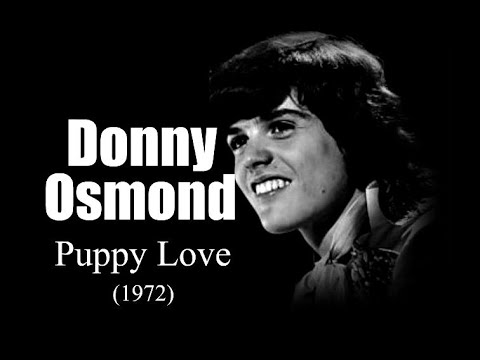
The Osmonds are an American family music group that reached the height of their fame in the early to mid-1970s. Currently consisting of a duo of original members Merrill Osmond and Jay Osmond, the group had its best-known configurations as a quartet (billed as the Osmond Brothers) and a quintet (as the Osmonds). The group has comprised siblings who are all members of a family of musicians from Ogden, Utah, and have been in the public eye since the 1960s. The Osmond Brothers began as a barbershop quartet consisting of brothers Alan, Wayne, Merrill, and Jay. They were later joined by younger siblings Donny and Jimmy, both of whom enjoyed success as solo artists. With the addition of Donny, the group became known as the Osmonds; performing both as teen idols and as a soft rock band, their peak lasted from 1971 to 1975. Their only sister Marie, who rarely sang with her brothers at that time, launched a successful career in 1973, both as a solo artist and as Donny’s duet partner. By 1976, the band was no longer producing hit singles; that year, they transitioned into television with Donny & Marie, a popular variety show that ran until 1979. A revival of the original Osmond Brothers lineup in the 1980s achieved moderate success in country music, and both Donny and Marie separately made comebacks in their respective fields in the late 1980s. The Osmonds have sold over 100 million records worldwide.[5] Much of their body of work has largely been forgotten among the general public in the United States since radio stations have largely excluded their music from classic hits and oldies playlists.

3 Mind-Blowing Gordon Lightfoot Songs THAT PROVE His BRILLIANCE! | Professor of Rock #shorts

#70smusic #gordonlightfoot I was so sad to hear of the passing of Gordon Lightfoot one of our most treasured singer-songwriters. He started in the 60s, ruled the 70s, and continued into the 80s. He had the #1 smash Sundown which is one of the 70s greatest songs… To honor him I wanted to share some key lyrics from 3 of his other most beloved songs that are worth pondering The first one is from his top 10 hit from 1974 Carefree Highway: “And the thing that I call living is just being satisfied With knowing I’ve got no one left to blame. Talk about being honest with yourself..” The second one is from his top 5 hit If You Could Read My Mind from 1970. He wrote it about his divorce..: he says when you reach the part where the heartache comes the hero would be me. But Heroes often fail, and you won’t read that book again because the ending’s just too hard to take. Heart-wrenching. and the last one is from his 1976 #2 hit the Wreck of the Edmund Fitzgerald. “Does Anyone Know where the Love of God Goes When the Waves Turn the Minutes to hours? It sends a shiver up my spine every time I hear it. Gordon Lightfoot’s songs are like Old Friends and will continue to get us through the best and worst of times. Rest easy sir.